


Home
X-Ray Diffraction Imaging of Biological Cells
Barnes and Noble
Loading Inventory...

X-Ray Diffraction Imaging of Biological Cells in Bloomington, MN
By Barnes & Noble
Current price: $199.99

X-Ray Diffraction Imaging of Biological Cells in Bloomington, MN
Current price: $199.99
Loading Inventory...
Size: Hardcover
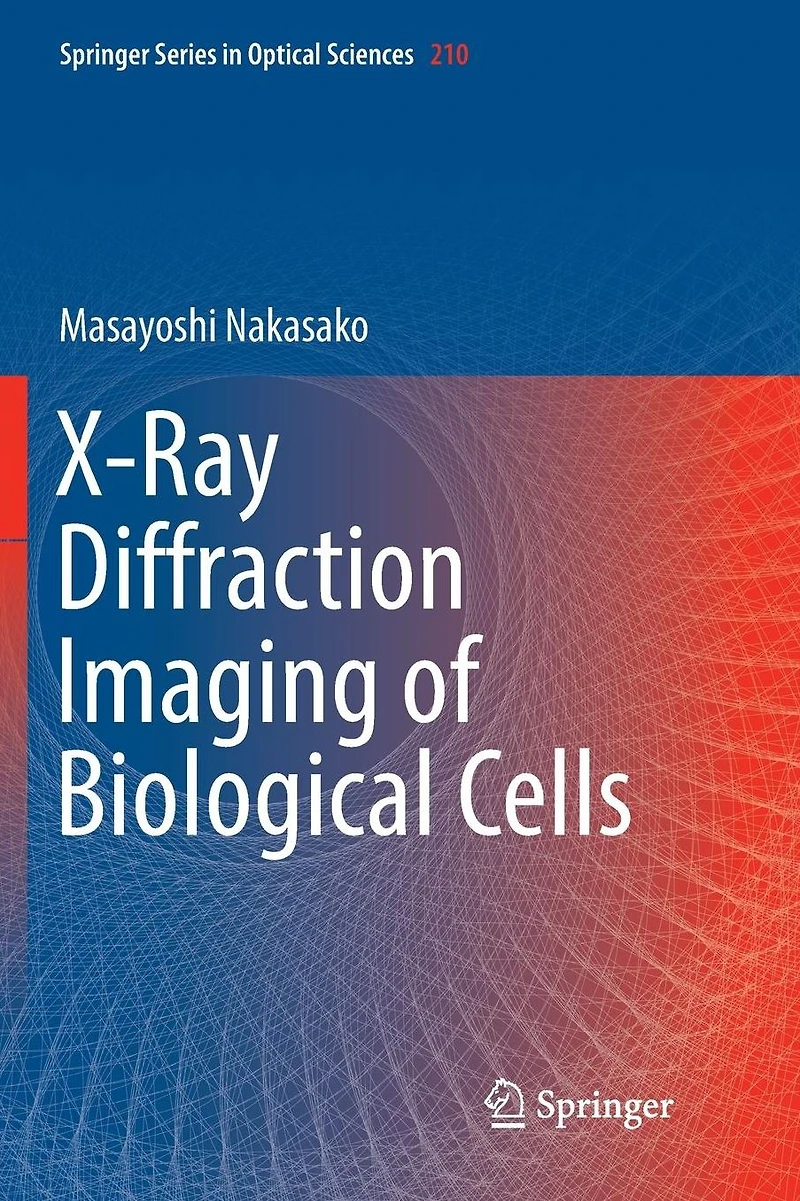
In this book, the author describes the development of the experimental diffraction setup and structural analysis of non-crystalline particles from material science and biology. Recent advances in X-ray free electron laser (XFEL)-coherent X-ray diffraction imaging (CXDI) experiments allow for the structural analysis of non-crystalline particles to a resolution of 7 nm, and to a resolution of 20 nm for biological materials. Now XFEL-CXDI marks the dawn of a new era in structural analys of non-crystalline particles with dimensions larger than 100 nm, which was quite impossible in the 20th century. To conduct CXDI experiments in both synchrotron and XFEL facilities, the author has developed apparatuses, named KOTOBUKI-1 and TAKASAGO-6 for cryogenic diffraction experiments on frozen-hydrated non-crystalline particles at around 66 K. At the synchrotron facility, cryogenic diffraction experiments dramatically reduce radiation damage of specimen particles and allow tomography CXDI experiments. In addition, in XFEL experiments, non-crystalline particles scattered on thin support membranes and flash-cooled can be used to efficiently increase the rate of XFEL pulses. The rate, which depends on the number density of scattered particles and the size of X-ray beams, is currently 20-90%, probably the world record in XFEL-CXDI experiments. The experiment setups and results are introduced in this book. The author has also developed software suitable for efficiently processing of diffraction patterns and retrieving electron density maps of specimen particles based on the diffraction theory used in CXDI.
In this book, the author describes the development of the experimental diffraction setup and structural analysis of non-crystalline particles from material science and biology. Recent advances in X-ray free electron laser (XFEL)-coherent X-ray diffraction imaging (CXDI) experiments allow for the structural analysis of non-crystalline particles to a resolution of 7 nm, and to a resolution of 20 nm for biological materials. Now XFEL-CXDI marks the dawn of a new era in structural analys of non-crystalline particles with dimensions larger than 100 nm, which was quite impossible in the 20th century. To conduct CXDI experiments in both synchrotron and XFEL facilities, the author has developed apparatuses, named KOTOBUKI-1 and TAKASAGO-6 for cryogenic diffraction experiments on frozen-hydrated non-crystalline particles at around 66 K. At the synchrotron facility, cryogenic diffraction experiments dramatically reduce radiation damage of specimen particles and allow tomography CXDI experiments. In addition, in XFEL experiments, non-crystalline particles scattered on thin support membranes and flash-cooled can be used to efficiently increase the rate of XFEL pulses. The rate, which depends on the number density of scattered particles and the size of X-ray beams, is currently 20-90%, probably the world record in XFEL-CXDI experiments. The experiment setups and results are introduced in this book. The author has also developed software suitable for efficiently processing of diffraction patterns and retrieving electron density maps of specimen particles based on the diffraction theory used in CXDI.
Shop Similar Products











Find at Mall of America® in Bloomington, MN
Visit at Mall of America® in Bloomington, MN