


Home
Why the Mind-Body Problem CANNOT Be Solved!: Some Final Conclusions in the Philosophy of Mind
Barnes and Noble
Loading Inventory...
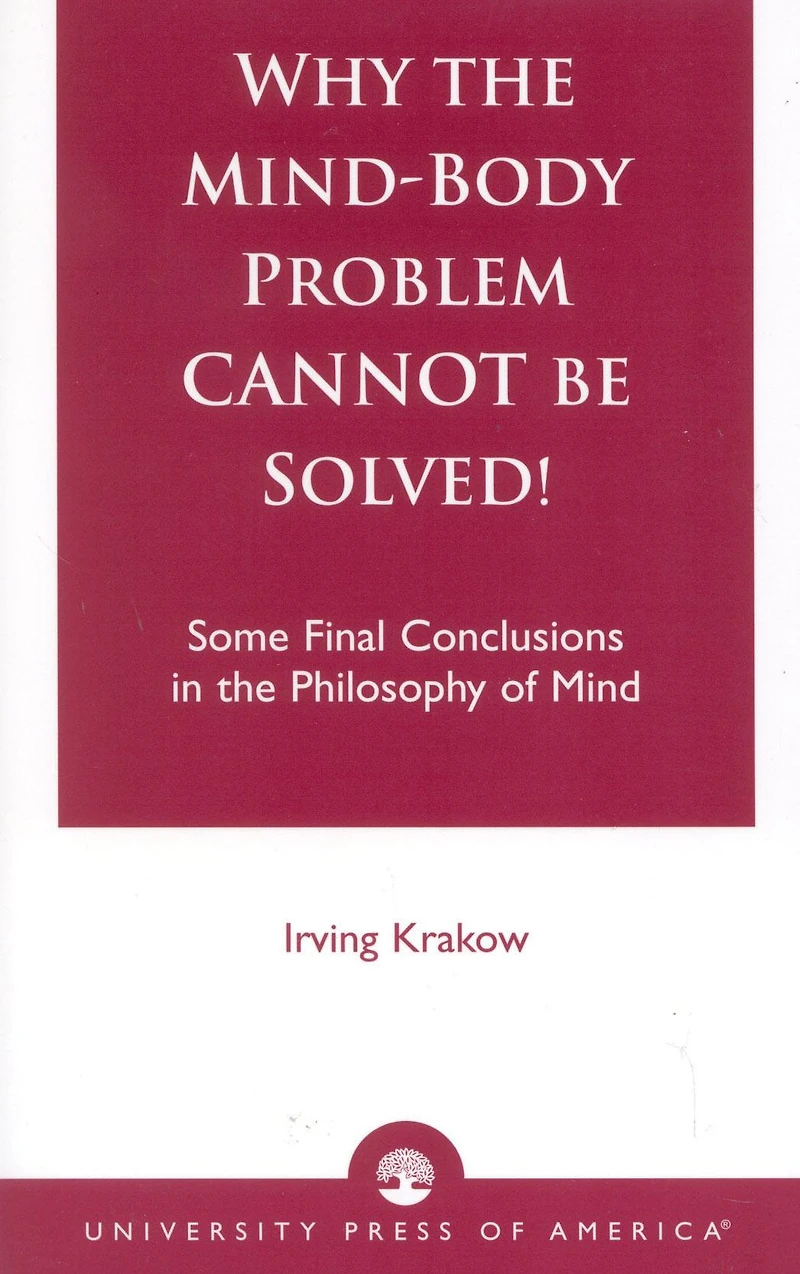
Why the Mind-Body Problem CANNOT Be Solved!: Some Final Conclusions in the Philosophy of Mind in Bloomington, MN
By Barnes & Noble
Current price: $65.99

Why the Mind-Body Problem CANNOT Be Solved!: Some Final Conclusions in the Philosophy of Mind in Bloomington, MN
Current price: $65.99
Loading Inventory...
Size: Paperback
In Why the Mind-Body Problem CANNOT Be Solved, Irving Krakow shows that a satisfactory scientific explanation of conscious experience isn't possible for methodological and semantic reasons. The reason is that sentences about conscious experience cannot be deduced from sentences about the brain's neurology without using brain-mind correlations. Using the fact of brain-mind correlation in appropriate ways, along with conceptual analysis, Krakow shows why identity theory is wrong; why Churchland's reductionism is wrong; why the concept of mental causation is incoherent; why parallelism is empirically true; why functionalism is incoherent; why McGinn's "Property P" of the brain is misconceived; and why Libet's view of free-will is mistaken. The net result of Krakow's examination is, that a good deal of thinking about these fundamental issues needs to be reworked.
In Why the Mind-Body Problem CANNOT Be Solved, Irving Krakow shows that a satisfactory scientific explanation of conscious experience isn't possible for methodological and semantic reasons. The reason is that sentences about conscious experience cannot be deduced from sentences about the brain's neurology without using brain-mind correlations. Using the fact of brain-mind correlation in appropriate ways, along with conceptual analysis, Krakow shows why identity theory is wrong; why Churchland's reductionism is wrong; why the concept of mental causation is incoherent; why parallelism is empirically true; why functionalism is incoherent; why McGinn's "Property P" of the brain is misconceived; and why Libet's view of free-will is mistaken. The net result of Krakow's examination is, that a good deal of thinking about these fundamental issues needs to be reworked.
Shop Similar Products











Find at Mall of America® in Bloomington, MN
Visit at Mall of America® in Bloomington, MN