


Home
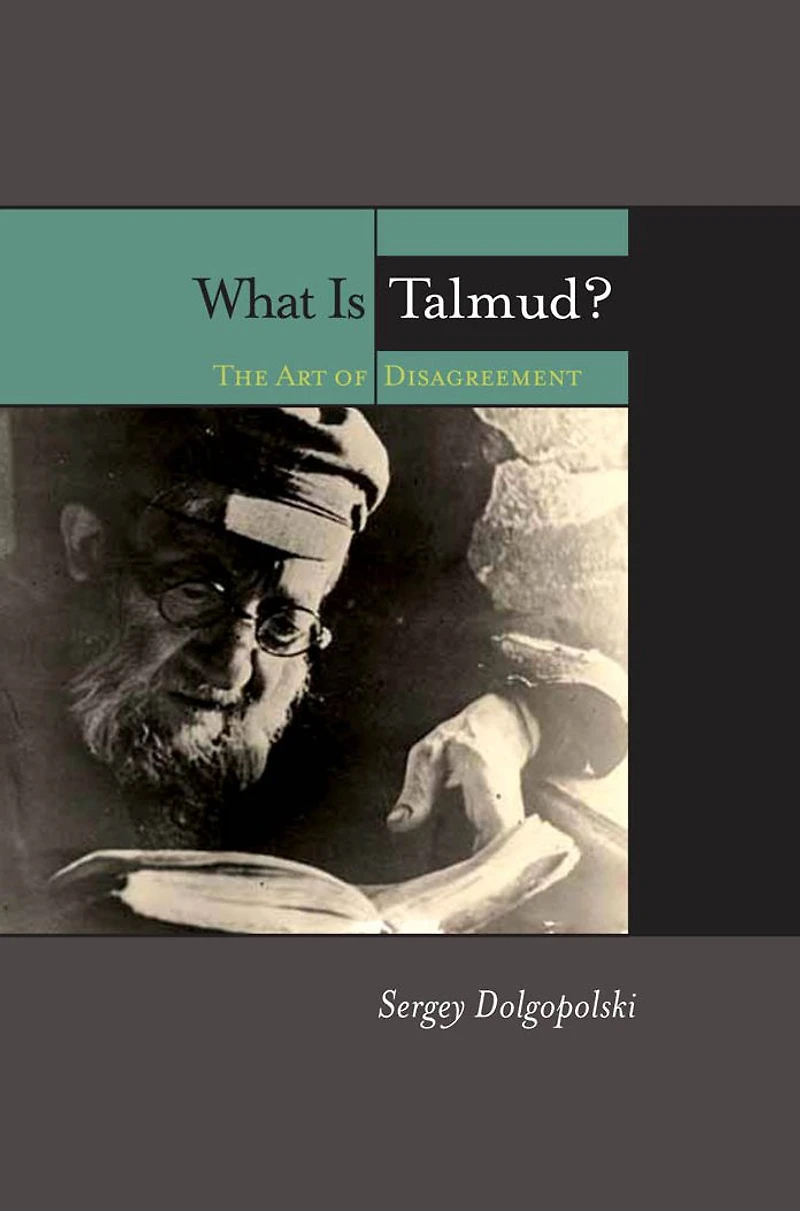
What Is Talmud?: The Art of Disagreement
Barnes and Noble
Loading Inventory...
What Is Talmud?: The Art of Disagreement in Bloomington, MN
By Barnes & Noble
Current price: $90.99

What Is Talmud?: The Art of Disagreement in Bloomington, MN
Current price: $90.99
Loading Inventory...
Size: EBook
True disagreements are hard to achieve, and even harder to maintain, for the ghost of final agreement constantly haunts them. The Babylonian Talmud, however, escapes from that ghost of agreement, and provokes unsettling questions: Are there any conditions under which disagreement might constitute a genuine relationship between minds? Are disagreements always only temporary steps toward final agreement? Must a community of disagreement always imply agreement, as in an agreement to disagree? What is Talmud? rethinks the task of philological, literary, historical, and cultural analysis of the Talmud. It introduces an aspect of this task that has best been approximated by the philosophical, anthropological, and ontological interrogation of human being in relationship to the Other-whether animal, divine, or human. In both engagement and disengagement with post-Heideggerian traditions of thought, Sergey Dogopolski complements philological-historical and cultural approaches to the Talmud with a rigorous anthropological, ontological, and Talmudic inquiry. He redefines the place of the Talmud and its study, both traditional and academic, in the intellectual map of the West, arguing that Talmud is a scholarly art of its own and represents a fundamental intellectual discipline, not a mere application of logical, grammatical, or even rhetorical arts for the purpose of textual hermeneutics. In Talmudic intellectual art, disagreement is a fundamental category. What Is Talmud? rediscovers disagreement as the ultimate condition of finite human existence or co-existence.
True disagreements are hard to achieve, and even harder to maintain, for the ghost of final agreement constantly haunts them. The Babylonian Talmud, however, escapes from that ghost of agreement, and provokes unsettling questions: Are there any conditions under which disagreement might constitute a genuine relationship between minds? Are disagreements always only temporary steps toward final agreement? Must a community of disagreement always imply agreement, as in an agreement to disagree? What is Talmud? rethinks the task of philological, literary, historical, and cultural analysis of the Talmud. It introduces an aspect of this task that has best been approximated by the philosophical, anthropological, and ontological interrogation of human being in relationship to the Other-whether animal, divine, or human. In both engagement and disengagement with post-Heideggerian traditions of thought, Sergey Dogopolski complements philological-historical and cultural approaches to the Talmud with a rigorous anthropological, ontological, and Talmudic inquiry. He redefines the place of the Talmud and its study, both traditional and academic, in the intellectual map of the West, arguing that Talmud is a scholarly art of its own and represents a fundamental intellectual discipline, not a mere application of logical, grammatical, or even rhetorical arts for the purpose of textual hermeneutics. In Talmudic intellectual art, disagreement is a fundamental category. What Is Talmud? rediscovers disagreement as the ultimate condition of finite human existence or co-existence.
Shop Similar Products













Find at Mall of America® in Bloomington, MN
Visit at Mall of America® in Bloomington, MN