


Home
Versions of Censorship
Barnes and Noble
Loading Inventory...
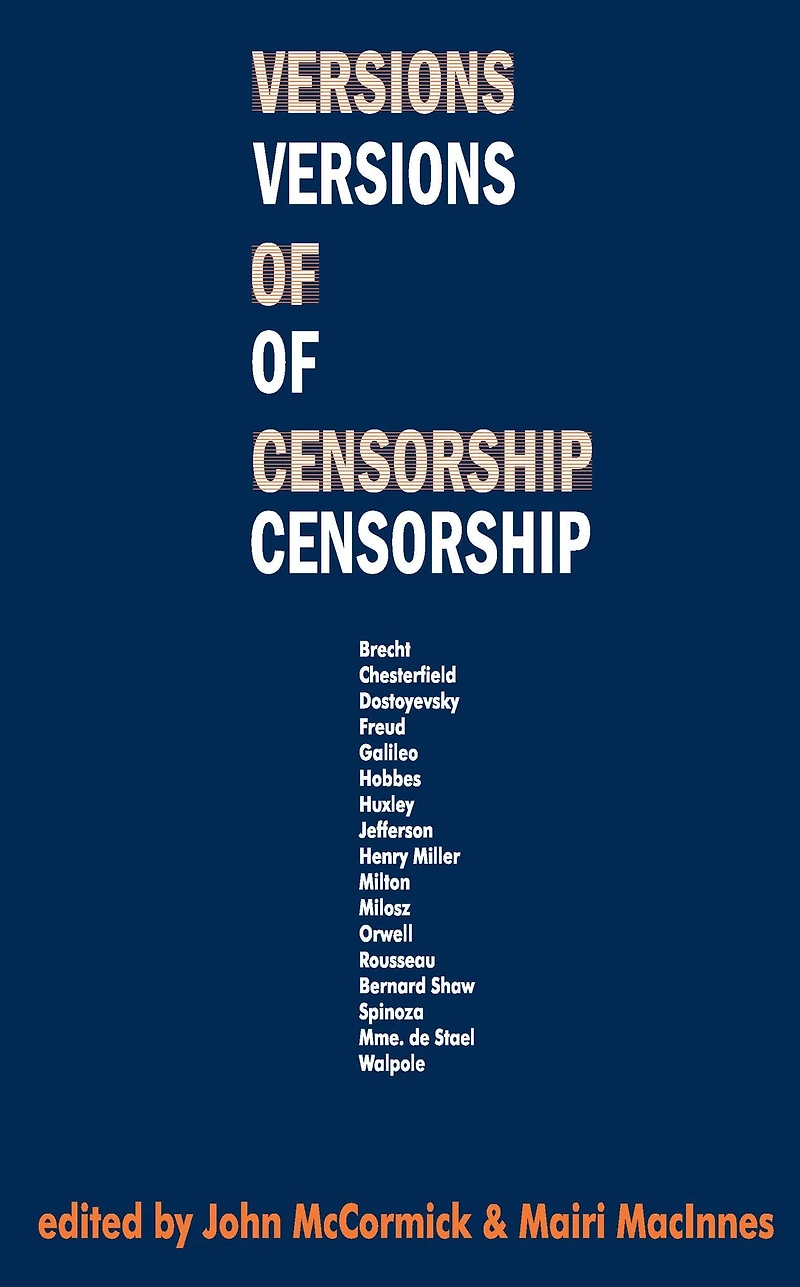
Versions of Censorship in Bloomington, MN
By Barnes & Noble
Current price: $65.99

Versions of Censorship in Bloomington, MN
Current price: $65.99
Loading Inventory...
Size: EBook
Censorship and all it implies in terms both of our historical understanding and of issues of enormous moment in contemporary life defies brief definition because it is an idea that always engages our prejudices, penetrates to the dim regions where our manners and mores take form, and shapes our attitude to the rule law, while at the same time the responses it evokes, whether pernicious or benevolent, depend upon the actualities of the historical moment. Censorship is fascinating because its theory demands some decision on its practice whenever there is an intellectual or political crisis; it is a measure of individual rationality and liberalism. History, which has accelerated so powerfully in recent decades, has diffused our attention, and we tend to overlook the most urgent of the threats to ourselves from ourselves.Censorship is one of the gauges of civilization, and it has always aroused men's most passionate and partisan feelings. The issues involved exploded into the modern world with John Milton's Areopagitica in 1644, and have become ever more pressing as our world has grown smaller and smaller. This anthology is therefore of urgent relevance to our own lives and times.Milton's thesis rests upon the issue of religious belief, and it introduces the book's first part, "Censorship and Belief." With "Censorship and Fact," the book moves to the conflict of the interests of science and freedom of speech with those of the state. In "Censorship and the Imagination," the issue turns on the question of what art is and how it functions in society. And, finally, comes "Self-Censorship," with Dostoievsky and Freud opening up that modern vista where neurosis and politics meet.
Censorship and all it implies in terms both of our historical understanding and of issues of enormous moment in contemporary life defies brief definition because it is an idea that always engages our prejudices, penetrates to the dim regions where our manners and mores take form, and shapes our attitude to the rule law, while at the same time the responses it evokes, whether pernicious or benevolent, depend upon the actualities of the historical moment. Censorship is fascinating because its theory demands some decision on its practice whenever there is an intellectual or political crisis; it is a measure of individual rationality and liberalism. History, which has accelerated so powerfully in recent decades, has diffused our attention, and we tend to overlook the most urgent of the threats to ourselves from ourselves.Censorship is one of the gauges of civilization, and it has always aroused men's most passionate and partisan feelings. The issues involved exploded into the modern world with John Milton's Areopagitica in 1644, and have become ever more pressing as our world has grown smaller and smaller. This anthology is therefore of urgent relevance to our own lives and times.Milton's thesis rests upon the issue of religious belief, and it introduces the book's first part, "Censorship and Belief." With "Censorship and Fact," the book moves to the conflict of the interests of science and freedom of speech with those of the state. In "Censorship and the Imagination," the issue turns on the question of what art is and how it functions in society. And, finally, comes "Self-Censorship," with Dostoievsky and Freud opening up that modern vista where neurosis and politics meet.
Shop Similar Products











Find at Mall of America® in Bloomington, MN
Visit at Mall of America® in Bloomington, MN