


Home
U.S. Research Institutes in the Mathematical Sciences: Assessment and Perspectives
Barnes and Noble
Loading Inventory...
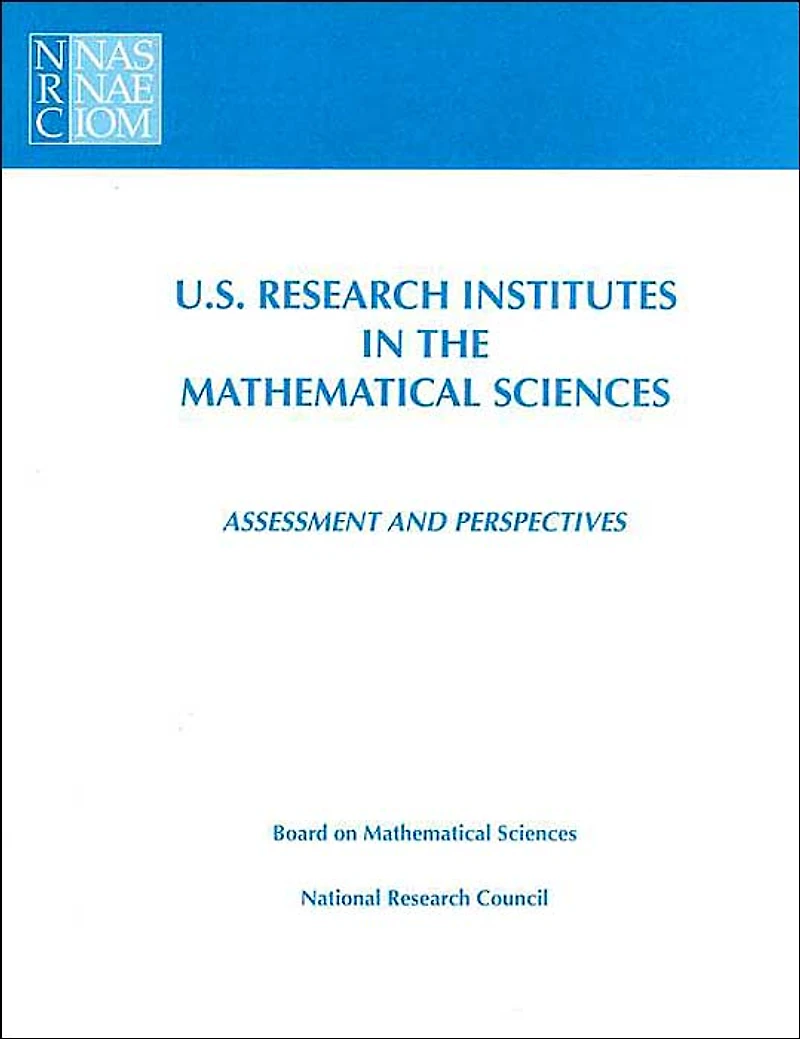
U.S. Research Institutes in the Mathematical Sciences: Assessment and Perspectives in Bloomington, MN
By Barnes & Noble
Current price: $121.00

U.S. Research Institutes in the Mathematical Sciences: Assessment and Perspectives in Bloomington, MN
Current price: $121.00
Loading Inventory...
Size: Paperback
This report is the result of a fast-track study of U.S. mathematical sciences research institutes done in response to a request from the National Science Foundation (NSF). The task of the Committee on U.S. Mathematical Sciences Research Institutes was to address the following three questions: What are the characteristic features of effective mathematical sciences research institutes in the ways that they further mathematical research in the United States, and are there ways that the current configuration can be improved? What kinds of institutes should there be in the United States, and how many does the nation need? How should U.S. mathematical sciences research institutes be configured (with regard to, for example, diversity of operating formats, distribution of mathematical fields, and interinstitute cooperation or coordination) in order to have the nation's mathematical research enterprise continue to be most productive and successful?
This report is the result of a fast-track study of U.S. mathematical sciences research institutes done in response to a request from the National Science Foundation (NSF). The task of the Committee on U.S. Mathematical Sciences Research Institutes was to address the following three questions: What are the characteristic features of effective mathematical sciences research institutes in the ways that they further mathematical research in the United States, and are there ways that the current configuration can be improved? What kinds of institutes should there be in the United States, and how many does the nation need? How should U.S. mathematical sciences research institutes be configured (with regard to, for example, diversity of operating formats, distribution of mathematical fields, and interinstitute cooperation or coordination) in order to have the nation's mathematical research enterprise continue to be most productive and successful?
Shop Similar Products















Find at Mall of America® in Bloomington, MN
Visit at Mall of America® in Bloomington, MN