


Home
Tree Fruit Trade: An Agricultural Economist Reviews Fifty Years of Washington State's Key Orchard Crops
Barnes and Noble
Loading Inventory...
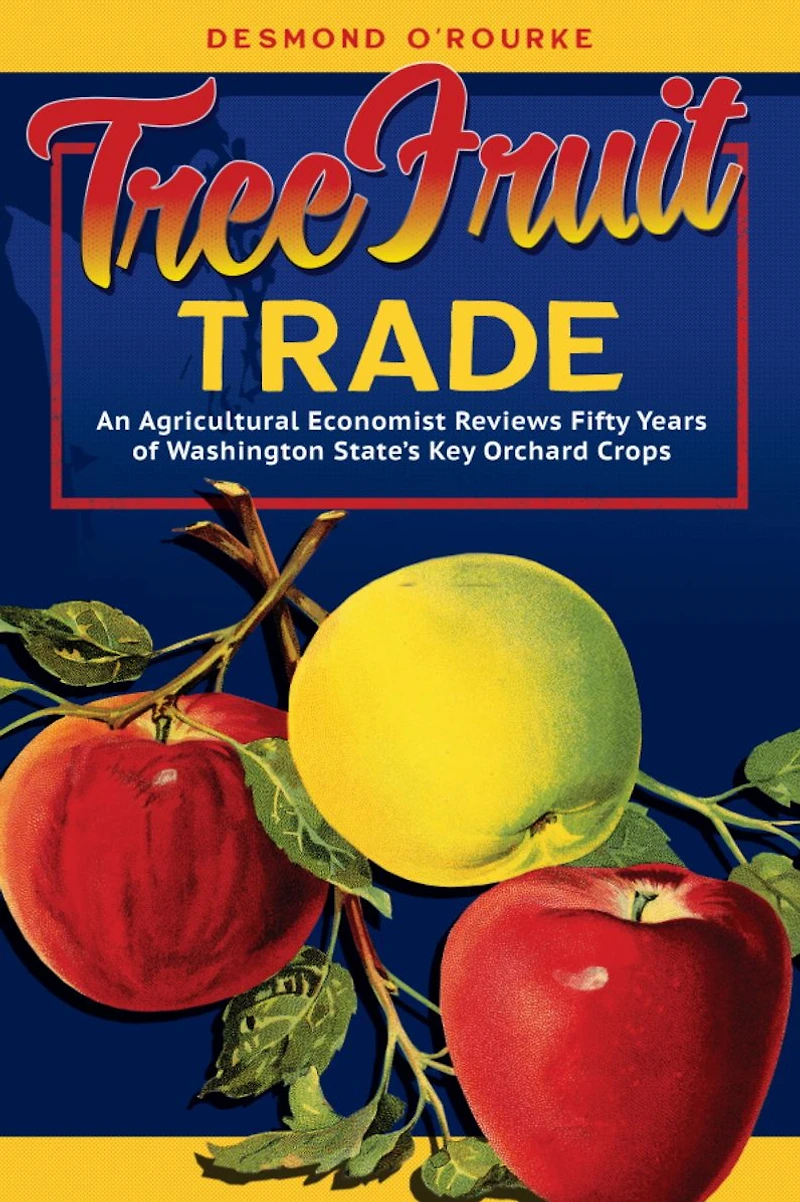
Tree Fruit Trade: An Agricultural Economist Reviews Fifty Years of Washington State's Key Orchard Crops in Bloomington, MN
By Barnes & Noble
Current price: $29.95

Tree Fruit Trade: An Agricultural Economist Reviews Fifty Years of Washington State's Key Orchard Crops in Bloomington, MN
Current price: $29.95
Loading Inventory...
Size: Paperback
When agricultural economist Desmond O'Rourke arrived in Washington in 1970, fruit growers were reeling from a widespread winter freeze, and packing plants were not the shiny, sterile behemoths they are today. One of his first tasks was to participate in a study on packing costs to help find efficiencies. He would spend the next five decades observing, investigating, and analyzing the dynamic state industry that has become one of the world's most competitive in deciduous tree fruit production. O'Rourke wrote Tree Fruit Trade as "a tribute to those who served the industry in the past and as a cautionary tale for those who seek to participate in its future." Amidst plentiful personal anecdotes, he describes major players and organizations, and chronicles challenges like the 1988 Alar scare, changing regulations, food trends, and the Covid-19 pandemic. He discusses the emergence of new threats, from the growth of Walmart to rising competition from China, and explains how new technology has forced family-owned firms to hire specialized employees. He recounts battles to gain foreign market access and the ongoing campaign to ensure adequate labor for a growing agricultural footprint. He analyzes how the availability of adequate water and a large expanse of Columbia Basin flat land allowed the industry to dramatically increase production, achieve new levels of productivity, and design orchards suited to modern tree architecture.
When agricultural economist Desmond O'Rourke arrived in Washington in 1970, fruit growers were reeling from a widespread winter freeze, and packing plants were not the shiny, sterile behemoths they are today. One of his first tasks was to participate in a study on packing costs to help find efficiencies. He would spend the next five decades observing, investigating, and analyzing the dynamic state industry that has become one of the world's most competitive in deciduous tree fruit production. O'Rourke wrote Tree Fruit Trade as "a tribute to those who served the industry in the past and as a cautionary tale for those who seek to participate in its future." Amidst plentiful personal anecdotes, he describes major players and organizations, and chronicles challenges like the 1988 Alar scare, changing regulations, food trends, and the Covid-19 pandemic. He discusses the emergence of new threats, from the growth of Walmart to rising competition from China, and explains how new technology has forced family-owned firms to hire specialized employees. He recounts battles to gain foreign market access and the ongoing campaign to ensure adequate labor for a growing agricultural footprint. He analyzes how the availability of adequate water and a large expanse of Columbia Basin flat land allowed the industry to dramatically increase production, achieve new levels of productivity, and design orchards suited to modern tree architecture.
Shop Similar Products


















Find at Mall of America® in Bloomington, MN
Visit at Mall of America® in Bloomington, MN