


Home
Time Pressure and Stress Human Judgment Decision Making
Barnes and Noble
Loading Inventory...
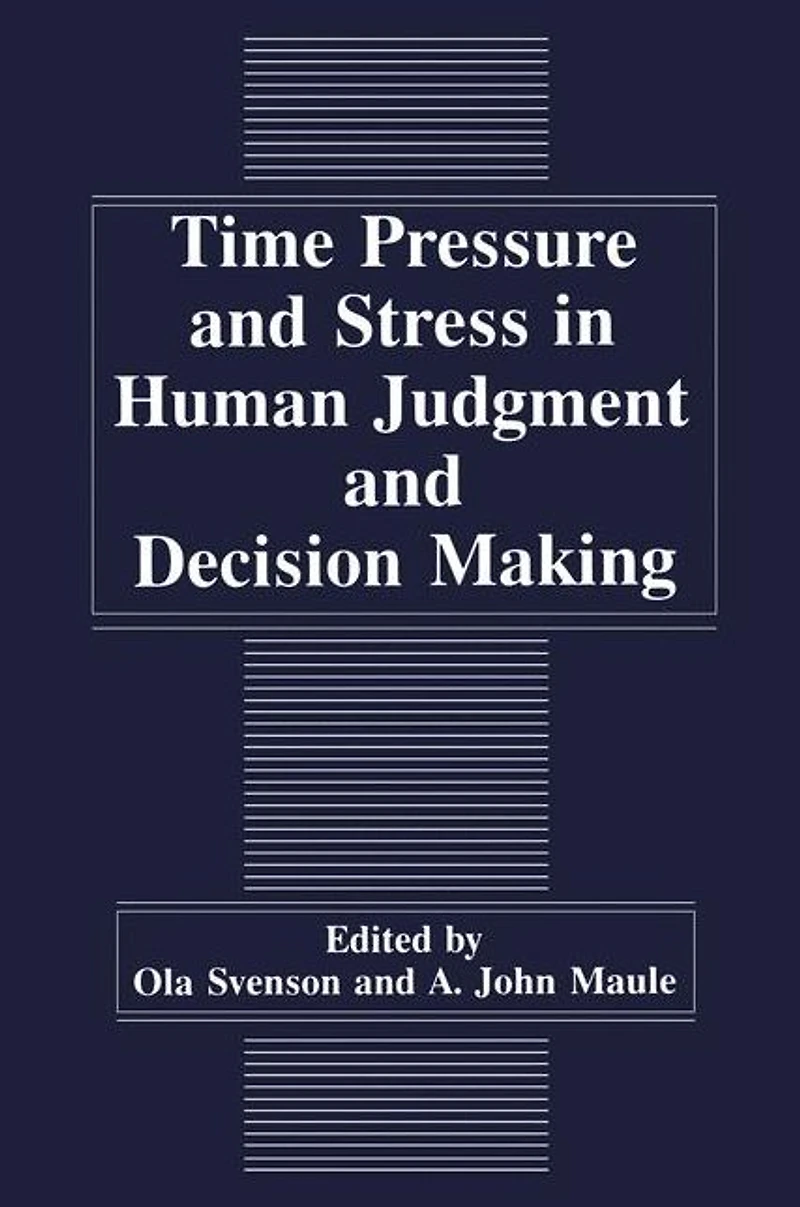
Time Pressure and Stress Human Judgment Decision Making in Bloomington, MN
By Barnes & Noble
Current price: $109.99

Time Pressure and Stress Human Judgment Decision Making in Bloomington, MN
Current price: $109.99
Loading Inventory...
Size: Hardcover
Some years ago we, the editors of this volume, found out about each other's deeply rooted interest in the concept of time, the usage of time, and the effects of shortage of time on human thought and behavior. Since then we have fostered the idea of bringing together different perspectives in this area. We are now, there fore, very content that our idea has materialized in the present volume. There is both anecdotal and empirical evidence to suggest that time constraints may affect behavior. Managers and other professional decision makers frequently identify time pressure as a major constraint on their behavior (Isen berg, 1984). Chamberlain and Zika (1990) provide empirical support for this view, showing that complaints of insufficient time are the most frequently report ed everyday minor stressors or hassles for all groups of people except the elderly. Similarly, studies in occupational settings have identified time pressure as one of the central components of workload (Derrich, 1988; O'Donnel & Eggemeier, 1986).
Some years ago we, the editors of this volume, found out about each other's deeply rooted interest in the concept of time, the usage of time, and the effects of shortage of time on human thought and behavior. Since then we have fostered the idea of bringing together different perspectives in this area. We are now, there fore, very content that our idea has materialized in the present volume. There is both anecdotal and empirical evidence to suggest that time constraints may affect behavior. Managers and other professional decision makers frequently identify time pressure as a major constraint on their behavior (Isen berg, 1984). Chamberlain and Zika (1990) provide empirical support for this view, showing that complaints of insufficient time are the most frequently report ed everyday minor stressors or hassles for all groups of people except the elderly. Similarly, studies in occupational settings have identified time pressure as one of the central components of workload (Derrich, 1988; O'Donnel & Eggemeier, 1986).
Shop Similar Products















Find at Mall of America® in Bloomington, MN
Visit at Mall of America® in Bloomington, MN