


Home
Three Dialogues between Hylas and Philonous, in Opposition to Sceptics and Athei
Barnes and Noble
Loading Inventory...
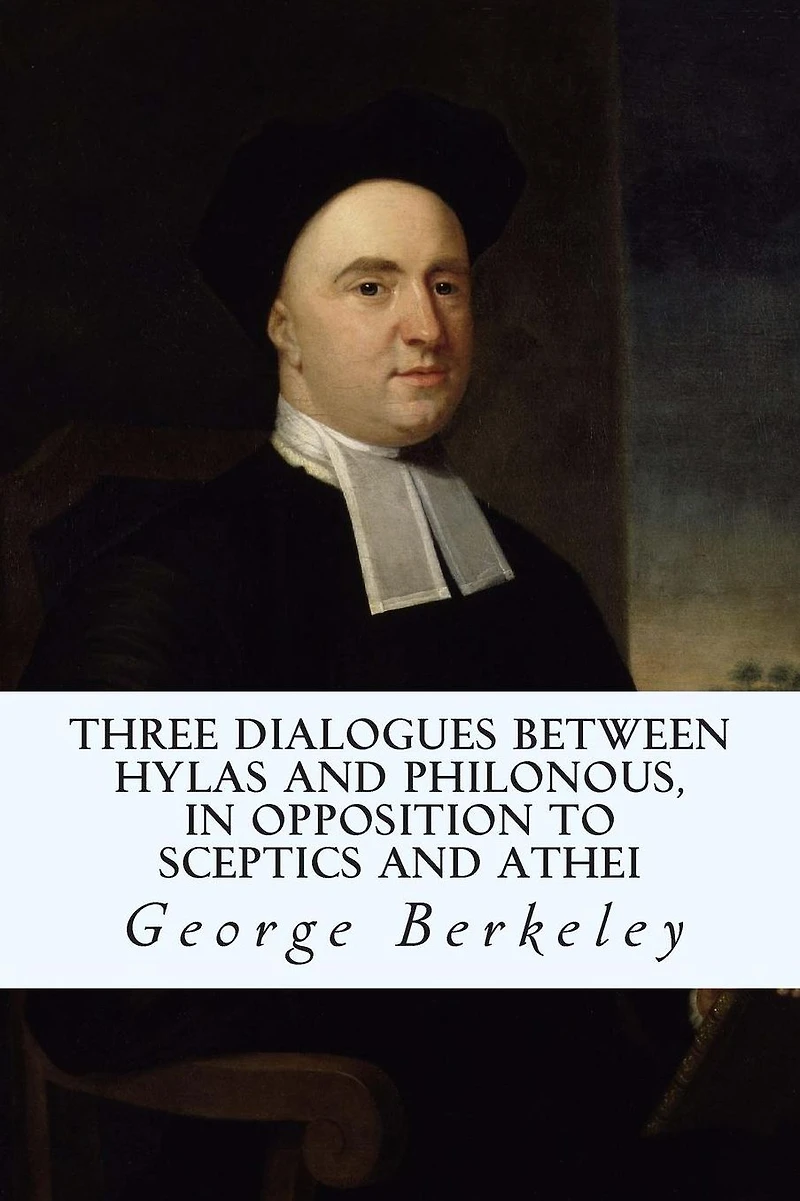
Three Dialogues between Hylas and Philonous, in Opposition to Sceptics and Athei in Bloomington, MN
By Barnes & Noble
Current price: $6.35

Three Dialogues between Hylas and Philonous, in Opposition to Sceptics and Athei in Bloomington, MN
Current price: $6.35
Loading Inventory...
Size: Paperback
Three Dialogues between Hylas and Philonous, in Opposition to Sceptics and Atheists by George Berkeley (1685-1753). Three Dialogues between Hylas and Philonous, or simply Three Dialogues, is a 1713 book on metaphysics and idealism written by George Berkeley. Taking the form of a dialogue, the book was written as a response to the criticism Berkeley experienced after publishing A Treatise Concerning the Principles of Human Knowledge. Three important concepts discussed in the Three Dialogues are perceptual relativity, the conceivability/master argument[a] and Berkeley's phenomenalism. Perceptual relativity argues that the same object can appear to have different characteristics depending on the observer's perspective. Since objective features of objects cannot change without an inherent change in the object itself, shape must not be an objective feature.
Three Dialogues between Hylas and Philonous, in Opposition to Sceptics and Atheists by George Berkeley (1685-1753). Three Dialogues between Hylas and Philonous, or simply Three Dialogues, is a 1713 book on metaphysics and idealism written by George Berkeley. Taking the form of a dialogue, the book was written as a response to the criticism Berkeley experienced after publishing A Treatise Concerning the Principles of Human Knowledge. Three important concepts discussed in the Three Dialogues are perceptual relativity, the conceivability/master argument[a] and Berkeley's phenomenalism. Perceptual relativity argues that the same object can appear to have different characteristics depending on the observer's perspective. Since objective features of objects cannot change without an inherent change in the object itself, shape must not be an objective feature.
Shop Similar Products
![Three Dialogues Between Hylas and Philonous. Opposition to Sceptics Atheists. By George Berkley [sic],](https://cdn.mall.adeptmind.ai/https%253A%252F%252Fcdn.shopify.com%252Fs%252Ffiles%252F1%252F0674%252F5433%252F7265%252Ffiles%252F9781385621639_p0.jpg_medium.webp)









Find at Mall of America® in Bloomington, MN
Visit at Mall of America® in Bloomington, MN