


Home
Thomas Tooke and the Monetary Thought of Classical Economics
Barnes and Noble
Loading Inventory...
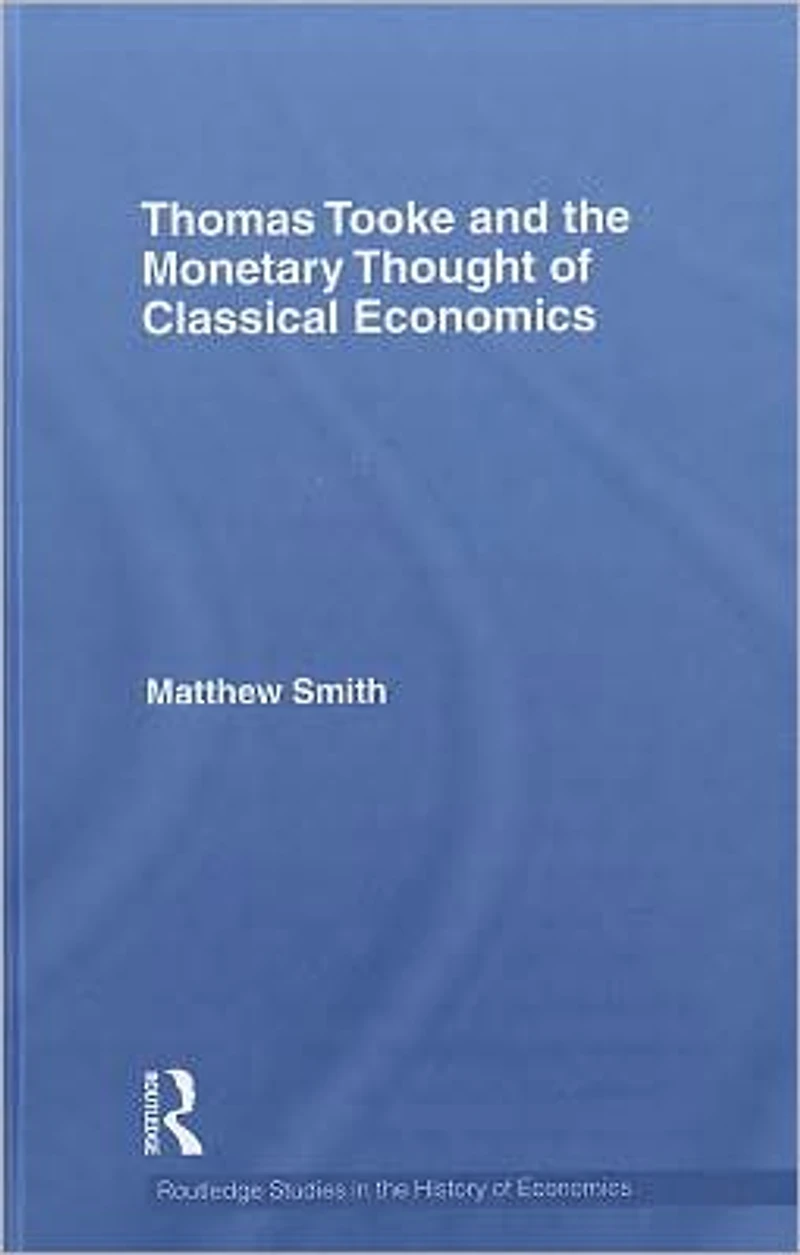
Thomas Tooke and the Monetary Thought of Classical Economics in Bloomington, MN
By Barnes & Noble
Current price: $140.00

Thomas Tooke and the Monetary Thought of Classical Economics in Bloomington, MN
Current price: $140.00
Loading Inventory...
Size: Hardcover
This study provides a comprehensive account and reconsideration of the contribution to political economy of Thomas Tooke (1774-1858). It clarifies Tooke’s monetary thought and its legacy to modern economics. The study shows Tooke possessed a rich and extensive political economy, covering many aspects of economic activity relevant to key policy issues. Tooke’s political economy is shown to be a unified and coherent body of intellectual thought in the classical tradition which, like most of his nineteenth-century contemporaries, was much influenced by Adam Smith’s economics. More particularly, Tooke’s monetary thought, especially his novel banking school theory, is shown to be theoretically coherent from the standpoint of nineteenth-century classical economics. It is also shown that besides contributing toward a better understanding of the behaviour of monetary systems in general, key elements of Tooke’s banking school theory make an important contribution to explaining distribution, growth and price inflation in modern economics.
This study provides a comprehensive account and reconsideration of the contribution to political economy of Thomas Tooke (1774-1858). It clarifies Tooke’s monetary thought and its legacy to modern economics. The study shows Tooke possessed a rich and extensive political economy, covering many aspects of economic activity relevant to key policy issues. Tooke’s political economy is shown to be a unified and coherent body of intellectual thought in the classical tradition which, like most of his nineteenth-century contemporaries, was much influenced by Adam Smith’s economics. More particularly, Tooke’s monetary thought, especially his novel banking school theory, is shown to be theoretically coherent from the standpoint of nineteenth-century classical economics. It is also shown that besides contributing toward a better understanding of the behaviour of monetary systems in general, key elements of Tooke’s banking school theory make an important contribution to explaining distribution, growth and price inflation in modern economics.
Shop Similar Products








Find at Mall of America® in Bloomington, MN
Visit at Mall of America® in Bloomington, MN