


Home
the Weight of Gold: Mining and Environment Ontario, Canada, 1909-1929
Barnes and Noble
Loading Inventory...
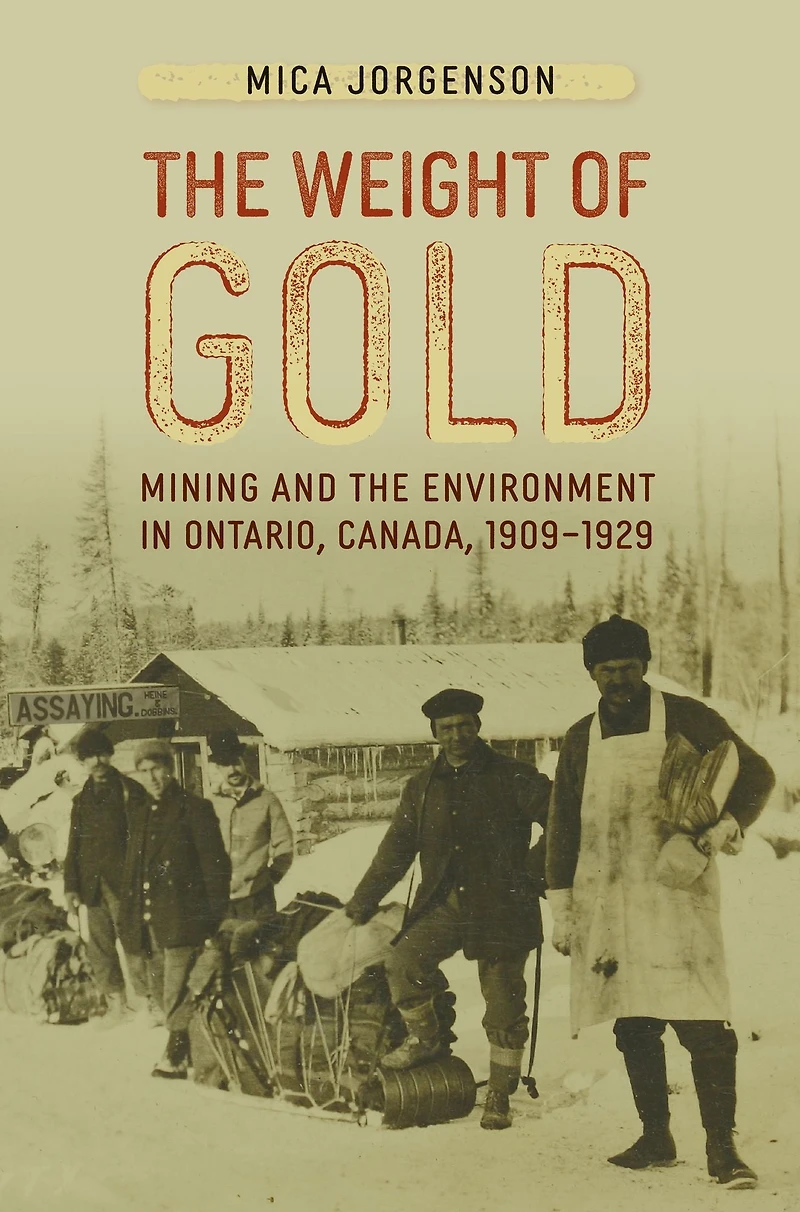
the Weight of Gold: Mining and Environment Ontario, Canada, 1909-1929 in Bloomington, MN
By Barnes & Noble
Current price: $39.95

the Weight of Gold: Mining and Environment Ontario, Canada, 1909-1929 in Bloomington, MN
Current price: $39.95
Loading Inventory...
Size: EBook
Mining in North America has long been criticized for its impact on the natural environment. Mica Jorgenson’s The Weight of Gold explores the history of Ontario, Canada’s rise to prominence in the gold mining industry, while detailing a series of environmental crises related to extraction activities. In Ontario in 1909, the discovery of exceptionally rich hard rock gold deposits in the Abitibi region in the north precipitated industrial development modeled on precedents in Australia, South Africa, and the United States. By the late 1920s, Ontario’s mines had reached their maturity, and in 1928, Minister of Mines Charles McRae called Canada “the mineral treasure house to [the] world.” Mining companies increasingly depended upon their ability to redistribute the burdens of mining onto surrounding communities—a strategy they continue to use today—both at home and abroad. Jorgenson connects Canadian gold mining to its international context, revealing that Ontario’s gold mines informed extractive knowledge which would go on to shape Canada’s mining industry over the next century.
Mining in North America has long been criticized for its impact on the natural environment. Mica Jorgenson’s The Weight of Gold explores the history of Ontario, Canada’s rise to prominence in the gold mining industry, while detailing a series of environmental crises related to extraction activities. In Ontario in 1909, the discovery of exceptionally rich hard rock gold deposits in the Abitibi region in the north precipitated industrial development modeled on precedents in Australia, South Africa, and the United States. By the late 1920s, Ontario’s mines had reached their maturity, and in 1928, Minister of Mines Charles McRae called Canada “the mineral treasure house to [the] world.” Mining companies increasingly depended upon their ability to redistribute the burdens of mining onto surrounding communities—a strategy they continue to use today—both at home and abroad. Jorgenson connects Canadian gold mining to its international context, revealing that Ontario’s gold mines informed extractive knowledge which would go on to shape Canada’s mining industry over the next century.
Shop Similar Products













Find at Mall of America® in Bloomington, MN
Visit at Mall of America® in Bloomington, MN