


Home
the Shared Space: Two Circuits of Urban Economy Underdeveloped Countries
Barnes and Noble
Loading Inventory...
the Shared Space: Two Circuits of Urban Economy Underdeveloped Countries in Bloomington, MN
By Barnes & Noble
Current price: $55.99

the Shared Space: Two Circuits of Urban Economy Underdeveloped Countries in Bloomington, MN
Current price: $55.99
Loading Inventory...
Size: EBook
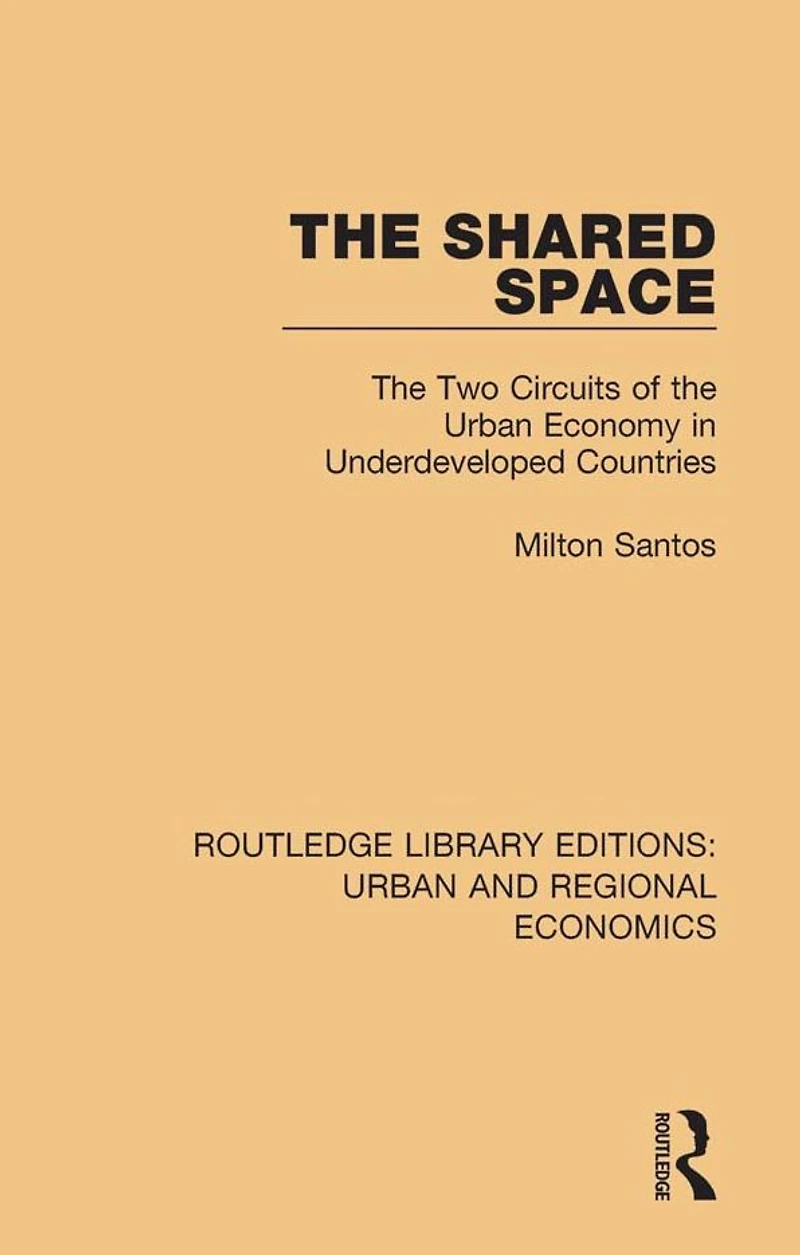
Originally published in 1979. In this forcefully argued book, Milton Santos shows that contemporary explanations of urbanization and spatial organization in underdeveloped countries are inadequate. This failure is attributable to their origins in theories elaborated to explain the development of advanced Western societies. Santos' work provides the basis for the new theory which is so badly needed. He describes the urban economy in these countries in terms of two circuits of activity – an upper circuit consisting of those enterprises and structures which are based on modern technology and are oriented towards the advanced capitalist world, and a lower circuit comprised of more traditional processes and forms of exchange. The dialectical interaction of these two circuits is seen to generate the patterns of growth, forms of State intervention and, above all, the spatial organization characteristic of Third World economies. This was a revision and translation of L’Espace Partagé (1975).
Originally published in 1979. In this forcefully argued book, Milton Santos shows that contemporary explanations of urbanization and spatial organization in underdeveloped countries are inadequate. This failure is attributable to their origins in theories elaborated to explain the development of advanced Western societies. Santos' work provides the basis for the new theory which is so badly needed. He describes the urban economy in these countries in terms of two circuits of activity – an upper circuit consisting of those enterprises and structures which are based on modern technology and are oriented towards the advanced capitalist world, and a lower circuit comprised of more traditional processes and forms of exchange. The dialectical interaction of these two circuits is seen to generate the patterns of growth, forms of State intervention and, above all, the spatial organization characteristic of Third World economies. This was a revision and translation of L’Espace Partagé (1975).
Shop Similar Products










Find at Mall of America® in Bloomington, MN
Visit at Mall of America® in Bloomington, MN