


Home
The Science and Art of Dental Ceramics - Volume I: The Nature of Dental Ceramics and their Clinical Use
Barnes and Noble
Loading Inventory...
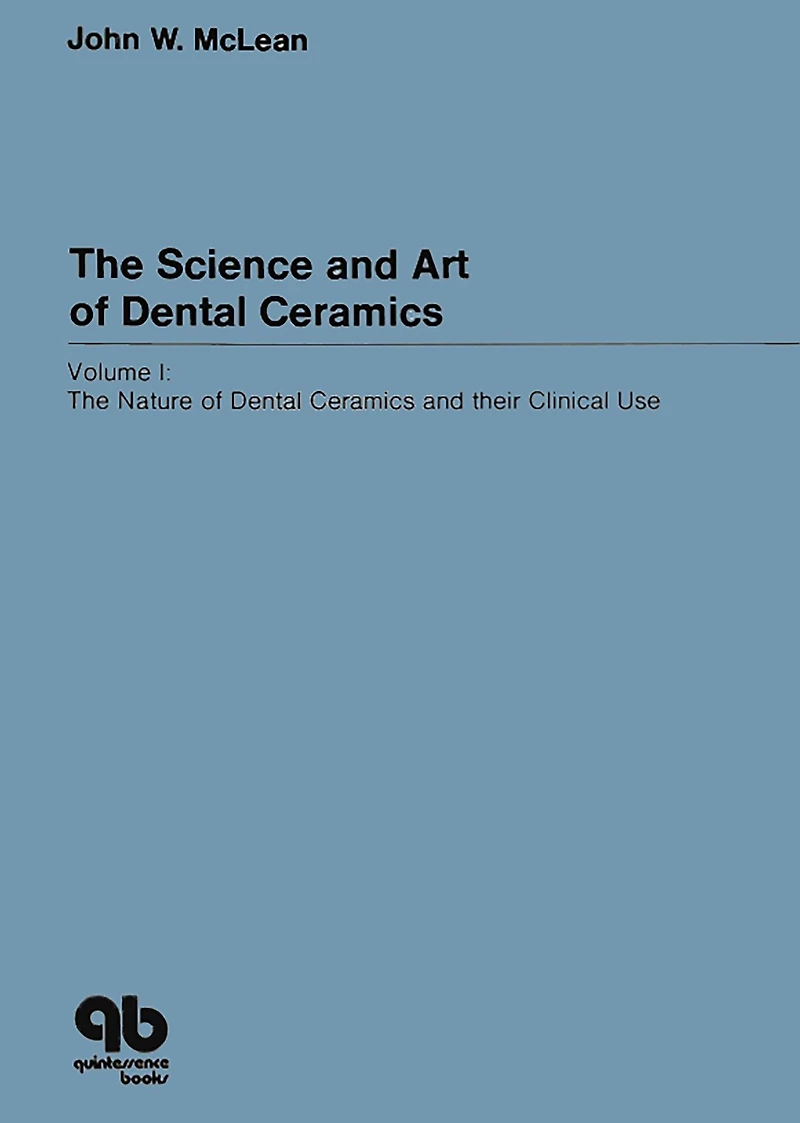
The Science and Art of Dental Ceramics - Volume I: The Nature of Dental Ceramics and their Clinical Use in Bloomington, MN
By Barnes & Noble
Current price: $77.99

The Science and Art of Dental Ceramics - Volume I: The Nature of Dental Ceramics and their Clinical Use in Bloomington, MN
Current price: $77.99
Loading Inventory...
Size: EBook
There is a no more rewarding experience in restorative dentistry than to duplicate to perfection the colour, texture and surface anatomy of the human tooth. Dental porcelain is the closest match to tooth enamel of all our restorative materials but is perhaps the most difficult to use in dental practice. A study of the science of dental porcelain will enable the dentist or technician to perfect his art since it develops an increasing awareness of the fundamental problems in construction. Preparation design, the stresses developing in porcelain restorations, the influence of opaque backgrounds on colour, surface reflectivity and light transmission in crowns are some of the complex factors that influence the success of a porcelain veneer restoration. A survey of metals, bonding systems, cements and impression materials will enable the clinician to select his materials with greater confidence. New research on the shoulder preparation for the veneer crown also sheds light on the controversy of the bevel versus the butt joint. The author has attempted to rationalise the use of both metal and alumina reinforced ceramics and to show how no ingle system can be applied universally if optimum aesthetics is to be achieved.
There is a no more rewarding experience in restorative dentistry than to duplicate to perfection the colour, texture and surface anatomy of the human tooth. Dental porcelain is the closest match to tooth enamel of all our restorative materials but is perhaps the most difficult to use in dental practice. A study of the science of dental porcelain will enable the dentist or technician to perfect his art since it develops an increasing awareness of the fundamental problems in construction. Preparation design, the stresses developing in porcelain restorations, the influence of opaque backgrounds on colour, surface reflectivity and light transmission in crowns are some of the complex factors that influence the success of a porcelain veneer restoration. A survey of metals, bonding systems, cements and impression materials will enable the clinician to select his materials with greater confidence. New research on the shoulder preparation for the veneer crown also sheds light on the controversy of the bevel versus the butt joint. The author has attempted to rationalise the use of both metal and alumina reinforced ceramics and to show how no ingle system can be applied universally if optimum aesthetics is to be achieved.
Shop Similar Products

















Find at Mall of America® in Bloomington, MN
Visit at Mall of America® in Bloomington, MN