


Home
The Republic of China: 1912 to 1949
Barnes and Noble
Loading Inventory...
The Republic of China: 1912 to 1949 in Bloomington, MN
Current price: $35.00

The Republic of China: 1912 to 1949 in Bloomington, MN
Current price: $35.00
Loading Inventory...
Size: Hardcover
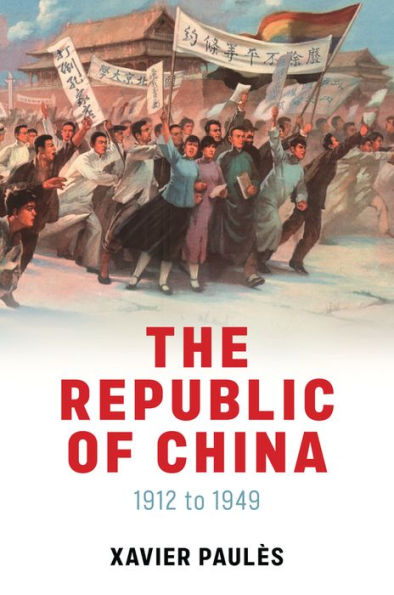
The declaration of the Republic of China in 1912 signalled an entirely new era. Not only did the revolution of 1911–12 bring about the fall of the Qing dynasty: it also brought an end to the entire series of dynasties that had marked Chinese history for over two millennia. Radical reforms since 1901 had culminated in the ending of the political status quo and the rejection of the very idea of empire.
Drawing on the most recent historical research, Xavier Paulès provides a comprehensive account of the crucial but chaotic period that stretched from the founding of the Republic of China in 1912 to the civil war of 1945–9, which ended with the victory of the Chinese Communist Party (CCP) and the establishment of the People's Republic of China. Paulès challenges various common claims about this period. It is often assumed that the CCP was instrumental in bringing about key events by skilfully mobilizing the population to serve its ends. Paulès argues, by contrast, that the CCP took advantage of fortunate circumstances and that, even then, it was only in a position to challenge the supremacy of the Guomindang as late as 1944. His analysis takes a broad view by considering the importance of political actors both within and external to the revolutionary movement, enabling him to offer a balanced interpretation of the republican period which sheds new light on China’s political, cultural and economic development.
Drawing on the most recent historical research, Xavier Paulès provides a comprehensive account of the crucial but chaotic period that stretched from the founding of the Republic of China in 1912 to the civil war of 1945–9, which ended with the victory of the Chinese Communist Party (CCP) and the establishment of the People's Republic of China. Paulès challenges various common claims about this period. It is often assumed that the CCP was instrumental in bringing about key events by skilfully mobilizing the population to serve its ends. Paulès argues, by contrast, that the CCP took advantage of fortunate circumstances and that, even then, it was only in a position to challenge the supremacy of the Guomindang as late as 1944. His analysis takes a broad view by considering the importance of political actors both within and external to the revolutionary movement, enabling him to offer a balanced interpretation of the republican period which sheds new light on China’s political, cultural and economic development.
The declaration of the Republic of China in 1912 signalled an entirely new era. Not only did the revolution of 1911–12 bring about the fall of the Qing dynasty: it also brought an end to the entire series of dynasties that had marked Chinese history for over two millennia. Radical reforms since 1901 had culminated in the ending of the political status quo and the rejection of the very idea of empire.
Drawing on the most recent historical research, Xavier Paulès provides a comprehensive account of the crucial but chaotic period that stretched from the founding of the Republic of China in 1912 to the civil war of 1945–9, which ended with the victory of the Chinese Communist Party (CCP) and the establishment of the People's Republic of China. Paulès challenges various common claims about this period. It is often assumed that the CCP was instrumental in bringing about key events by skilfully mobilizing the population to serve its ends. Paulès argues, by contrast, that the CCP took advantage of fortunate circumstances and that, even then, it was only in a position to challenge the supremacy of the Guomindang as late as 1944. His analysis takes a broad view by considering the importance of political actors both within and external to the revolutionary movement, enabling him to offer a balanced interpretation of the republican period which sheds new light on China’s political, cultural and economic development.
Drawing on the most recent historical research, Xavier Paulès provides a comprehensive account of the crucial but chaotic period that stretched from the founding of the Republic of China in 1912 to the civil war of 1945–9, which ended with the victory of the Chinese Communist Party (CCP) and the establishment of the People's Republic of China. Paulès challenges various common claims about this period. It is often assumed that the CCP was instrumental in bringing about key events by skilfully mobilizing the population to serve its ends. Paulès argues, by contrast, that the CCP took advantage of fortunate circumstances and that, even then, it was only in a position to challenge the supremacy of the Guomindang as late as 1944. His analysis takes a broad view by considering the importance of political actors both within and external to the revolutionary movement, enabling him to offer a balanced interpretation of the republican period which sheds new light on China’s political, cultural and economic development.
Shop Similar Products








Find at Mall of America® in Bloomington, MN
Visit at Mall of America® in Bloomington, MN