


Home
The Phoenician Virgins
Barnes and Noble
Loading Inventory...

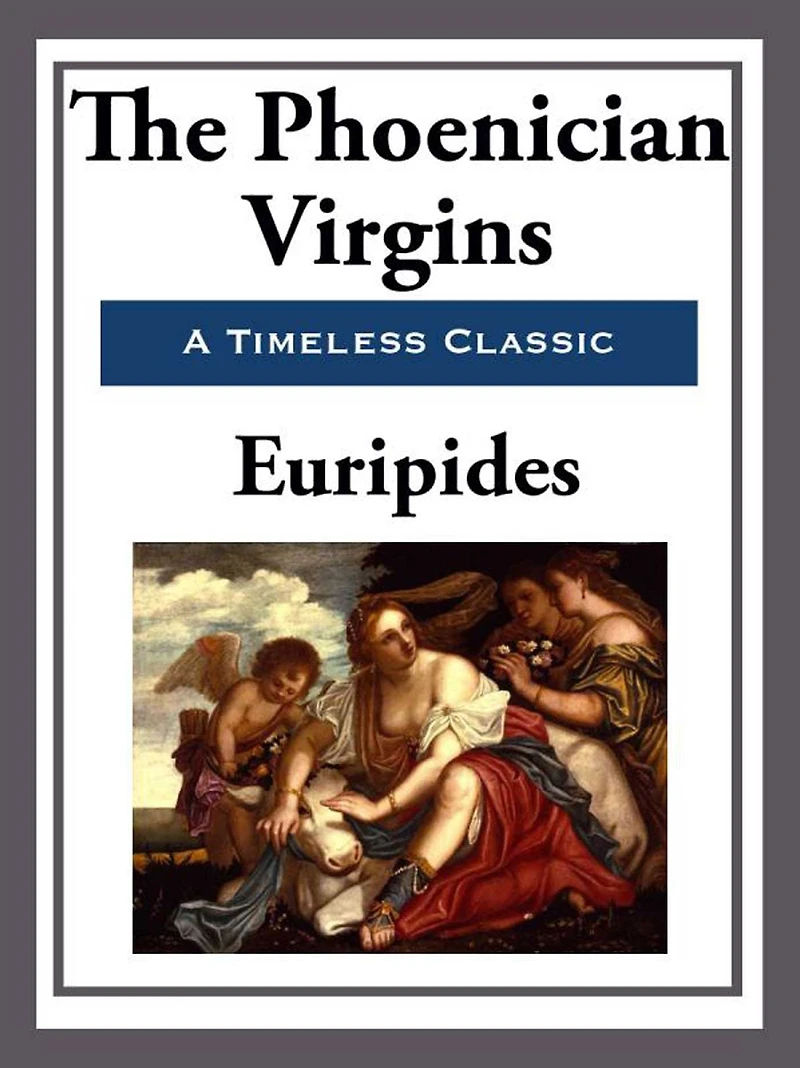
The Phoenician Virgins in Bloomington, MN
By Barnes & Noble
Current price: $6.99

The Phoenician Virgins in Bloomington, MN
Current price: $6.99
Loading Inventory...
Size: Audiobook
This audiobook is narrated by a digital voice.Euripides, one of the three great Greek tragedians was born in Attica probably in 485 B.C. of well-to-do parents. In his youth he cultivated gymnastic pursuits and studied philosophy and rhetoric. Soon after he received recognition for a play that he had written, Euripides left Athens for the court of Archelaus, king of Macedonia. In his tragedies, Euripides represented individuals not as they ought to be but as they are. His excellence lies in the tenderness and pathos with which he invested many of his characters. Euripides' attitude toward the gods was iconoclastic and rationalistic; toward humans-notably his passionate female characters-his attitude was deeply sympathetic. In his dramas, Euripides separated the chorus from the action, which was the first step toward the complete elimination of the chorus. He used the prologue as an introduction and explanation. Although Euripides has been charged with intemperate use of the deus ex machina, by which artifice a god is dragged in abruptly at the end to resolve a situation beyond human powers, he created some of the most unforgettable psychological portraits. Fragments of about fifty-five plays survive; some were discovered as recently as 1906. Among his best-known plays are Alcestis (438 B.C.), Medea and Philoctetes (431 B.C.), Electra (417 B.C.), Iphigenia in Tauris (413 B.C.), The Trojan Women (415 B.C.), and Iphigenia in Aulis Iphigenia (c.405 B.C.). Euripides died in Athens in 406. Shortly after his death his reputation rose and has never diminished.
This audiobook is narrated by a digital voice.Euripides, one of the three great Greek tragedians was born in Attica probably in 485 B.C. of well-to-do parents. In his youth he cultivated gymnastic pursuits and studied philosophy and rhetoric. Soon after he received recognition for a play that he had written, Euripides left Athens for the court of Archelaus, king of Macedonia. In his tragedies, Euripides represented individuals not as they ought to be but as they are. His excellence lies in the tenderness and pathos with which he invested many of his characters. Euripides' attitude toward the gods was iconoclastic and rationalistic; toward humans-notably his passionate female characters-his attitude was deeply sympathetic. In his dramas, Euripides separated the chorus from the action, which was the first step toward the complete elimination of the chorus. He used the prologue as an introduction and explanation. Although Euripides has been charged with intemperate use of the deus ex machina, by which artifice a god is dragged in abruptly at the end to resolve a situation beyond human powers, he created some of the most unforgettable psychological portraits. Fragments of about fifty-five plays survive; some were discovered as recently as 1906. Among his best-known plays are Alcestis (438 B.C.), Medea and Philoctetes (431 B.C.), Electra (417 B.C.), Iphigenia in Tauris (413 B.C.), The Trojan Women (415 B.C.), and Iphigenia in Aulis Iphigenia (c.405 B.C.). Euripides died in Athens in 406. Shortly after his death his reputation rose and has never diminished.
Shop Similar Products


















Find at Mall of America® in Bloomington, MN
Visit at Mall of America® in Bloomington, MN