


Home
the Opening of Apartheid Mind: Options for New South Africa
Barnes and Noble
Loading Inventory...
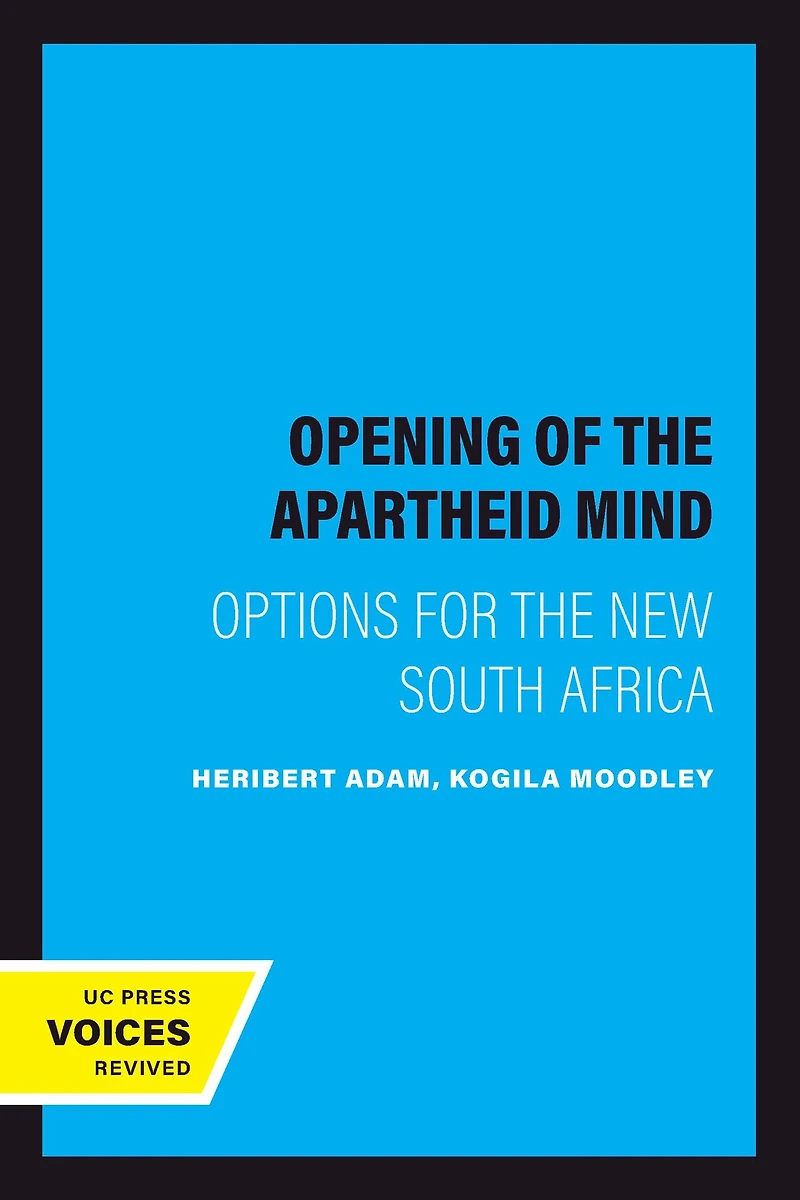
the Opening of Apartheid Mind: Options for New South Africa in Bloomington, MN
By Barnes & Noble
Current price: $57.95

the Opening of Apartheid Mind: Options for New South Africa in Bloomington, MN
Current price: $57.95
Loading Inventory...
Size: EBook
Refusing to be governed by what is fashionable or inoffensive, Heribert Adam and Kogila Moodley frankly address the passions and rationalities that drive politics in postapartheid South Africa. They argue that the country's quest for democracy is widely misunderstood and that public opinion abroad relies on stereotypes of violent tribalism and false colonial analogies.Adam and Moodley criticize the personality cult surrounding Nelson Mandela and the accolades accorded F. W. de Klerk. They reject the blackversuswhite conflict and substitute sober analysis and strategic pragmatism for the moral outrage that typifies so much writing about South Africa. Believing that the best expression of solidarity emanates from sympathetic but candid criticism, they pose challenging questions for the African National Congress and Nelson Mandela. They give indepth coverage to political violence, the ANCSouth African Communist Party alliance, Inkatha, and other controversial topics as well.The authors do not propose a solution that will guarantee a genuinely democratic South Africa. What they offer is an understanding of the country's social conditions and political constraints, and they sketch options for both a new South Africa and a new postCold War foreign policy for the whole of southern Africa. The importance of this book is as immediate as today's headlines.
Refusing to be governed by what is fashionable or inoffensive, Heribert Adam and Kogila Moodley frankly address the passions and rationalities that drive politics in postapartheid South Africa. They argue that the country's quest for democracy is widely misunderstood and that public opinion abroad relies on stereotypes of violent tribalism and false colonial analogies.Adam and Moodley criticize the personality cult surrounding Nelson Mandela and the accolades accorded F. W. de Klerk. They reject the blackversuswhite conflict and substitute sober analysis and strategic pragmatism for the moral outrage that typifies so much writing about South Africa. Believing that the best expression of solidarity emanates from sympathetic but candid criticism, they pose challenging questions for the African National Congress and Nelson Mandela. They give indepth coverage to political violence, the ANCSouth African Communist Party alliance, Inkatha, and other controversial topics as well.The authors do not propose a solution that will guarantee a genuinely democratic South Africa. What they offer is an understanding of the country's social conditions and political constraints, and they sketch options for both a new South Africa and a new postCold War foreign policy for the whole of southern Africa. The importance of this book is as immediate as today's headlines.
Shop Similar Products










Find at Mall of America® in Bloomington, MN
Visit at Mall of America® in Bloomington, MN