


Home
The Offshore World: Sovereign Markets, Virtual Places, and Nomad Millionaires
Barnes and Noble
Loading Inventory...
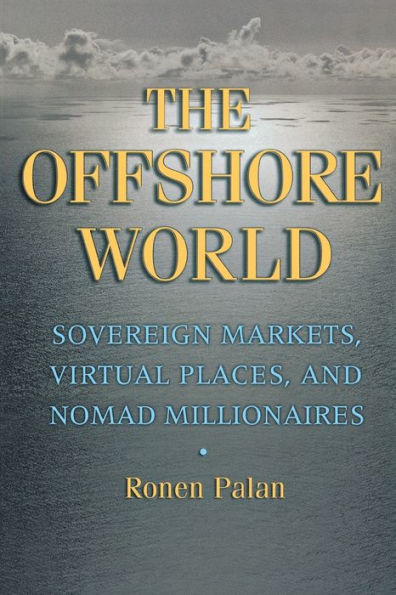
The Offshore World: Sovereign Markets, Virtual Places, and Nomad Millionaires in Bloomington, MN
Current price: $25.95

The Offshore World: Sovereign Markets, Virtual Places, and Nomad Millionaires in Bloomington, MN
Current price: $25.95
Loading Inventory...
Size: OS
The atlas of contemporary capitalism is curious indeed. A desperately poor and civilwarwracked nation, Liberia, is the world's shipping superpower; the Cayman Islands the fifthlargest financial center in the world; landlocked Zurich a venerable "offshore" banking center. Indeed, it is estimated that half of the global stock of money passes through tax havens. The logic of the offshore world, where millionaires and corporations roam in search of financial advantage, is slippery. It challenges many conventional assumptions about power and economics.
In the single most comprehensive account of the offshore economy, Ronen Palan investigates the legal spaces, unregulated and yet maintained and supported by the state system, that have emerged for purposes of international finance, tax havens, export processing zones, flags of convenience, and ecommerce.
The offshore economy had its beginnings in the late nineteenth century, saw early development after the First World War, and metastasized in the 1970s. Palan believes that a rapidly expanding offshore economy is now producing a new market in sovereignty; states have discovered that their rights to write law may be used as a commercial asset. This commercialization of sovereignty, he asserts, undermines the legitimacy of the nationstate and supports a form of nomadic capitalism.
In the single most comprehensive account of the offshore economy, Ronen Palan investigates the legal spaces, unregulated and yet maintained and supported by the state system, that have emerged for purposes of international finance, tax havens, export processing zones, flags of convenience, and ecommerce.
The offshore economy had its beginnings in the late nineteenth century, saw early development after the First World War, and metastasized in the 1970s. Palan believes that a rapidly expanding offshore economy is now producing a new market in sovereignty; states have discovered that their rights to write law may be used as a commercial asset. This commercialization of sovereignty, he asserts, undermines the legitimacy of the nationstate and supports a form of nomadic capitalism.
The atlas of contemporary capitalism is curious indeed. A desperately poor and civilwarwracked nation, Liberia, is the world's shipping superpower; the Cayman Islands the fifthlargest financial center in the world; landlocked Zurich a venerable "offshore" banking center. Indeed, it is estimated that half of the global stock of money passes through tax havens. The logic of the offshore world, where millionaires and corporations roam in search of financial advantage, is slippery. It challenges many conventional assumptions about power and economics.
In the single most comprehensive account of the offshore economy, Ronen Palan investigates the legal spaces, unregulated and yet maintained and supported by the state system, that have emerged for purposes of international finance, tax havens, export processing zones, flags of convenience, and ecommerce.
The offshore economy had its beginnings in the late nineteenth century, saw early development after the First World War, and metastasized in the 1970s. Palan believes that a rapidly expanding offshore economy is now producing a new market in sovereignty; states have discovered that their rights to write law may be used as a commercial asset. This commercialization of sovereignty, he asserts, undermines the legitimacy of the nationstate and supports a form of nomadic capitalism.
In the single most comprehensive account of the offshore economy, Ronen Palan investigates the legal spaces, unregulated and yet maintained and supported by the state system, that have emerged for purposes of international finance, tax havens, export processing zones, flags of convenience, and ecommerce.
The offshore economy had its beginnings in the late nineteenth century, saw early development after the First World War, and metastasized in the 1970s. Palan believes that a rapidly expanding offshore economy is now producing a new market in sovereignty; states have discovered that their rights to write law may be used as a commercial asset. This commercialization of sovereignty, he asserts, undermines the legitimacy of the nationstate and supports a form of nomadic capitalism.
Shop Similar Products













Find at Mall of America® in Bloomington, MN
Visit at Mall of America® in Bloomington, MN