


Home
The Legend of Fair Helen as Told by Homer, Goethe, and Others
Barnes and Noble
Loading Inventory...
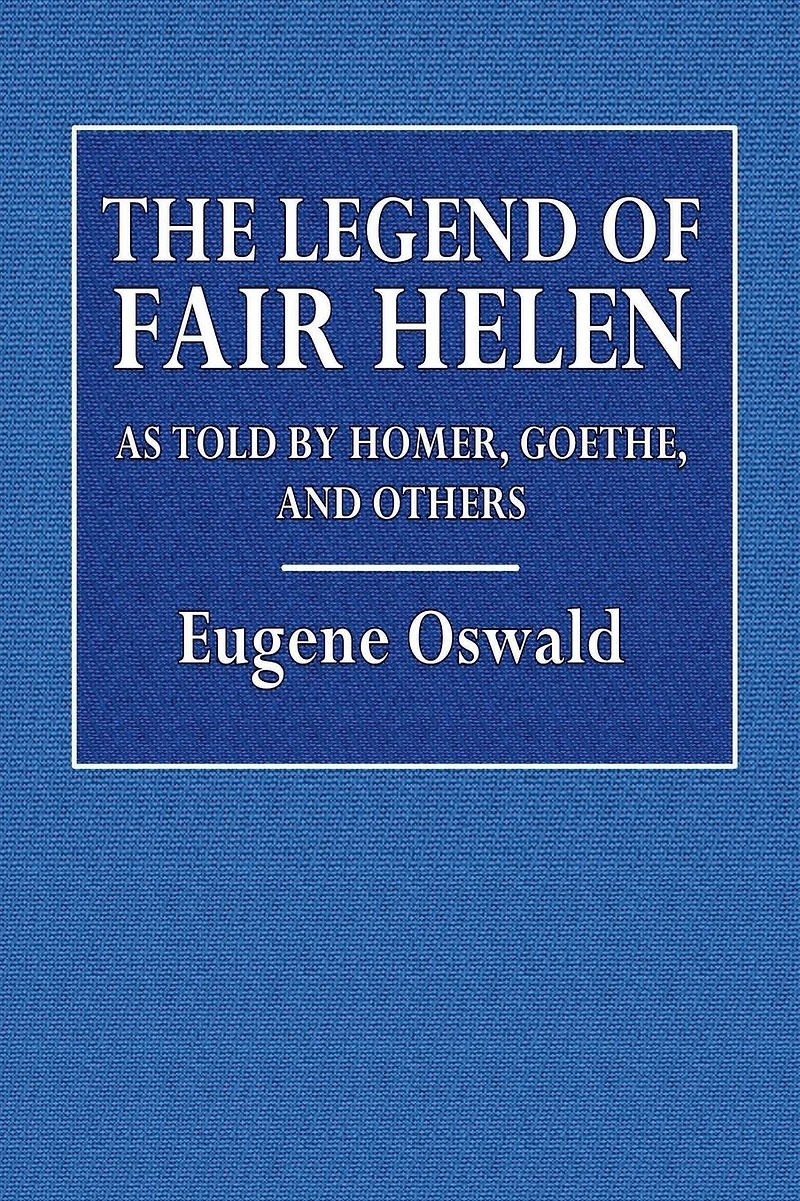
The Legend of Fair Helen as Told by Homer, Goethe, and Others in Bloomington, MN
By Barnes & Noble
Current price: $8.99

The Legend of Fair Helen as Told by Homer, Goethe, and Others in Bloomington, MN
Current price: $8.99
Loading Inventory...
Size: Paperback
From the PROLOGUE: DEDICATED TO THE MEMBERS OF THE ENGLISH GOETHE SOCIETY In Goethe's Helena-which Heine called 'the most splendid statue that ever left the sculptor Goethe's studio'-the poet handles a treasury of old, partly contradictory fables, adding some of his own more modern fancies and thoughts. The magician may be said to play with the whole inventory, bringing before us the old as well as the new precious things in rapid and unexpected intermingling, and with a total disregard of time and place, but striking out from the combination new sparks of light and beauty in a phantasmagoria-that is his own expression- of infinite enjoyment for those of us who are not bound in pedantry or party spirit, who can free themselves from the fetters of the antique and from the new fetters of the modern so-called realism. Does Goethe's second Faust allegorize his hero's excursion into the passion of the Renaissance for classical beauty? So the Encyclopedia Britannica (9th edition): 'Goethe (Faust, Part II.) introduces Helena apparently to symbolize the Greek spirit acting on the modern mind.' Is Goethe's poem the intermingling of the classic poetry with that of the Middle Ages, of Achilles and King Arthur, of Helena and Brunhild, of Virgil and Tasso, of the Siege of Troy and the Crusades, of Homer and the spirit of the Minnesingers, whence the New Spirit is born, figured forth as Euphorion-Byron? Let it be this, but it is much more besides. No formula seems to exhaust the riches of Goethe's words, the dignity and harmony of his verse, the gallery of pictures he unrolls before our eyes, his praise of pathetic beauty.
From the PROLOGUE: DEDICATED TO THE MEMBERS OF THE ENGLISH GOETHE SOCIETY In Goethe's Helena-which Heine called 'the most splendid statue that ever left the sculptor Goethe's studio'-the poet handles a treasury of old, partly contradictory fables, adding some of his own more modern fancies and thoughts. The magician may be said to play with the whole inventory, bringing before us the old as well as the new precious things in rapid and unexpected intermingling, and with a total disregard of time and place, but striking out from the combination new sparks of light and beauty in a phantasmagoria-that is his own expression- of infinite enjoyment for those of us who are not bound in pedantry or party spirit, who can free themselves from the fetters of the antique and from the new fetters of the modern so-called realism. Does Goethe's second Faust allegorize his hero's excursion into the passion of the Renaissance for classical beauty? So the Encyclopedia Britannica (9th edition): 'Goethe (Faust, Part II.) introduces Helena apparently to symbolize the Greek spirit acting on the modern mind.' Is Goethe's poem the intermingling of the classic poetry with that of the Middle Ages, of Achilles and King Arthur, of Helena and Brunhild, of Virgil and Tasso, of the Siege of Troy and the Crusades, of Homer and the spirit of the Minnesingers, whence the New Spirit is born, figured forth as Euphorion-Byron? Let it be this, but it is much more besides. No formula seems to exhaust the riches of Goethe's words, the dignity and harmony of his verse, the gallery of pictures he unrolls before our eyes, his praise of pathetic beauty.
Shop Similar Products


















Find at Mall of America® in Bloomington, MN
Visit at Mall of America® in Bloomington, MN