


Home
The Impact of Gene Transfer Techniques in Eucaryotic Cell Biology: 35. Colloquium, 12.-14. April 1984
Barnes and Noble
Loading Inventory...
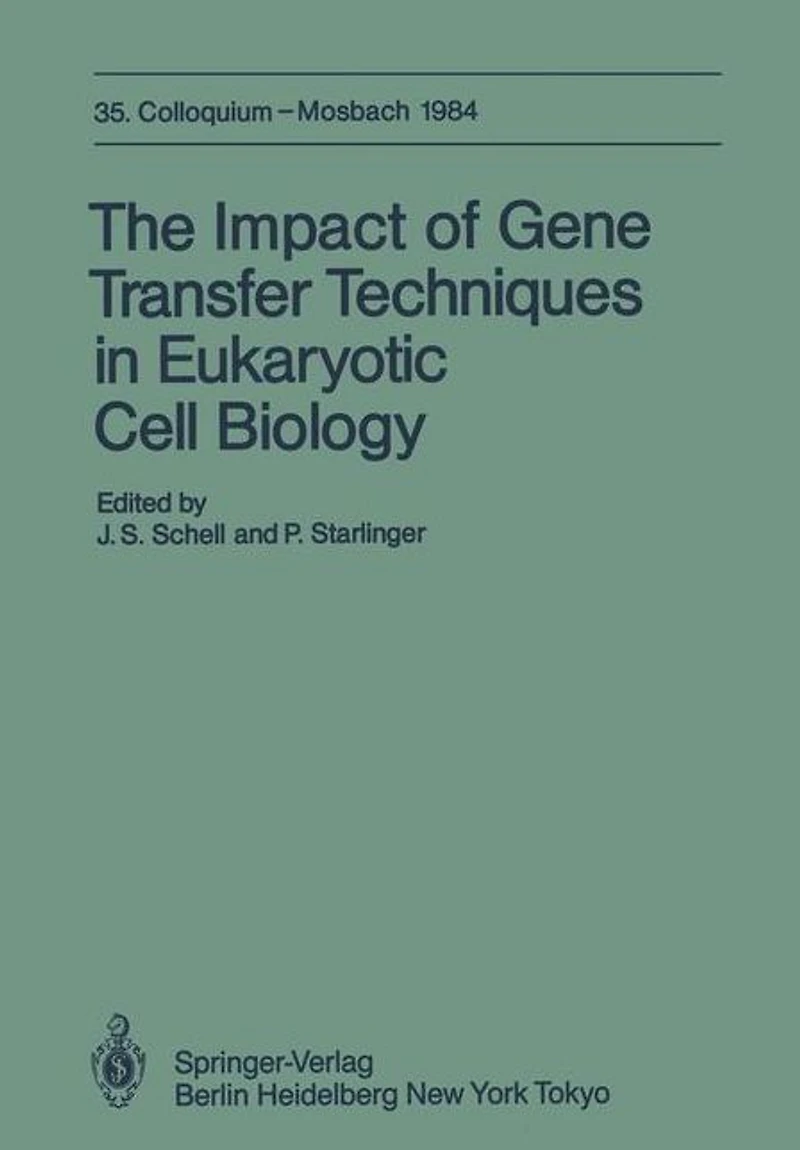
The Impact of Gene Transfer Techniques in Eucaryotic Cell Biology: 35. Colloquium, 12.-14. April 1984 in Bloomington, MN
By Barnes & Noble
Current price: $109.99

The Impact of Gene Transfer Techniques in Eucaryotic Cell Biology: 35. Colloquium, 12.-14. April 1984 in Bloomington, MN
Current price: $109.99
Loading Inventory...
Size: Paperback
The 35th N:osbach Colloquium "The Impact of Gene Transfer Techniques in Eukaryotic CeU Biology" brought together a number of speakers interested in various aspects of cellular and developmental biology and over 600 other scientists, who listened to the lectures and participated in the lively discussions. The questions and experiments described were very varied, but all of them illustrated the importance of recombinant DNA technology. The powerful techniques of identifying and isolating DNA sequences, followed by their introduction into living cells and even into the germ cells of multicellular organisms, have pervaded nearly every branch of molecular biology. The presentations and discussions that followed showed that recombinant DNA has tremendously increased our potential for fundamental research. Now, and for some time to corne, these contributions and the resulting increase in our understanding of life will be the main result of gene manipulation. There will, however, also be applications that will lead to new industrial processes. One section was devoted to novel ways of vaccine production and another to herbicide resistance. These applications are a matter of intense debate in the public domain today. Although they reach beyond the scope of the research labora.tory at a university or research institution, scientists have the knowledge necessary to judge these developments and are sometimes directly involved. There fore the development of industrial qene technology requires the attention of the whole scientific community. We hope that this Symposium has also served this purpose.
The 35th N:osbach Colloquium "The Impact of Gene Transfer Techniques in Eukaryotic CeU Biology" brought together a number of speakers interested in various aspects of cellular and developmental biology and over 600 other scientists, who listened to the lectures and participated in the lively discussions. The questions and experiments described were very varied, but all of them illustrated the importance of recombinant DNA technology. The powerful techniques of identifying and isolating DNA sequences, followed by their introduction into living cells and even into the germ cells of multicellular organisms, have pervaded nearly every branch of molecular biology. The presentations and discussions that followed showed that recombinant DNA has tremendously increased our potential for fundamental research. Now, and for some time to corne, these contributions and the resulting increase in our understanding of life will be the main result of gene manipulation. There will, however, also be applications that will lead to new industrial processes. One section was devoted to novel ways of vaccine production and another to herbicide resistance. These applications are a matter of intense debate in the public domain today. Although they reach beyond the scope of the research labora.tory at a university or research institution, scientists have the knowledge necessary to judge these developments and are sometimes directly involved. There fore the development of industrial qene technology requires the attention of the whole scientific community. We hope that this Symposium has also served this purpose.
Shop Similar Products














Find at Mall of America® in Bloomington, MN
Visit at Mall of America® in Bloomington, MN