


Home
The Death of Treaty Supremacy
Barnes and Noble
Loading Inventory...
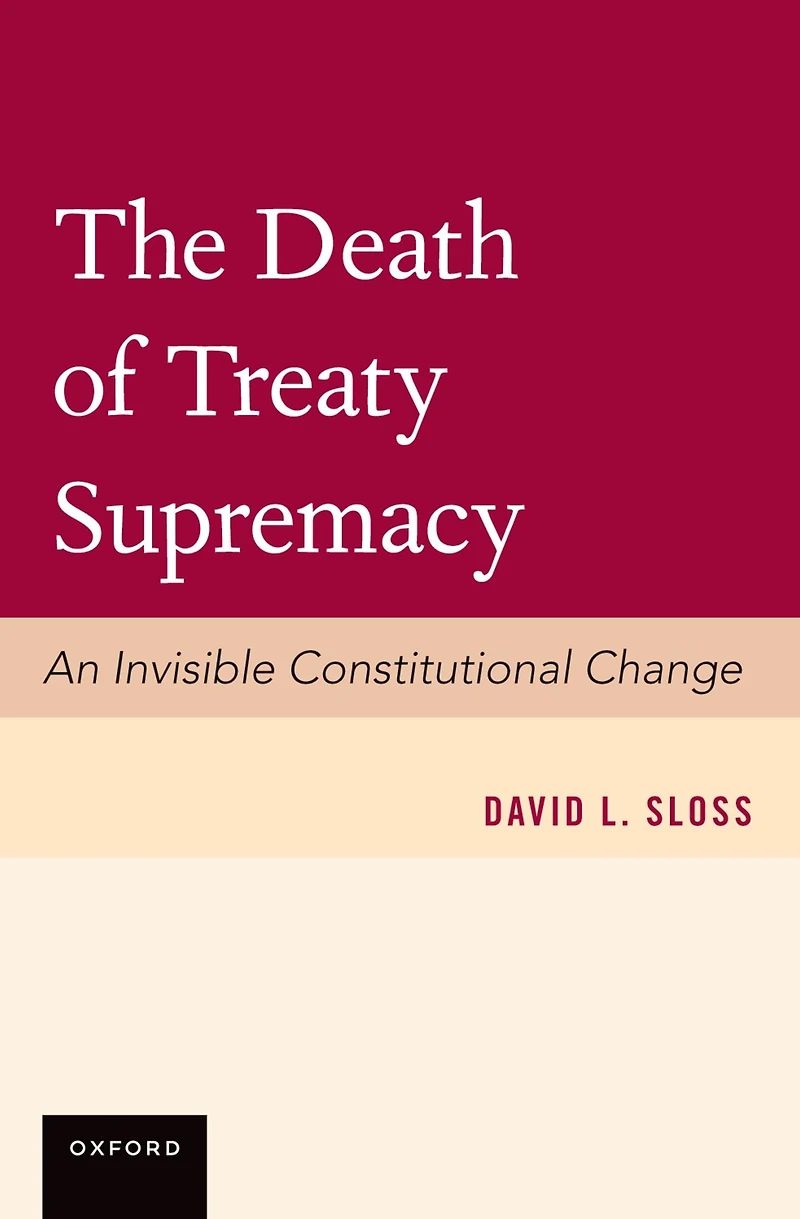
The Death of Treaty Supremacy in Bloomington, MN
By Barnes & Noble
Current price: $30.99

The Death of Treaty Supremacy in Bloomington, MN
Current price: $30.99
Loading Inventory...
Size: EBook
This book provides the first detailed history of the Constitution's treaty supremacy rule. It describes a process of invisible constitutional change. The traditional supremacy rule provided that all treaties supersede conflicting state laws; it precluded state governments from violating U.S. treaty obligations. Before 1945, treaty supremacy and self-execution were independent doctrines. Supremacy governed the relationship between treaties and state law. Self-execution governed the division of power over treaty implementation between Congress and the President. In 1945, the U.S. ratified the UN Charter, which obligates nations to promote human rights "for all without distinction as to race." In 1950, a California court applied the Charter's human rights provisions and the traditional treaty supremacy rule to invalidate a state law that discriminated against Japanese nationals. The implications were shocking: the decision implied that the United States had effectively abrogated Jim Crow laws throughout the South by ratifying the UN Charter. In response, conservatives mobilized support for a constitutional amendment, known as the Bricker Amendment, to abolish the treaty supremacy rule. The amendment never passed, but Bricker's supporters achieved their goals through de facto constitutional change. The de facto Bricker Amendment created a novel exception to the treaty supremacy rule for non-self-executing (NSE) treaties. The exception permits state governments to violate NSE treaties without authorization from the federal political branches. The death of treaty supremacy has significant implications for U.S. foreign policy and for U.S. compliance with its treaty obligations.
This book provides the first detailed history of the Constitution's treaty supremacy rule. It describes a process of invisible constitutional change. The traditional supremacy rule provided that all treaties supersede conflicting state laws; it precluded state governments from violating U.S. treaty obligations. Before 1945, treaty supremacy and self-execution were independent doctrines. Supremacy governed the relationship between treaties and state law. Self-execution governed the division of power over treaty implementation between Congress and the President. In 1945, the U.S. ratified the UN Charter, which obligates nations to promote human rights "for all without distinction as to race." In 1950, a California court applied the Charter's human rights provisions and the traditional treaty supremacy rule to invalidate a state law that discriminated against Japanese nationals. The implications were shocking: the decision implied that the United States had effectively abrogated Jim Crow laws throughout the South by ratifying the UN Charter. In response, conservatives mobilized support for a constitutional amendment, known as the Bricker Amendment, to abolish the treaty supremacy rule. The amendment never passed, but Bricker's supporters achieved their goals through de facto constitutional change. The de facto Bricker Amendment created a novel exception to the treaty supremacy rule for non-self-executing (NSE) treaties. The exception permits state governments to violate NSE treaties without authorization from the federal political branches. The death of treaty supremacy has significant implications for U.S. foreign policy and for U.S. compliance with its treaty obligations.
Shop Similar Products








Find at Mall of America® in Bloomington, MN
Visit at Mall of America® in Bloomington, MN