


Home
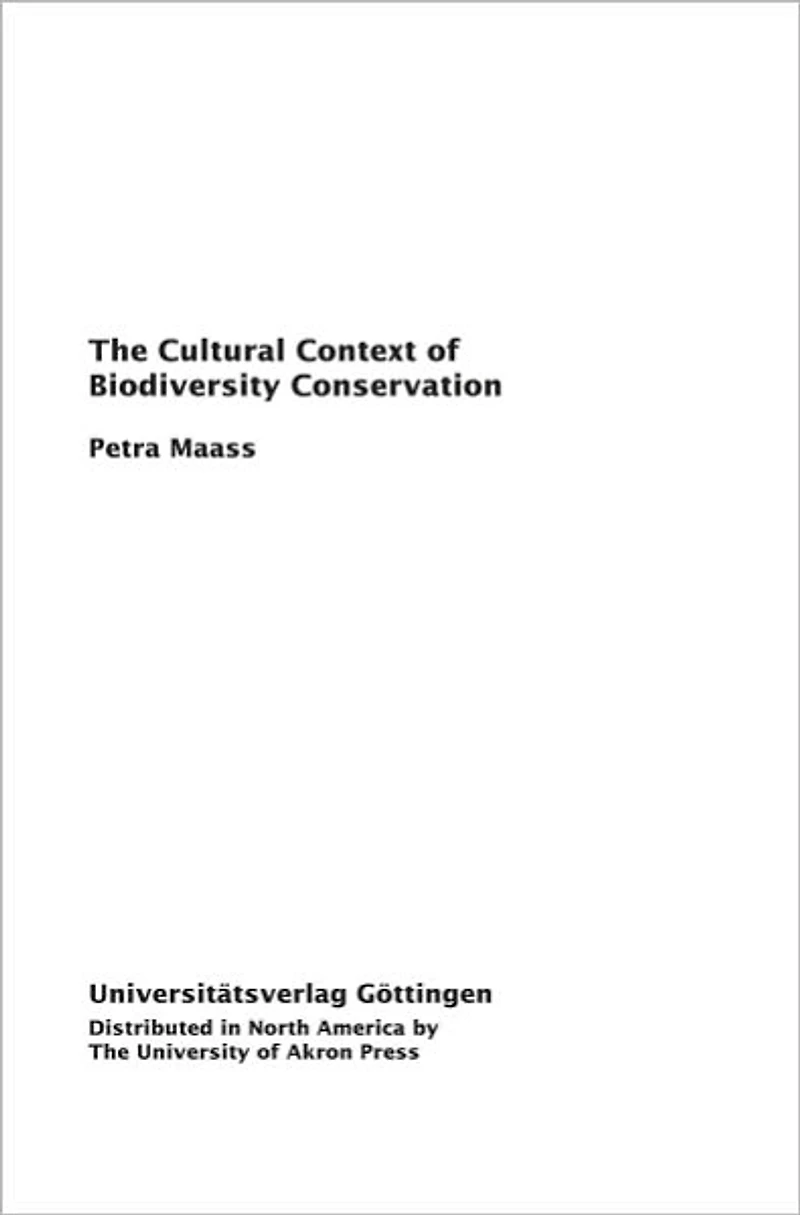
The Cultural Context of Biodiversity Conservation: Seen and Unseen Dimensions of Indigenous Knowledge among Q'eqchi' Communities in Guatemala
Barnes and Noble
Loading Inventory...
The Cultural Context of Biodiversity Conservation: Seen and Unseen Dimensions of Indigenous Knowledge among Q'eqchi' Communities in Guatemala in Bloomington, MN
By Barnes & Noble
Current price: $35.99

The Cultural Context of Biodiversity Conservation: Seen and Unseen Dimensions of Indigenous Knowledge among Q'eqchi' Communities in Guatemala in Bloomington, MN
Current price: $35.99
Loading Inventory...
Size: EBook
How are biological diversity, protected areas, indigenous knowledge and religious worldviews related? From an anthropological perspective, this book provides an introduction into the complex subject of conservation policies that cannot be addressed without recognising the encompassing relationship between discursive, political, economic, social and ecological facets. By facing these interdependencies across global, national and local dynamics, it draws on an ethnographic case study among Maya-Q'eqchi' communities living in the margins of protected areas in Guatemala. In documenting the cultural aspects of landscape, the study explores the coherence of diverse expressions of indigenous knowledge. It intends to remind of cultural values and beliefs closely tied to subsistence activities and ritual practices that define local perceptions of the natural environment. The basic idea is to illustrate that there are different ways of knowing and reasoning, seeing and endowing the world with meaning, which include visible material and invisible interpretative understandings. These tend to be underestimated issues in international debates and may provide an alternative approach upon which conservation initiatives responsive to the needs of the humans involved should be based on.
How are biological diversity, protected areas, indigenous knowledge and religious worldviews related? From an anthropological perspective, this book provides an introduction into the complex subject of conservation policies that cannot be addressed without recognising the encompassing relationship between discursive, political, economic, social and ecological facets. By facing these interdependencies across global, national and local dynamics, it draws on an ethnographic case study among Maya-Q'eqchi' communities living in the margins of protected areas in Guatemala. In documenting the cultural aspects of landscape, the study explores the coherence of diverse expressions of indigenous knowledge. It intends to remind of cultural values and beliefs closely tied to subsistence activities and ritual practices that define local perceptions of the natural environment. The basic idea is to illustrate that there are different ways of knowing and reasoning, seeing and endowing the world with meaning, which include visible material and invisible interpretative understandings. These tend to be underestimated issues in international debates and may provide an alternative approach upon which conservation initiatives responsive to the needs of the humans involved should be based on.
Shop Similar Products

















Find at Mall of America® in Bloomington, MN
Visit at Mall of America® in Bloomington, MN