


Home
The Constitution's Text Foreign Affairs
Barnes and Noble
Loading Inventory...
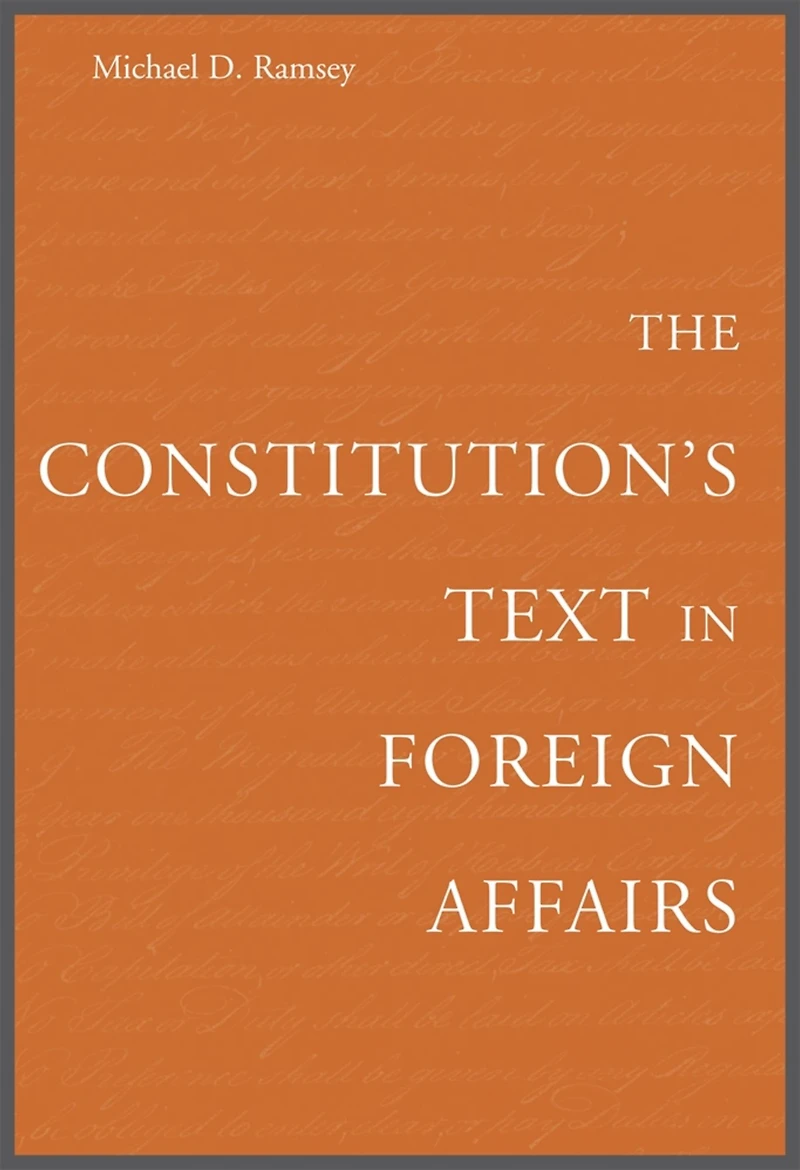
The Constitution's Text Foreign Affairs in Bloomington, MN
By Barnes & Noble
Current price: $100.00

The Constitution's Text Foreign Affairs in Bloomington, MN
Current price: $100.00
Loading Inventory...
Size: EBook
This book describes the constitutional law of foreign affairs, derived from the historical understanding of the Constitution's text. It examines timeless and recurring foreign affairs controversies--such as the role of the president and Congress, the power to enter armed conflict, and the power to make and break treaties--and shows how the words, structure, and context of the Constitution can resolve pivotal court cases and leading modern disputes. The book provides a counterpoint to much conventional discussion of constitutional foreign affairs law, which tends to assume that the Constitution's text and history cannot give much guidance, and which rests many of its arguments upon modern practice and policy considerations.Using a close focus on the text and a wide array of historical sources, Michael Ramsey argues that the Constitution's original design gives the president substantial independent powers in foreign affairs. But, contrary to what many presidents and presidential advisors contend, these powers are balanced by the independent powers given to Congress, the Senate, the states, and the courts. The Constitution, Ramsey concludes, does not make any branch of government the ultimate decision maker in foreign affairs, but rather divides authority among multiple independent power centers.
This book describes the constitutional law of foreign affairs, derived from the historical understanding of the Constitution's text. It examines timeless and recurring foreign affairs controversies--such as the role of the president and Congress, the power to enter armed conflict, and the power to make and break treaties--and shows how the words, structure, and context of the Constitution can resolve pivotal court cases and leading modern disputes. The book provides a counterpoint to much conventional discussion of constitutional foreign affairs law, which tends to assume that the Constitution's text and history cannot give much guidance, and which rests many of its arguments upon modern practice and policy considerations.Using a close focus on the text and a wide array of historical sources, Michael Ramsey argues that the Constitution's original design gives the president substantial independent powers in foreign affairs. But, contrary to what many presidents and presidential advisors contend, these powers are balanced by the independent powers given to Congress, the Senate, the states, and the courts. The Constitution, Ramsey concludes, does not make any branch of government the ultimate decision maker in foreign affairs, but rather divides authority among multiple independent power centers.
Shop Similar Products








Find at Mall of America® in Bloomington, MN
Visit at Mall of America® in Bloomington, MN