


Home
The Colonial Origins of Korean Enterprise: 1910-1945
Barnes and Noble
Loading Inventory...
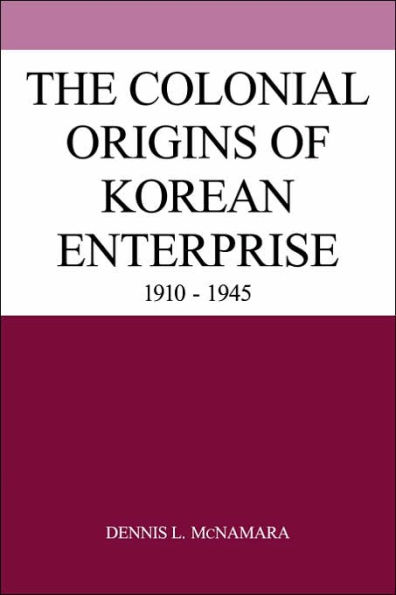
The Colonial Origins of Korean Enterprise: 1910-1945 in Bloomington, MN
Current price: $45.00

The Colonial Origins of Korean Enterprise: 1910-1945 in Bloomington, MN
Current price: $45.00
Loading Inventory...
Size: OS
South Korean conglomerates, or "chaebol," such as Hyundai and Samsung play a far more important role in Korean economy than do comparable large firms in the United States' and Japanese economies. Despite the importance of the chaebol to the rapid postwar development of the Korean economy, little has been written about their origins during the Japanese occupation. Through case studies of local ownership in major financial, commercial and industrial ventures, this book provides a detailed picture of indigenous capitalism during Japanese colonization. Drawing on Japanese government sources, Korean biographies and diaries, interviews, and United States intelligence material, the author gives a compelling account of key personalities in the Korean business elite and of the personal dilemmas of balancing nationalism against success under dependent, colonial conditions. The author concludes that dependent rather than comprador capitalism characterized leading Korean business through 1945. Patterns of concentration within family enterprises, close ties with the colonial state, and mutual support among a Korean inner circle of business leaders constitute a legacy of the colonial period important to the subsequent development of Korean conglomerates.
South Korean conglomerates, or "chaebol," such as Hyundai and Samsung play a far more important role in Korean economy than do comparable large firms in the United States' and Japanese economies. Despite the importance of the chaebol to the rapid postwar development of the Korean economy, little has been written about their origins during the Japanese occupation. Through case studies of local ownership in major financial, commercial and industrial ventures, this book provides a detailed picture of indigenous capitalism during Japanese colonization. Drawing on Japanese government sources, Korean biographies and diaries, interviews, and United States intelligence material, the author gives a compelling account of key personalities in the Korean business elite and of the personal dilemmas of balancing nationalism against success under dependent, colonial conditions. The author concludes that dependent rather than comprador capitalism characterized leading Korean business through 1945. Patterns of concentration within family enterprises, close ties with the colonial state, and mutual support among a Korean inner circle of business leaders constitute a legacy of the colonial period important to the subsequent development of Korean conglomerates.
Shop Similar Products














Find at Mall of America® in Bloomington, MN
Visit at Mall of America® in Bloomington, MN