


Home
The Amman Theater Statue in its Iron Age Contexts
Barnes and Noble
Loading Inventory...
The Amman Theater Statue in its Iron Age Contexts in Bloomington, MN
By Barnes & Noble
Current price: $85.95

The Amman Theater Statue in its Iron Age Contexts in Bloomington, MN
Current price: $85.95
Loading Inventory...
Size: Hardcover
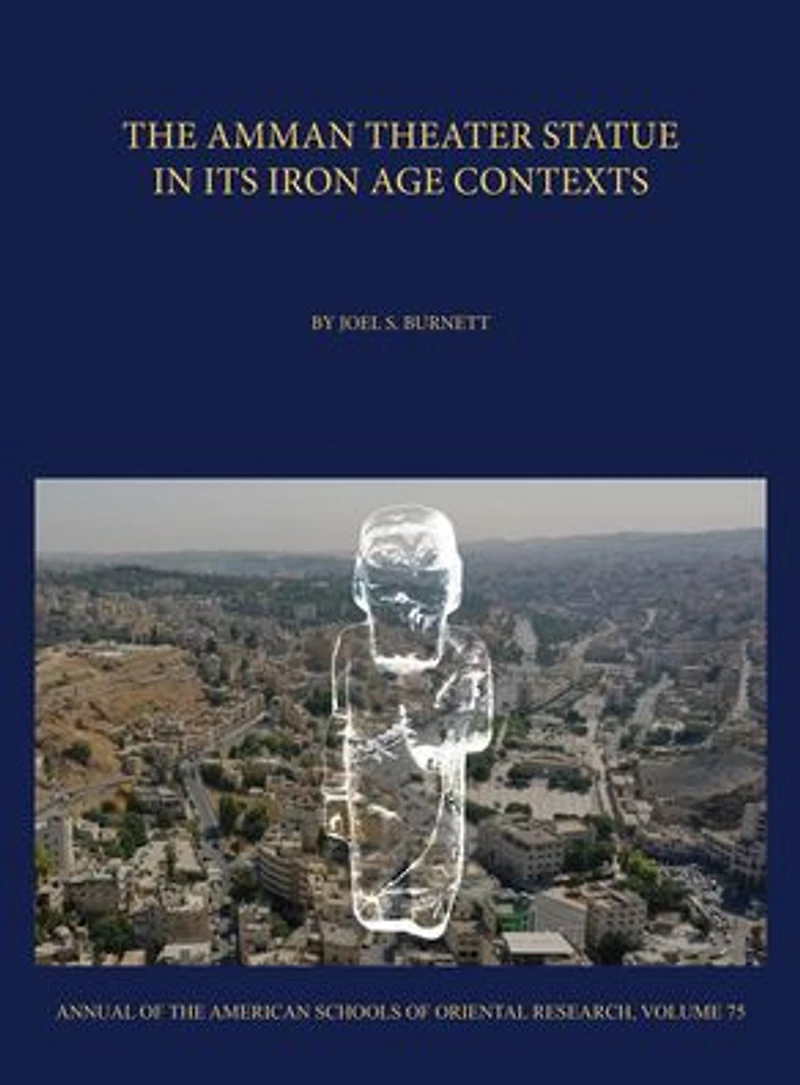
A colossal basalt statue was uncovered through rescue excavation in downtown Amman, Jordan in 2010. Despite the statue's Roman period find context, its form and motifs show it to be an Iron Age sculpture, and geoscientific testing indicates a regional quarry source. Comparison with an established corpus of Iron Age stone sculpture from Amman shows the Amman Theater Statue shares the distinct iconography of a series of Amman male statues portraying deities and human rulers. Broader arthistorical comparisons from Egypt, the Levant, and Mesopotamia indicate that the statue dates ca. 850825 B.C.E., that it belonged to an Ammonite royal ancestor cult, and that in that setting it portrayed a deified, deceased Ammonite king. Archaeological and epigraphic evidence accompanying those broader Near Eastern comparisons, especially those from SyroAnatolian political capitals from Iron Age II, and archaeological evidence from Amman indicate that the Amman Theater Statue was incorporated into an architectural structure, either a building facade or monumental gate, on the Amman Citadel (Jabal alQal'a), along its southern ascent, or just beyond its southern slope. With contributions by Romel Gharib and Don F. Parker.
A colossal basalt statue was uncovered through rescue excavation in downtown Amman, Jordan in 2010. Despite the statue's Roman period find context, its form and motifs show it to be an Iron Age sculpture, and geoscientific testing indicates a regional quarry source. Comparison with an established corpus of Iron Age stone sculpture from Amman shows the Amman Theater Statue shares the distinct iconography of a series of Amman male statues portraying deities and human rulers. Broader arthistorical comparisons from Egypt, the Levant, and Mesopotamia indicate that the statue dates ca. 850825 B.C.E., that it belonged to an Ammonite royal ancestor cult, and that in that setting it portrayed a deified, deceased Ammonite king. Archaeological and epigraphic evidence accompanying those broader Near Eastern comparisons, especially those from SyroAnatolian political capitals from Iron Age II, and archaeological evidence from Amman indicate that the Amman Theater Statue was incorporated into an architectural structure, either a building facade or monumental gate, on the Amman Citadel (Jabal alQal'a), along its southern ascent, or just beyond its southern slope. With contributions by Romel Gharib and Don F. Parker.
Shop Similar Products














Find at Mall of America® in Bloomington, MN
Visit at Mall of America® in Bloomington, MN