


Home
the American Vignola: A Guide to Making of Classical Architecture
Barnes and Noble
Loading Inventory...
the American Vignola: A Guide to Making of Classical Architecture in Bloomington, MN
By Barnes & Noble
Current price: $18.95

the American Vignola: A Guide to Making of Classical Architecture in Bloomington, MN
Current price: $18.95
Loading Inventory...
Size: EBook
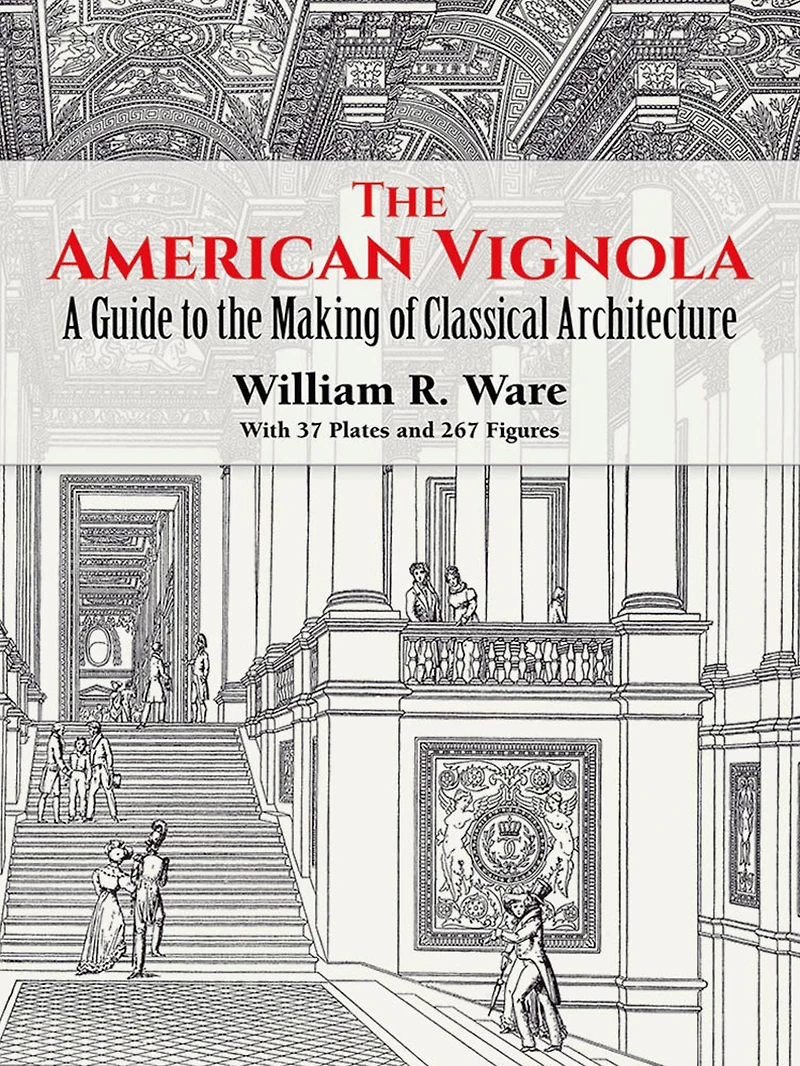
"Vignola codified the rules of classical architecture for the Italian Renaissance . . . Ware codified Vignola for the American Renaissance." — John Barrington Bayley, from the Introductory Notes to The American VignolaFrom 1890 to 1940, Americans designed and built classical architecture on an extraordinary scale. During this American Renaissance were built countless libraries, museums, universities, courthouses, capitol buildings and other structures, both public and private, rich with domes, pediments, colonnades, and other classical features. "We built with unparalleled grandeur," architect and scholar John Barrington Bayley observes, "and our architecture led the world." More than any other document of the period, The American Vignola laid the groundwork for this grand resurgence in American architecture. Its author, William R. Ware, founded America's first school of architecture at M.I.T. in 1865, and sixteen years later, the School of Architecture at Columbia University. He became America's leading teacher of the art of designing classical architecture. The American Vignola is his textbook on that art. As the Renaissance architect Giacomo Barozzi da Vignola helped to recover the lost laws of classical architecture that made possible the architectural wonders of the Italian Renaissance, Ware helped lay the groundwork for the wonders of the American Renaissance. The American Vignola contains tables of the Tuscan, Ionic, Doric, Corinthian, and Composite Orders; measured drawings of the great monuments of the ancient, Renaissance, and baroque periods; and guides for drawing and establishing geometrical relations. Especially important are its detailed practical instructions for designing classical arches and vaults, roofs and domes, doors and windows, walls and ceilings, steps and staircases, and more. Over 300 illustrations illuminate the text, including 37 full-page plates and 267 smaller figures. Introductory notes by Mr. Bayley and architectural expert Henry Hope Reed set Mr. Ware's great achievement in perspective.
"Vignola codified the rules of classical architecture for the Italian Renaissance . . . Ware codified Vignola for the American Renaissance." — John Barrington Bayley, from the Introductory Notes to The American VignolaFrom 1890 to 1940, Americans designed and built classical architecture on an extraordinary scale. During this American Renaissance were built countless libraries, museums, universities, courthouses, capitol buildings and other structures, both public and private, rich with domes, pediments, colonnades, and other classical features. "We built with unparalleled grandeur," architect and scholar John Barrington Bayley observes, "and our architecture led the world." More than any other document of the period, The American Vignola laid the groundwork for this grand resurgence in American architecture. Its author, William R. Ware, founded America's first school of architecture at M.I.T. in 1865, and sixteen years later, the School of Architecture at Columbia University. He became America's leading teacher of the art of designing classical architecture. The American Vignola is his textbook on that art. As the Renaissance architect Giacomo Barozzi da Vignola helped to recover the lost laws of classical architecture that made possible the architectural wonders of the Italian Renaissance, Ware helped lay the groundwork for the wonders of the American Renaissance. The American Vignola contains tables of the Tuscan, Ionic, Doric, Corinthian, and Composite Orders; measured drawings of the great monuments of the ancient, Renaissance, and baroque periods; and guides for drawing and establishing geometrical relations. Especially important are its detailed practical instructions for designing classical arches and vaults, roofs and domes, doors and windows, walls and ceilings, steps and staircases, and more. Over 300 illustrations illuminate the text, including 37 full-page plates and 267 smaller figures. Introductory notes by Mr. Bayley and architectural expert Henry Hope Reed set Mr. Ware's great achievement in perspective.
Shop Similar Products










Find at Mall of America® in Bloomington, MN
Visit at Mall of America® in Bloomington, MN