


Home
The Alexander Technique: Twelve Fundamentals of Integrated Movement
Barnes and Noble
Loading Inventory...
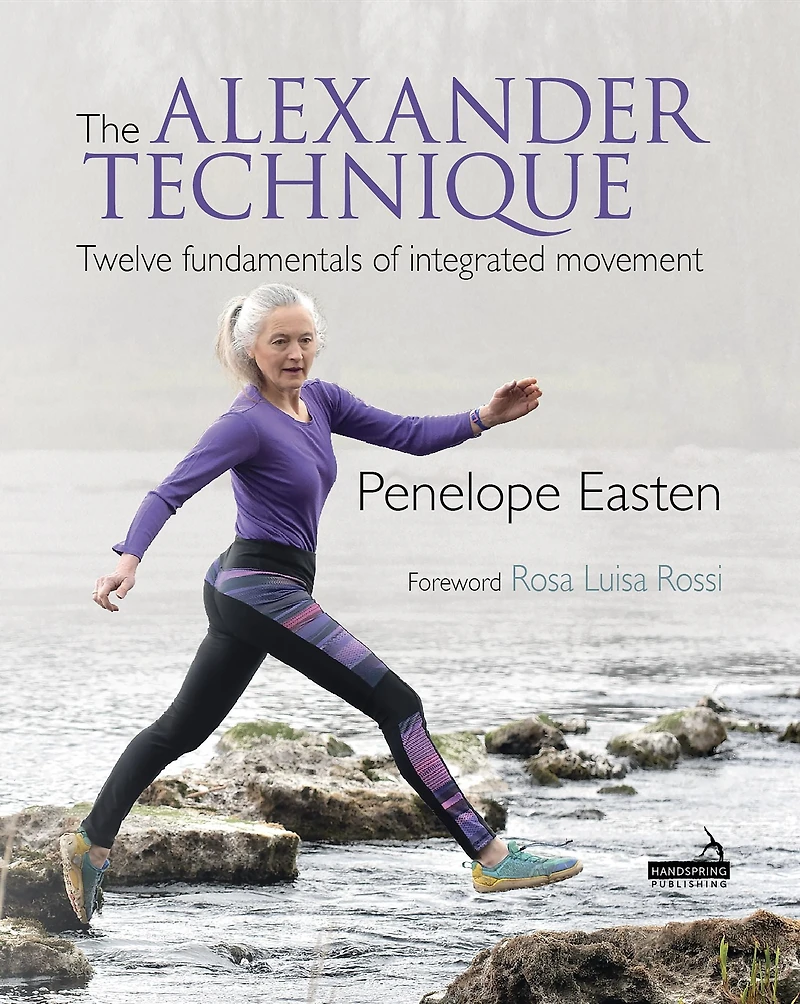
The Alexander Technique: Twelve Fundamentals of Integrated Movement in Bloomington, MN
By Barnes & Noble
Current price: $65.00

The Alexander Technique: Twelve Fundamentals of Integrated Movement in Bloomington, MN
Current price: $65.00
Loading Inventory...
Size: EBook
Penelope Easten was born in Wales, and studied Biological Sciences at Cambridge University, England. She abandoned a PhD to train in Alexander technique, qualifying in 1989. After completing her training, she studied with Miss Goldie, then 86, who stripped away everything she had learned, and rebuilt it as she envisioned the technique, Since then, Penelope has sought to understand the differences in her approach, and the historical reasons for them. She has been teaching these differences to the Alexander profession internationally since 2004, and her booklet My lessons with Miss Goldie has sold worldwide. In her private practice in the West of Ireland, she works with individuals and groups, both with more classic Alexander work, and in activities such as playing music, gardening, yoga, sport, or even wearing heels! She runs regular online training courses for AT teachers internationally on how to teach the technique, online and hands-off, using these methods. Contact Penelope through her website at alexandertechniqueinfo.org. All aspects of life involve movement. This book offers a broad new theoretical framework of how integrated movement occurs, based on recent science and practical explorations: simple techniques that build to enable practitioners both to look after themselves, and to help clients to understand and integrate the Alexander technique into in life and practice. Aimed at teachers of and trainees in the Alexander technique, movement educators and somatic therapists, the book uses accessible language to enable experiential learning. Emerging out of lessons taken between 1990 and 1994 with Miss Goldie, who worked alongside Alexander for thirty years and was closest to him, it presents a new interpretation of how Alexander developed the technique, and what happened next. The explorations recapture the essence of Miss Goldie's teaching, discovering the full scope of methods that Alexander must have used to work on himself. Taking an evolutionary theme, the author considers movement capacity which has been lost in Western culture and how we can re-access it by reawakening older, more balanced movement patterns. The twelve fundamentals of integrated movement described are all practical: one structural fundamental is biomechanics; others are aspects of perception and thinking, much more part of movement than is often realized, because optimal movement is organized around our awareness, focus, and goals. Combining theory with practical explorations that take the reader step by step back to integrated movement, Part 1 introduces the twelve fundamentals, and how natural breathing emerges when these work together; Part 2 uses body-play, conscious guidance and control and physical pulls to bring all the musculature back into play; and Part 3 explores letting previously unknown integrated movements emerge out of a quiet system. The new scientific theories described will help the reader accept these very different physical experiences. These include: left / right brain models; the concept that all our body's intelligence centers (including the brain) are cooperative networks and not hierarchical; polyvagal theory; attachment theory; two visual streams theory; spinal engine theory; tensegrity; and a new model of postural alignment. All are woven together-to explain how we can live in a flow of dynamic balance.
Penelope Easten was born in Wales, and studied Biological Sciences at Cambridge University, England. She abandoned a PhD to train in Alexander technique, qualifying in 1989. After completing her training, she studied with Miss Goldie, then 86, who stripped away everything she had learned, and rebuilt it as she envisioned the technique, Since then, Penelope has sought to understand the differences in her approach, and the historical reasons for them. She has been teaching these differences to the Alexander profession internationally since 2004, and her booklet My lessons with Miss Goldie has sold worldwide. In her private practice in the West of Ireland, she works with individuals and groups, both with more classic Alexander work, and in activities such as playing music, gardening, yoga, sport, or even wearing heels! She runs regular online training courses for AT teachers internationally on how to teach the technique, online and hands-off, using these methods. Contact Penelope through her website at alexandertechniqueinfo.org. All aspects of life involve movement. This book offers a broad new theoretical framework of how integrated movement occurs, based on recent science and practical explorations: simple techniques that build to enable practitioners both to look after themselves, and to help clients to understand and integrate the Alexander technique into in life and practice. Aimed at teachers of and trainees in the Alexander technique, movement educators and somatic therapists, the book uses accessible language to enable experiential learning. Emerging out of lessons taken between 1990 and 1994 with Miss Goldie, who worked alongside Alexander for thirty years and was closest to him, it presents a new interpretation of how Alexander developed the technique, and what happened next. The explorations recapture the essence of Miss Goldie's teaching, discovering the full scope of methods that Alexander must have used to work on himself. Taking an evolutionary theme, the author considers movement capacity which has been lost in Western culture and how we can re-access it by reawakening older, more balanced movement patterns. The twelve fundamentals of integrated movement described are all practical: one structural fundamental is biomechanics; others are aspects of perception and thinking, much more part of movement than is often realized, because optimal movement is organized around our awareness, focus, and goals. Combining theory with practical explorations that take the reader step by step back to integrated movement, Part 1 introduces the twelve fundamentals, and how natural breathing emerges when these work together; Part 2 uses body-play, conscious guidance and control and physical pulls to bring all the musculature back into play; and Part 3 explores letting previously unknown integrated movements emerge out of a quiet system. The new scientific theories described will help the reader accept these very different physical experiences. These include: left / right brain models; the concept that all our body's intelligence centers (including the brain) are cooperative networks and not hierarchical; polyvagal theory; attachment theory; two visual streams theory; spinal engine theory; tensegrity; and a new model of postural alignment. All are woven together-to explain how we can live in a flow of dynamic balance.
Shop Similar Products











Find at Mall of America® in Bloomington, MN
Visit at Mall of America® in Bloomington, MN