


Home
Testing and Characterization of Sustainable Innovative Bituminous Materials Systems: State-of-the-Art Report the RILEM Technical Committee 237-SIB
Barnes and Noble
Loading Inventory...
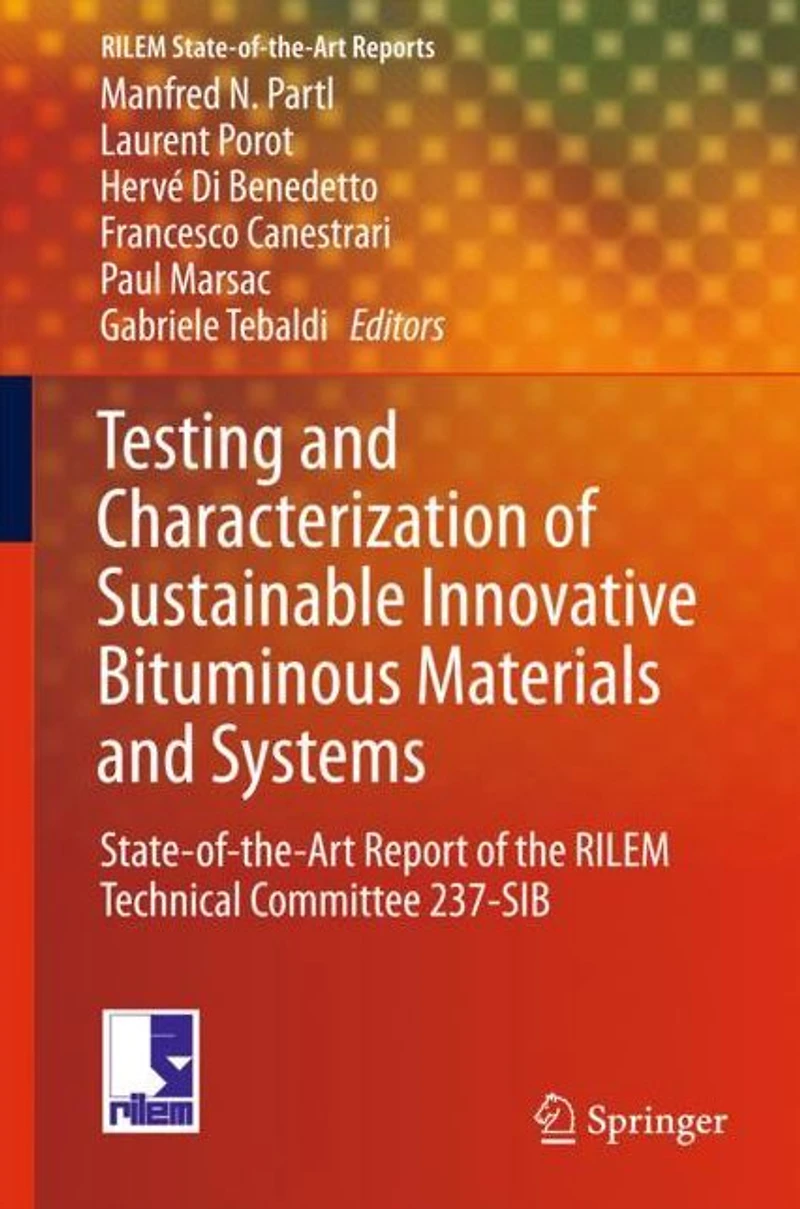
Testing and Characterization of Sustainable Innovative Bituminous Materials Systems: State-of-the-Art Report the RILEM Technical Committee 237-SIB in Bloomington, MN
By Barnes & Noble
Current price: $199.99

Testing and Characterization of Sustainable Innovative Bituminous Materials Systems: State-of-the-Art Report the RILEM Technical Committee 237-SIB in Bloomington, MN
Current price: $199.99
Loading Inventory...
Size: Hardcover
This book presents the detailed results of five task groups of the RILEM technical committee TC 237SIB on Testing and Characterization of Sustainable Innovative Bituminous Materials and Systems. It concentrates on specific new topics in asphalt binder and mixture testing, dealing with new developments in asphalt testing, in particular also in view of new innovative bituminous materials, such as hot and cold recycled mixtures, grid reinforced pavements and recycled Reclaimed Asphalt Pavements (RAP), where test methods developed for traditional asphalt concrete are not a priori applicable. The main objective is providing a basis for prestandardization by comparing different test methods and showing ways for fundamental improvements. Thus, the book also points the way for a further advanced chemophysical understanding of materials and their role in pavement systems relying on fundamental material properties and suitable models for describing and predicting the intrinsic mechanisms thatdetermine the material behavior.
This book presents the detailed results of five task groups of the RILEM technical committee TC 237SIB on Testing and Characterization of Sustainable Innovative Bituminous Materials and Systems. It concentrates on specific new topics in asphalt binder and mixture testing, dealing with new developments in asphalt testing, in particular also in view of new innovative bituminous materials, such as hot and cold recycled mixtures, grid reinforced pavements and recycled Reclaimed Asphalt Pavements (RAP), where test methods developed for traditional asphalt concrete are not a priori applicable. The main objective is providing a basis for prestandardization by comparing different test methods and showing ways for fundamental improvements. Thus, the book also points the way for a further advanced chemophysical understanding of materials and their role in pavement systems relying on fundamental material properties and suitable models for describing and predicting the intrinsic mechanisms thatdetermine the material behavior.
Shop Similar Products








Find at Mall of America® in Bloomington, MN
Visit at Mall of America® in Bloomington, MN