


Home
Suppose and Tell: The Semantics Heuristics of Conditionals
Barnes and Noble
Loading Inventory...
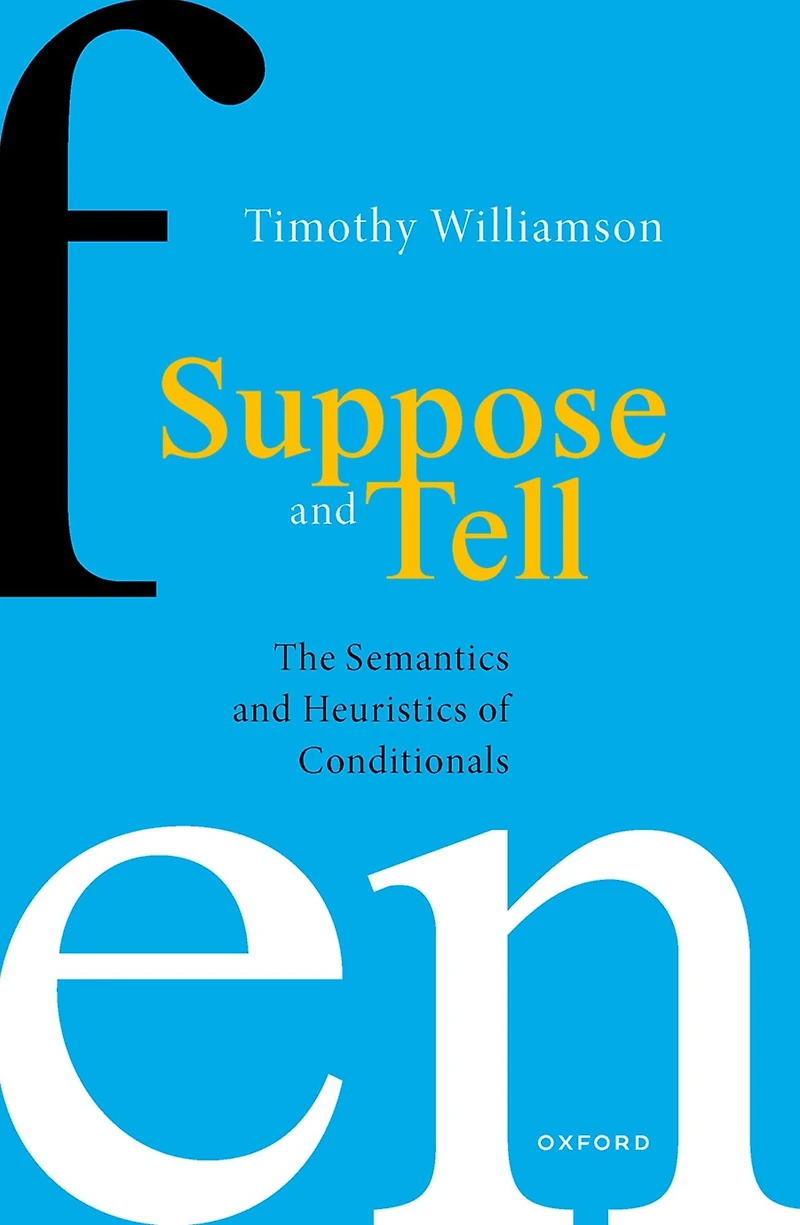
Suppose and Tell: The Semantics Heuristics of Conditionals in Bloomington, MN
By Barnes & Noble
Current price: $18.99

Suppose and Tell: The Semantics Heuristics of Conditionals in Bloomington, MN
Current price: $18.99
Loading Inventory...
Size: EBook
What does 'if' mean? It is one of the most commonly used words in the English language, in itself a sign to the importance of conditional thinking to human cognitive life. We make conditional statements, ask conditional questions, and issue conditional orders. We need to think and talk conditionally for many purposes, from everyday decision-making to mathematical proof. Yet the meaning of conditionals has been debated for thousands of years. Suppose and Tell brings together ideas from philosophy, linguistics, and psychology to present a controversial new approach to understanding conditionals. It argues that in using 'if' we rely on psychological heuristics, methods which are fast and frugal and mostly, but not always, reliable. As a result philosophers and linguists have been led astray in theorizing about conditionals through trusting faulty data generated by such methods and prematurely rejecting simple theories on the basis of merely apparent counterexamples. Williamson shows how one such simple theory of conditionals can explain the data, and draws wider implications for the nature of meaning and its non-transparency to native speakers, vagueness in thought and language, and the need for semantics to attend to the unreliable heuristics underlying our judgments.
What does 'if' mean? It is one of the most commonly used words in the English language, in itself a sign to the importance of conditional thinking to human cognitive life. We make conditional statements, ask conditional questions, and issue conditional orders. We need to think and talk conditionally for many purposes, from everyday decision-making to mathematical proof. Yet the meaning of conditionals has been debated for thousands of years. Suppose and Tell brings together ideas from philosophy, linguistics, and psychology to present a controversial new approach to understanding conditionals. It argues that in using 'if' we rely on psychological heuristics, methods which are fast and frugal and mostly, but not always, reliable. As a result philosophers and linguists have been led astray in theorizing about conditionals through trusting faulty data generated by such methods and prematurely rejecting simple theories on the basis of merely apparent counterexamples. Williamson shows how one such simple theory of conditionals can explain the data, and draws wider implications for the nature of meaning and its non-transparency to native speakers, vagueness in thought and language, and the need for semantics to attend to the unreliable heuristics underlying our judgments.
Shop Similar Products









Find at Mall of America® in Bloomington, MN
Visit at Mall of America® in Bloomington, MN