


Home
Strategy, Economic Organization, and the Knowledge Economy: The Coordination of Firms and Resources
Barnes and Noble
Loading Inventory...
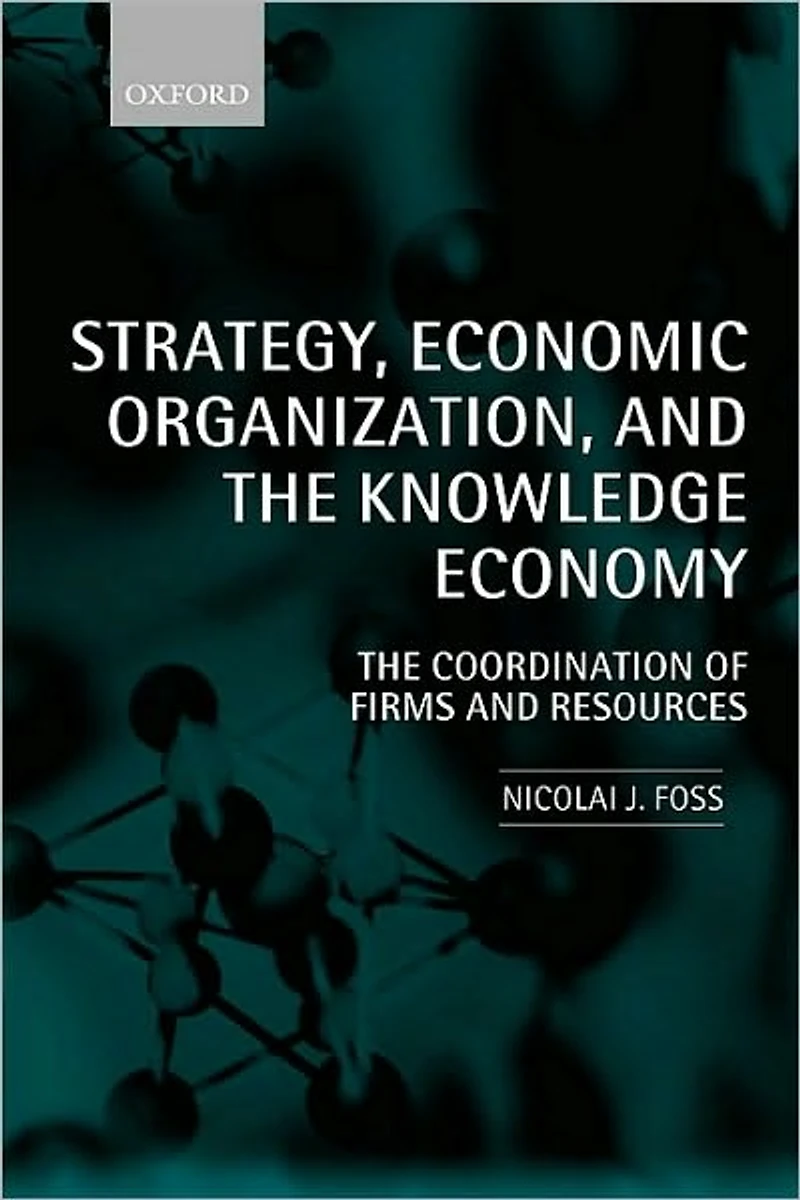
Strategy, Economic Organization, and the Knowledge Economy: The Coordination of Firms and Resources in Bloomington, MN
By Barnes & Noble
Current price: $59.99

Strategy, Economic Organization, and the Knowledge Economy: The Coordination of Firms and Resources in Bloomington, MN
Current price: $59.99
Loading Inventory...
Size: EBook
The rise of the knowledge economy has far-reaching implications for the nature of economic organization as well as firm strategy. Not surprisingly, thinking in management studies as well as in economics has been profoundly affected by these changes. Thus, management thinking in particular has been increasingly characterized by a schism between those who advocate 'knowledge' or 'capabilities-based' approaches in the strategy and organization fields and those who adopt more economics-influenced approaches, notably the economics of organization. This book is a sustained attempt to overcome this schism. Its basic argument is that knowledge-based and organizational economics approaches are not substitutes but complements. In particular, organizational economics has much to contribute with respect to furthering the understanding of efficient organization and strategy in the emerging knowledge economy. This theme is taken through several theoretical as well as empirical variations. Themes such as the incentive liabilities of flat, 'knowledge-based' organizations and the role of complementary HRM practices for fostering knowledge sharing and creation are extensively treated. The book thus contains important implications for knowledge management, organizational design, and firm strategy." The book encompasses nine chapters which critically examine current thinking on strategy, and organization. The reasoning is non-technical. While primarily aimed at a management studies audience, economists and other social scientists will also benefit from it, including Advanced Students, Academics, and Researchers.
The rise of the knowledge economy has far-reaching implications for the nature of economic organization as well as firm strategy. Not surprisingly, thinking in management studies as well as in economics has been profoundly affected by these changes. Thus, management thinking in particular has been increasingly characterized by a schism between those who advocate 'knowledge' or 'capabilities-based' approaches in the strategy and organization fields and those who adopt more economics-influenced approaches, notably the economics of organization. This book is a sustained attempt to overcome this schism. Its basic argument is that knowledge-based and organizational economics approaches are not substitutes but complements. In particular, organizational economics has much to contribute with respect to furthering the understanding of efficient organization and strategy in the emerging knowledge economy. This theme is taken through several theoretical as well as empirical variations. Themes such as the incentive liabilities of flat, 'knowledge-based' organizations and the role of complementary HRM practices for fostering knowledge sharing and creation are extensively treated. The book thus contains important implications for knowledge management, organizational design, and firm strategy." The book encompasses nine chapters which critically examine current thinking on strategy, and organization. The reasoning is non-technical. While primarily aimed at a management studies audience, economists and other social scientists will also benefit from it, including Advanced Students, Academics, and Researchers.
Shop Similar Products












Find at Mall of America® in Bloomington, MN
Visit at Mall of America® in Bloomington, MN