


Home
Speech Recognition Adverse Conditions: Explorations Behaviour and Neuroscience
Barnes and Noble
Loading Inventory...
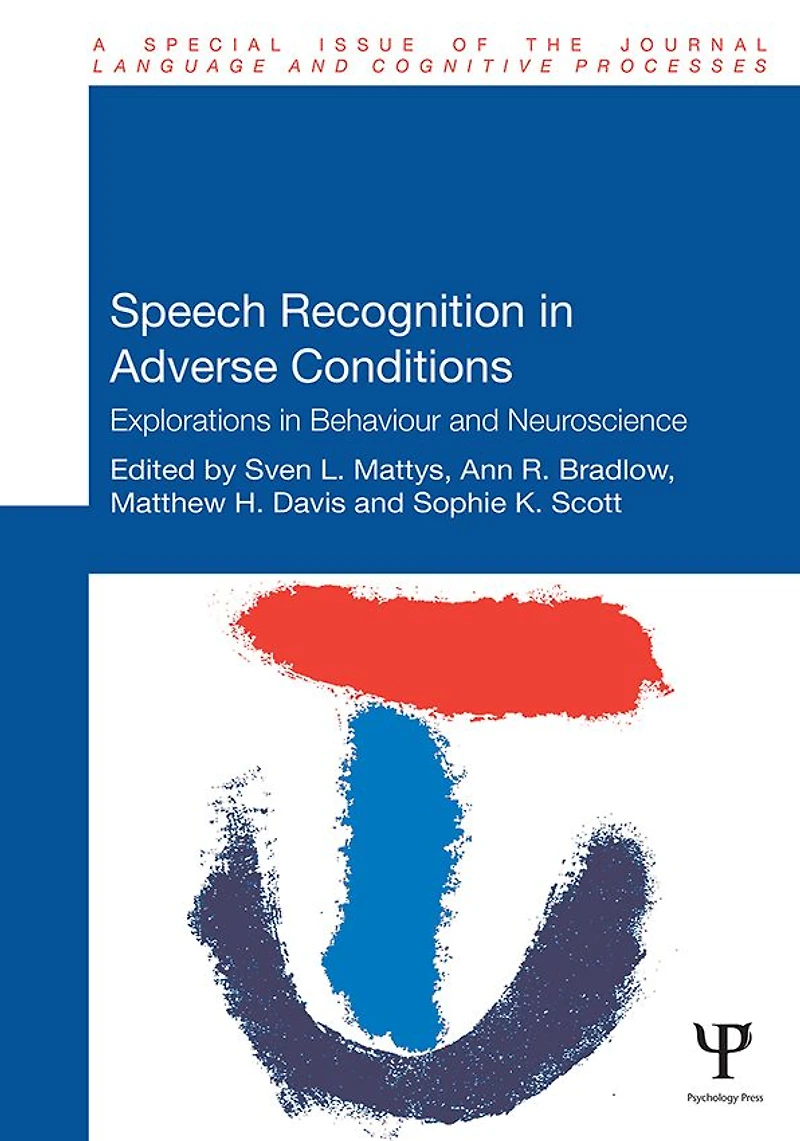
Speech Recognition Adverse Conditions: Explorations Behaviour and Neuroscience in Bloomington, MN
By Barnes & Noble
Current price: $57.99

Speech Recognition Adverse Conditions: Explorations Behaviour and Neuroscience in Bloomington, MN
Current price: $57.99
Loading Inventory...
Size: EBook
Speech recognition in ‘adverse conditions’ has been a familiar area of research in computer science, engineering, and hearing sciences for several decades. In contrast, most psycholinguistic theories of speech recognition are built upon evidence gathered from tasks performed by healthy listeners on carefully recorded speech, in a quiet environment, and under conditions of undivided attention. Building upon the momentum initiated by the Psycholinguistic Approaches to Speech Recognition in Adverse Conditions workshop held in Bristol, UK, in 2010, the aim of this volume is to promote a multi-disciplinary, yet unified approach to the perceptual, cognitive, and neuro-physiological mechanisms underpinning the recognition of degraded speech, variable speech, speech experienced under cognitive load, and speech experienced by theoretically relevant populations. This collection opens with a review of the literature and a formal classification of adverse conditions. The research articles then highlight those adverse conditions with the greatest potential for constraining theory, showing that some speech phenomena often believed to be immutable can be affected by noise, surface variations, or attentional set in ways that will force researchers to rethink their theory. This volume is essential for those interested in speech recognition outside laboratory constraints.
Speech recognition in ‘adverse conditions’ has been a familiar area of research in computer science, engineering, and hearing sciences for several decades. In contrast, most psycholinguistic theories of speech recognition are built upon evidence gathered from tasks performed by healthy listeners on carefully recorded speech, in a quiet environment, and under conditions of undivided attention. Building upon the momentum initiated by the Psycholinguistic Approaches to Speech Recognition in Adverse Conditions workshop held in Bristol, UK, in 2010, the aim of this volume is to promote a multi-disciplinary, yet unified approach to the perceptual, cognitive, and neuro-physiological mechanisms underpinning the recognition of degraded speech, variable speech, speech experienced under cognitive load, and speech experienced by theoretically relevant populations. This collection opens with a review of the literature and a formal classification of adverse conditions. The research articles then highlight those adverse conditions with the greatest potential for constraining theory, showing that some speech phenomena often believed to be immutable can be affected by noise, surface variations, or attentional set in ways that will force researchers to rethink their theory. This volume is essential for those interested in speech recognition outside laboratory constraints.
Shop Similar Products








Find at Mall of America® in Bloomington, MN
Visit at Mall of America® in Bloomington, MN