


Home
Sounds Like Life: Sound-Symbolic Grammar, Performance, and Cognition in Pastaza Quechua
Barnes and Noble
Loading Inventory...
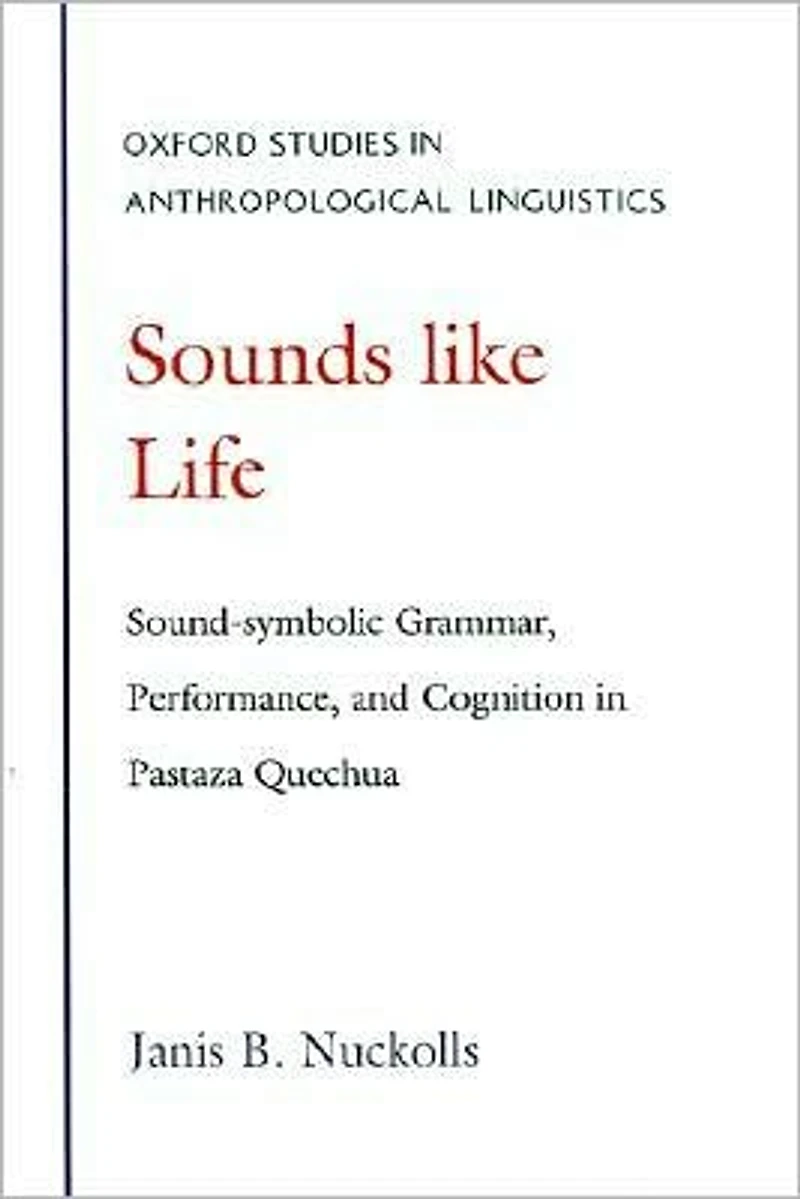
Sounds Like Life: Sound-Symbolic Grammar, Performance, and Cognition in Pastaza Quechua in Bloomington, MN
By Barnes & Noble
Current price: $68.99
Sounds Like Life: Sound-Symbolic Grammar, Performance, and Cognition in Pastaza Quechua in Bloomington, MN
Current price: $68.99
Loading Inventory...
Size: EBook
Sound-symbolism occurs when words resemble the sounds associated with the phenomena they attempt to describe, rather than an arbitrary representation. For example the word raven is arbitrary in that it does not resemble a raven; cuckoo, however, is sound -symbolic in that it resembles the bird's call. In Sounds Like Life, Janis Nuckolls studies the occurrence of sound-symbolic words in Pastaza Quechua (a dialect of Quechua), which is spoken in eastern Ecuador. The use of sound-symbolic words is much more prevalent in Pastaza Quechua than in any other language, and they symbolize a wider range of sensory perceptions including sounds, rhythms, and visual patterns. Nuckolls uses discourse data from everyday contexts to demonstrate the Quechua speakers' elaborate schematic perceptual structure to describe experience through sound-symbolic language. With words for contact with a surface, opening and closing, falling, sudden realizations, and moving through water and space, Nuckolls finds that sound-symbolism is integral to the Quechua speakers' way of thinking about and expressing their experience of the world.
Sound-symbolism occurs when words resemble the sounds associated with the phenomena they attempt to describe, rather than an arbitrary representation. For example the word raven is arbitrary in that it does not resemble a raven; cuckoo, however, is sound -symbolic in that it resembles the bird's call. In Sounds Like Life, Janis Nuckolls studies the occurrence of sound-symbolic words in Pastaza Quechua (a dialect of Quechua), which is spoken in eastern Ecuador. The use of sound-symbolic words is much more prevalent in Pastaza Quechua than in any other language, and they symbolize a wider range of sensory perceptions including sounds, rhythms, and visual patterns. Nuckolls uses discourse data from everyday contexts to demonstrate the Quechua speakers' elaborate schematic perceptual structure to describe experience through sound-symbolic language. With words for contact with a surface, opening and closing, falling, sudden realizations, and moving through water and space, Nuckolls finds that sound-symbolism is integral to the Quechua speakers' way of thinking about and expressing their experience of the world.
Shop Similar Products


![Cherry Hill 12: What Love Sounds Like [Cherry Hill 12] (Siren Publishing LoveXtreme Forever)](https://cdn.mall.adeptmind.ai/https%253A%252F%252Fcdn.shopify.com%252Fs%252Ffiles%252F1%252F0674%252F5433%252F7265%252Ffiles%252F9781642437973_p0.jpg_medium.webp)







Find at Mall of America® in Bloomington, MN
Visit at Mall of America® in Bloomington, MN