


Home
Society, State, and Urbanism: Ibn Khaldun's Sociological Thought
Barnes and Noble
Loading Inventory...
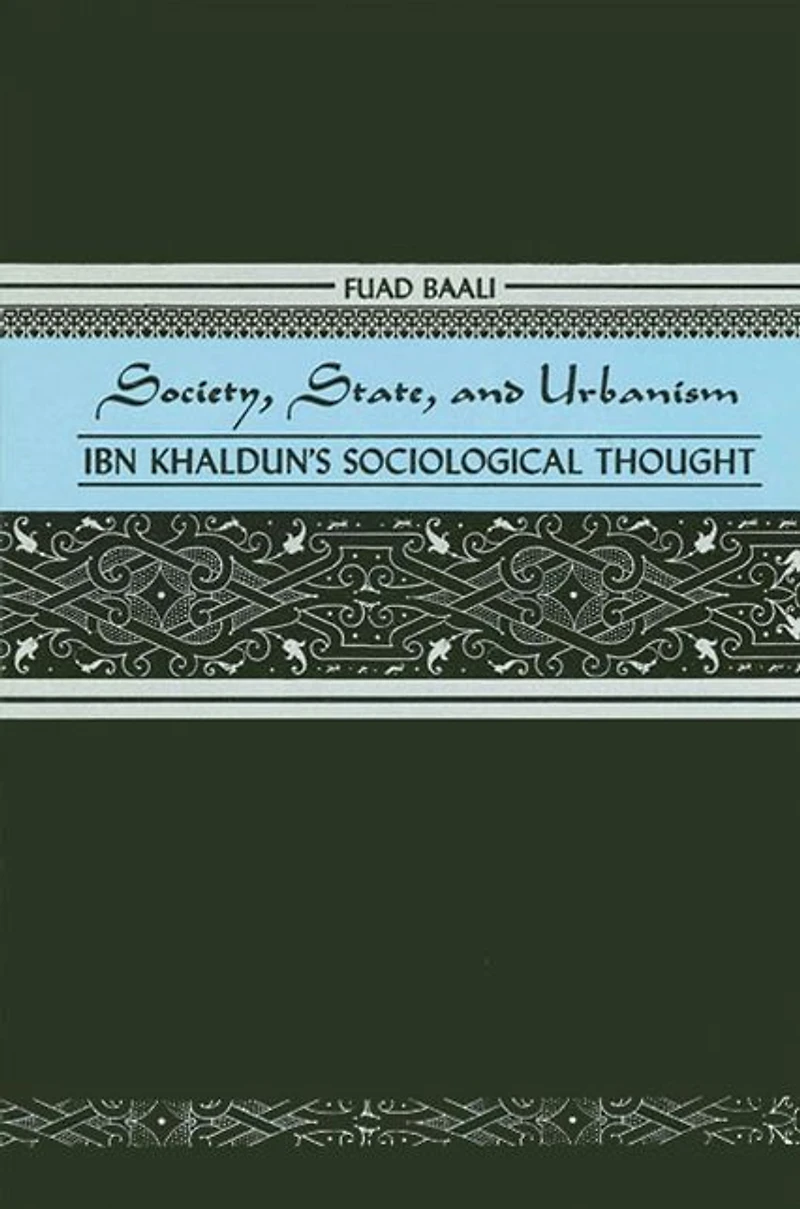
Society, State, and Urbanism: Ibn Khaldun's Sociological Thought in Bloomington, MN
By Barnes & Noble
Current price: $35.95

Society, State, and Urbanism: Ibn Khaldun's Sociological Thought in Bloomington, MN
Current price: $35.95
Loading Inventory...
Size: Paperback
This book probes the nature, scope, and methods of 'ilm al- 'umran, the new science of human social organization, as it is developed in Ibn Khaldun's 14th-century masterpiece, the Mugaddimah. It explores his ideas and observations on society, culture, socialization, social control, the state, asabiyah (social solidarity), history as a cyclical movement, urbanization, and the typology of badawa (primitive life) and hadara (civilized life or urbanism).Through a comparative perspective, this study illustrates that Khaldun's ideas about society have conceptually preceded those of Machiavelli, Vico, and Turgot, as well as those of Montesqueau, Comte, Durkheim, Gumplowicz, Spengler, Tonnies, and even Marx. Society, State, and Urbanism demonstrates that Ibn Khaldun's thought is relevant to contemporary sociological theory, and that his very language differs little from that of classical and modern sociologists.
This book probes the nature, scope, and methods of 'ilm al- 'umran, the new science of human social organization, as it is developed in Ibn Khaldun's 14th-century masterpiece, the Mugaddimah. It explores his ideas and observations on society, culture, socialization, social control, the state, asabiyah (social solidarity), history as a cyclical movement, urbanization, and the typology of badawa (primitive life) and hadara (civilized life or urbanism).Through a comparative perspective, this study illustrates that Khaldun's ideas about society have conceptually preceded those of Machiavelli, Vico, and Turgot, as well as those of Montesqueau, Comte, Durkheim, Gumplowicz, Spengler, Tonnies, and even Marx. Society, State, and Urbanism demonstrates that Ibn Khaldun's thought is relevant to contemporary sociological theory, and that his very language differs little from that of classical and modern sociologists.
Shop Similar Products













Find at Mall of America® in Bloomington, MN
Visit at Mall of America® in Bloomington, MN