


Home
Revisiting Shakespeare's Lost Play: Cardenio/Double Falsehood the Eighteenth Century
Barnes and Noble
Loading Inventory...
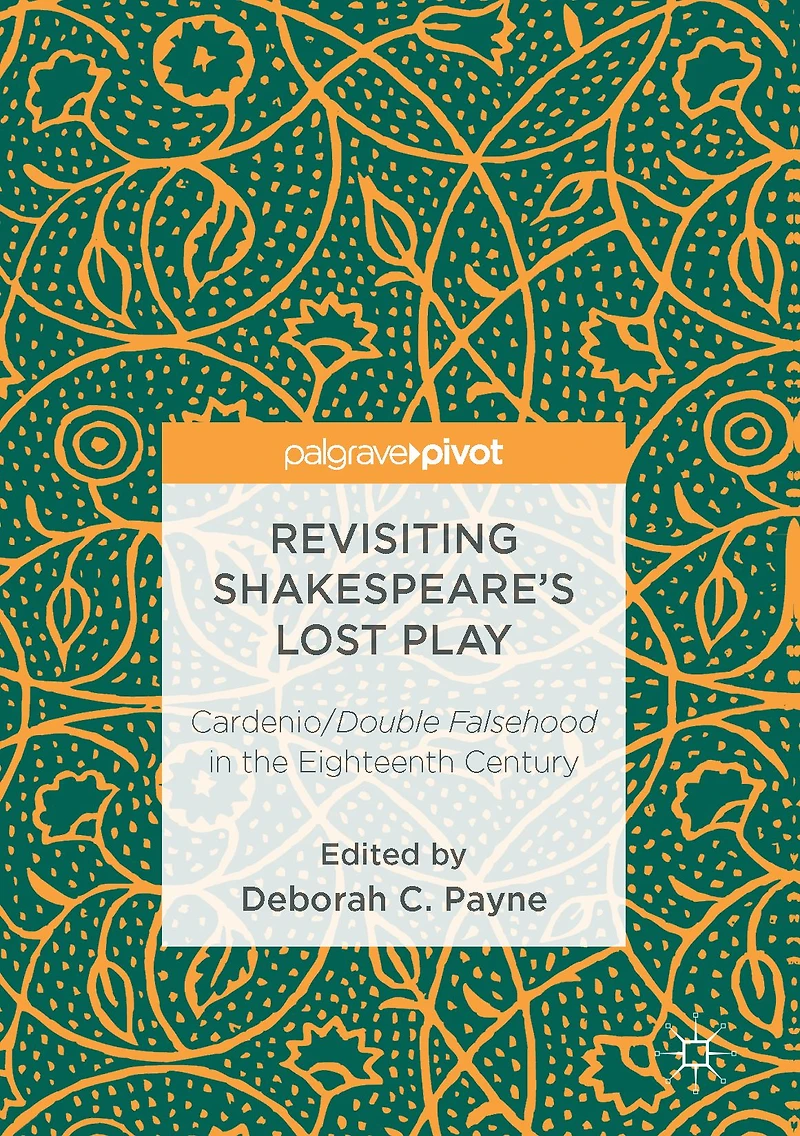

Revisiting Shakespeare's Lost Play: Cardenio/Double Falsehood the Eighteenth Century in Bloomington, MN
By Barnes & Noble
Current price: $59.99

Revisiting Shakespeare's Lost Play: Cardenio/Double Falsehood the Eighteenth Century in Bloomington, MN
Current price: $59.99
Loading Inventory...
Size: EBook
This collection of essays centres on Double Falsehood, Lewis Theobald’s 1727 adaptation of the “lost” play of Cardenio, possibly co-authored by John Fletcher and William Shakespeare. In a departure from most scholarship to date, the contributors fold Double Falsehood back into the milieu for which it was created rather than searching for traces of Shakespeare in the text. Robert D. Hume’s knowledge of theatre history permits a fresh take on the forgery question as well as the Shakespeare authorship controversy. Diana Solomon’s understanding of eighteenth-century rape culture and Jean I. Marsden’s command of contemporary adaptation practices both emphasise the play’s immediate social and theatrical contexts. And, finally, Deborah C. Payne’s familiarity with the eighteenth-century stage allows for a reconsideration of Double Falsehood as integral to a debate between Theobald, Alexander Pope, and John Gay over the future of the English drama.
This collection of essays centres on Double Falsehood, Lewis Theobald’s 1727 adaptation of the “lost” play of Cardenio, possibly co-authored by John Fletcher and William Shakespeare. In a departure from most scholarship to date, the contributors fold Double Falsehood back into the milieu for which it was created rather than searching for traces of Shakespeare in the text. Robert D. Hume’s knowledge of theatre history permits a fresh take on the forgery question as well as the Shakespeare authorship controversy. Diana Solomon’s understanding of eighteenth-century rape culture and Jean I. Marsden’s command of contemporary adaptation practices both emphasise the play’s immediate social and theatrical contexts. And, finally, Deborah C. Payne’s familiarity with the eighteenth-century stage allows for a reconsideration of Double Falsehood as integral to a debate between Theobald, Alexander Pope, and John Gay over the future of the English drama.
Shop Similar Products








Find at Mall of America® in Bloomington, MN
Visit at Mall of America® in Bloomington, MN