


Home
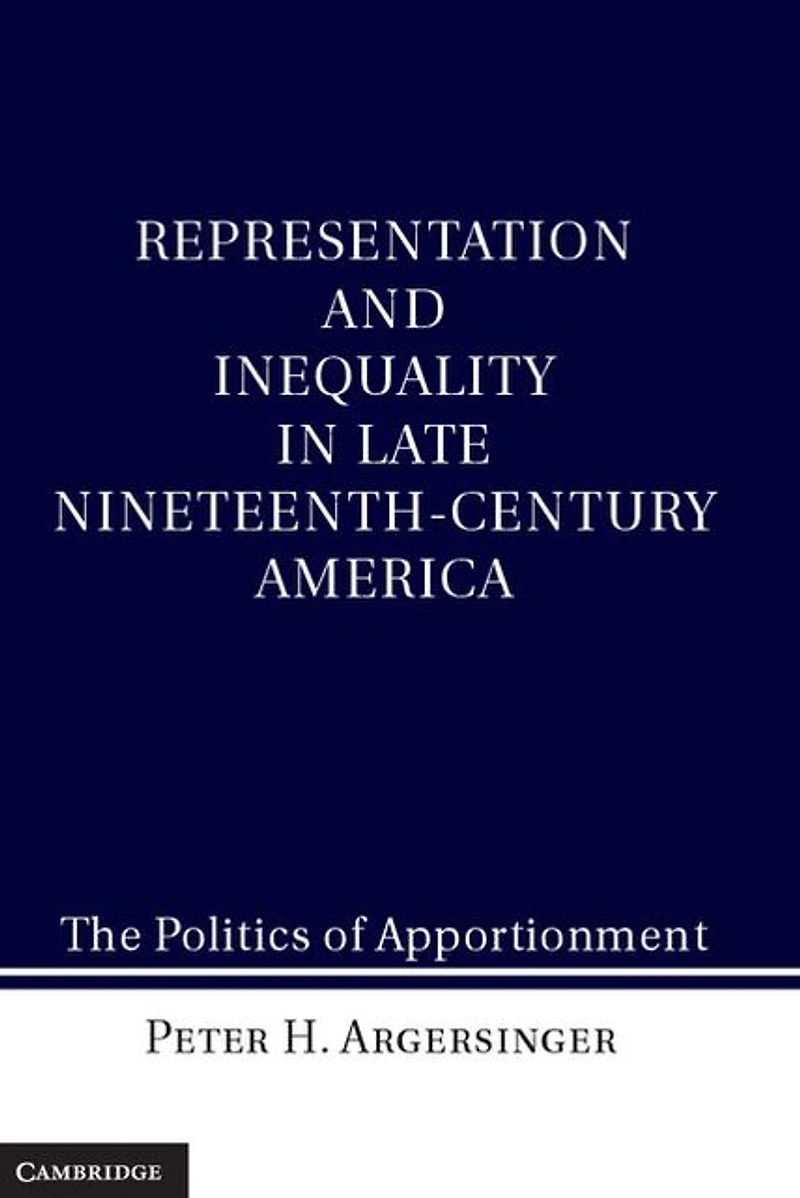
Representation and Inequality Late Nineteenth-Century America: The Politics of Apportionment
Barnes and Noble
Loading Inventory...
Representation and Inequality Late Nineteenth-Century America: The Politics of Apportionment in Bloomington, MN
By Barnes & Noble
Current price: $44.00

Representation and Inequality Late Nineteenth-Century America: The Politics of Apportionment in Bloomington, MN
Current price: $44.00
Loading Inventory...
Size: EBook
This book demonstrates that apportionment, although long overlooked by scholars, dominated state politics in late nineteenth-century America, setting the boundaries not only for legislative districts but for the nature of representative democracy. The book examines the fierce struggles over apportionment in the Midwest, where a distinctive constitutional and electoral context shaped their course with momentous consequences. As the major parties alternated in effectively disenfranchising their opponents through gerrymanders, growing tensions challenged established patterns of political behaviour and precipitated intense and even dangerous disputes. Unprecedented judicial intervention overturned gerrymanders in stunning decisions that electrified the public but intensified rather than resolved political conflict and uncertainty. Ultimately, America's political ideal of representative democracy was frustrated by its own political institutions, including the courts, because their decisions against gerrymandering in the 1890s helped parties and legislatures entrench the practice as a basic and profoundly undemocratic feature of American politics in the twentieth century.
This book demonstrates that apportionment, although long overlooked by scholars, dominated state politics in late nineteenth-century America, setting the boundaries not only for legislative districts but for the nature of representative democracy. The book examines the fierce struggles over apportionment in the Midwest, where a distinctive constitutional and electoral context shaped their course with momentous consequences. As the major parties alternated in effectively disenfranchising their opponents through gerrymanders, growing tensions challenged established patterns of political behaviour and precipitated intense and even dangerous disputes. Unprecedented judicial intervention overturned gerrymanders in stunning decisions that electrified the public but intensified rather than resolved political conflict and uncertainty. Ultimately, America's political ideal of representative democracy was frustrated by its own political institutions, including the courts, because their decisions against gerrymandering in the 1890s helped parties and legislatures entrench the practice as a basic and profoundly undemocratic feature of American politics in the twentieth century.
Shop Similar Products









Find at Mall of America® in Bloomington, MN
Visit at Mall of America® in Bloomington, MN