


Home
Rendering Violence: Riots, Strikes, and Upheaval in Nineteenth-Century American Art
Barnes and Noble
Loading Inventory...
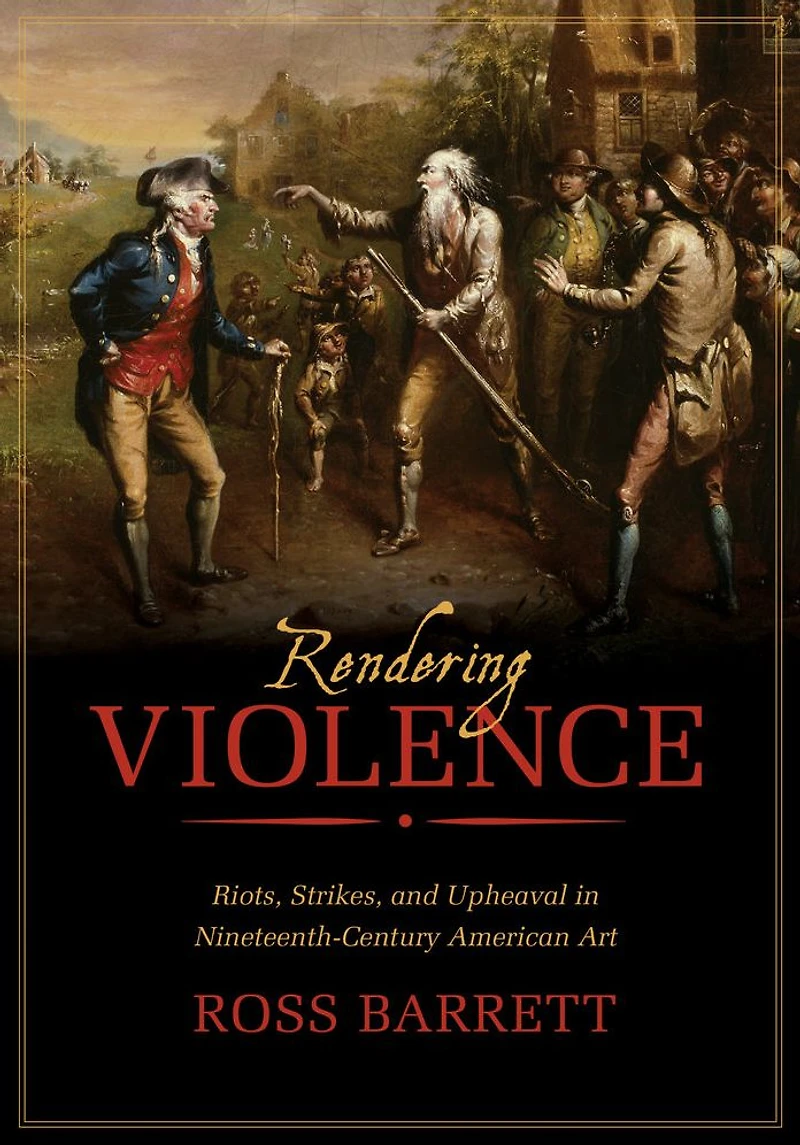
Rendering Violence: Riots, Strikes, and Upheaval in Nineteenth-Century American Art in Bloomington, MN
By Barnes & Noble
Current price: $60.00

Rendering Violence: Riots, Strikes, and Upheaval in Nineteenth-Century American Art in Bloomington, MN
Current price: $60.00
Loading Inventory...
Size: Hardcover
Rendering Violence explores the problems and possibilities that the subject of political violence presented to American painters working between 1830 and 1890, a turbulent period during which common citizens frequently abandoned orderly forms of democratic expression to riot, strike, and protest violently. Examining a range of critical texts, this book shows for the first time that nineteenthcentury American aesthetic theory defined painting as a privileged vehicle for the representation of political order and the stabilization of liberaldemocratic life. Analyzing seven paintings by Thomas Cole, John Quidor, Nathaniel Jocelyn, George Henry Hall, Thomas Nast, Martin Leisser, and Robert Koehler, Ross Barrett reconstructs the strategies that American artists developed to explore the symbolic power of violence in a medium aligned ideologically with lawful democracy. He argues that American paintings of upheaval “render” their subjects in divergent ways. By exploring the inner conflicts that structure these painterly projects, Barrett sheds new light on the politicized pressures that shaped visual representation in the nineteenth century and on the anxieties and ambivalences that have long defined American responses to political turmoil.
Rendering Violence explores the problems and possibilities that the subject of political violence presented to American painters working between 1830 and 1890, a turbulent period during which common citizens frequently abandoned orderly forms of democratic expression to riot, strike, and protest violently. Examining a range of critical texts, this book shows for the first time that nineteenthcentury American aesthetic theory defined painting as a privileged vehicle for the representation of political order and the stabilization of liberaldemocratic life. Analyzing seven paintings by Thomas Cole, John Quidor, Nathaniel Jocelyn, George Henry Hall, Thomas Nast, Martin Leisser, and Robert Koehler, Ross Barrett reconstructs the strategies that American artists developed to explore the symbolic power of violence in a medium aligned ideologically with lawful democracy. He argues that American paintings of upheaval “render” their subjects in divergent ways. By exploring the inner conflicts that structure these painterly projects, Barrett sheds new light on the politicized pressures that shaped visual representation in the nineteenth century and on the anxieties and ambivalences that have long defined American responses to political turmoil.
Shop Similar Products













Find at Mall of America® in Bloomington, MN
Visit at Mall of America® in Bloomington, MN