


Home
Prices and Quantities: Fundamentals of Microeconomics
Barnes and Noble
Loading Inventory...


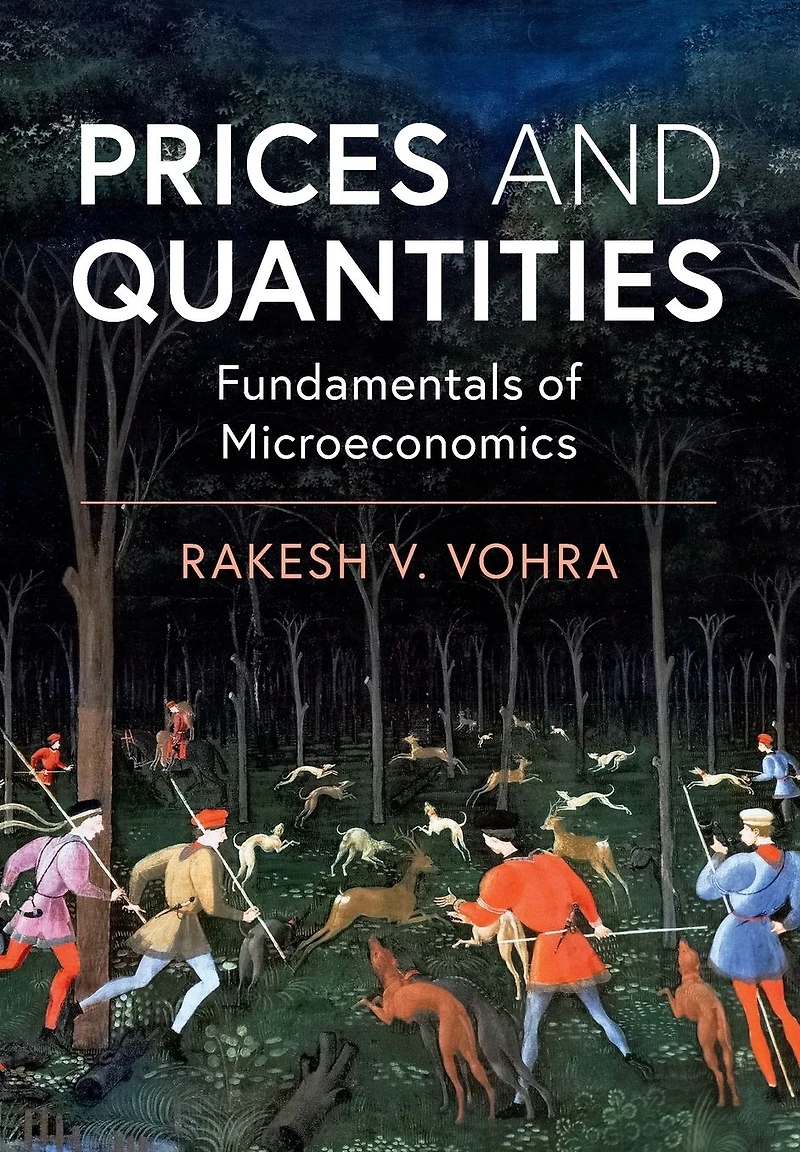
Prices and Quantities: Fundamentals of Microeconomics in Bloomington, MN
By Barnes & Noble
Current price: $43.00

Prices and Quantities: Fundamentals of Microeconomics in Bloomington, MN
Current price: $43.00
Loading Inventory...
Size: EBook
Rakesh V. Vohra offers a unique approach to studying and understanding intermediate microeconomics by reversing the conventional order of treatment, starting with topics that are mathematically simpler and progressing to the more complex. The book begins with monopoly, which requires single variable rather than multivariable calculus and allows students to focus clearly on the fundamental trade-off at the heart of economics: margin versus volume. Imperfect competition and the contrast with monopoly follows, introducing the notion of Nash equilibrium. Perfect competition is addressed toward the end of the book, and framed as a model of non-strategic behavior by firms and agents. The last chapter is devoted to externalities, with an emphasis on how one might design competitive markets to price externalities and linking the difficulties to the problem of efficient provision of public goods. Real-life examples engage the reader while encouraging them to think critically about the interplay between model and reality.
Rakesh V. Vohra offers a unique approach to studying and understanding intermediate microeconomics by reversing the conventional order of treatment, starting with topics that are mathematically simpler and progressing to the more complex. The book begins with monopoly, which requires single variable rather than multivariable calculus and allows students to focus clearly on the fundamental trade-off at the heart of economics: margin versus volume. Imperfect competition and the contrast with monopoly follows, introducing the notion of Nash equilibrium. Perfect competition is addressed toward the end of the book, and framed as a model of non-strategic behavior by firms and agents. The last chapter is devoted to externalities, with an emphasis on how one might design competitive markets to price externalities and linking the difficulties to the problem of efficient provision of public goods. Real-life examples engage the reader while encouraging them to think critically about the interplay between model and reality.


















Find at Mall of America® in Bloomington, MN
Visit at Mall of America® in Bloomington, MN