


Home
Prevalence and Severity of Dental Fluorosis in the United States, 1999–2004
Barnes and Noble
Loading Inventory...
Prevalence and Severity of Dental Fluorosis in the United States, 1999–2004 in Bloomington, MN
By Barnes & Noble
Current price: $1.99

Prevalence and Severity of Dental Fluorosis in the United States, 1999–2004 in Bloomington, MN
Current price: $1.99
Loading Inventory...
Size: EBook
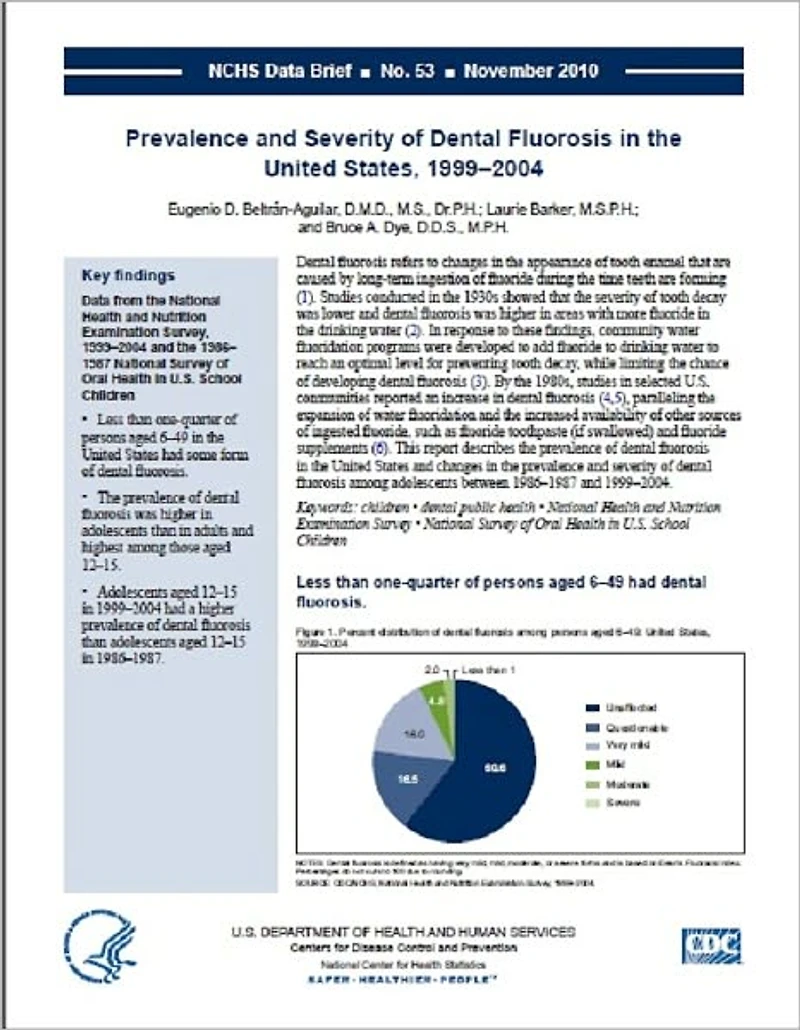
Dental fluorosis refers to changes in the appearance of tooth enamel that are caused by long-term ingestion of fluoride during the time the teeth are forming. (1). Studies conducted in the 1930s showed that the severity of tooth decay was lower and dental fluorosis was higher in areas with more fluoride in the drinking water (2). In response to these findings, community water fluoridation programs were developed to add fluoride to drinking water to reach an optimal level for preventing tooth decay, while limiting the chance of developing dental fluorosis (3). By the 1980s, studies in selected U.S. communities reported an increase in dental fluorosis (4,5), paralleling the expansion of water fluoridation and the increased availability of other sources of ingested fluoride, such as fluoride toothpaste (if swallowed) and fluoride supplements (6). This report describes the prevalence of dental fluorosis in the United States and changes in the prevalence and severity of dental fluorosis among adolescents between 1986–1987 and 1999–2004.
Dental fluorosis refers to changes in the appearance of tooth enamel that are caused by long-term ingestion of fluoride during the time the teeth are forming. (1). Studies conducted in the 1930s showed that the severity of tooth decay was lower and dental fluorosis was higher in areas with more fluoride in the drinking water (2). In response to these findings, community water fluoridation programs were developed to add fluoride to drinking water to reach an optimal level for preventing tooth decay, while limiting the chance of developing dental fluorosis (3). By the 1980s, studies in selected U.S. communities reported an increase in dental fluorosis (4,5), paralleling the expansion of water fluoridation and the increased availability of other sources of ingested fluoride, such as fluoride toothpaste (if swallowed) and fluoride supplements (6). This report describes the prevalence of dental fluorosis in the United States and changes in the prevalence and severity of dental fluorosis among adolescents between 1986–1987 and 1999–2004.
Shop Similar Products















Find at Mall of America® in Bloomington, MN
Visit at Mall of America® in Bloomington, MN