


Home
Postclassical Greek Prepositions and Conceptual Metaphor: Cognitive Semantic Analysis Biblical Interpretation
Barnes and Noble
Loading Inventory...
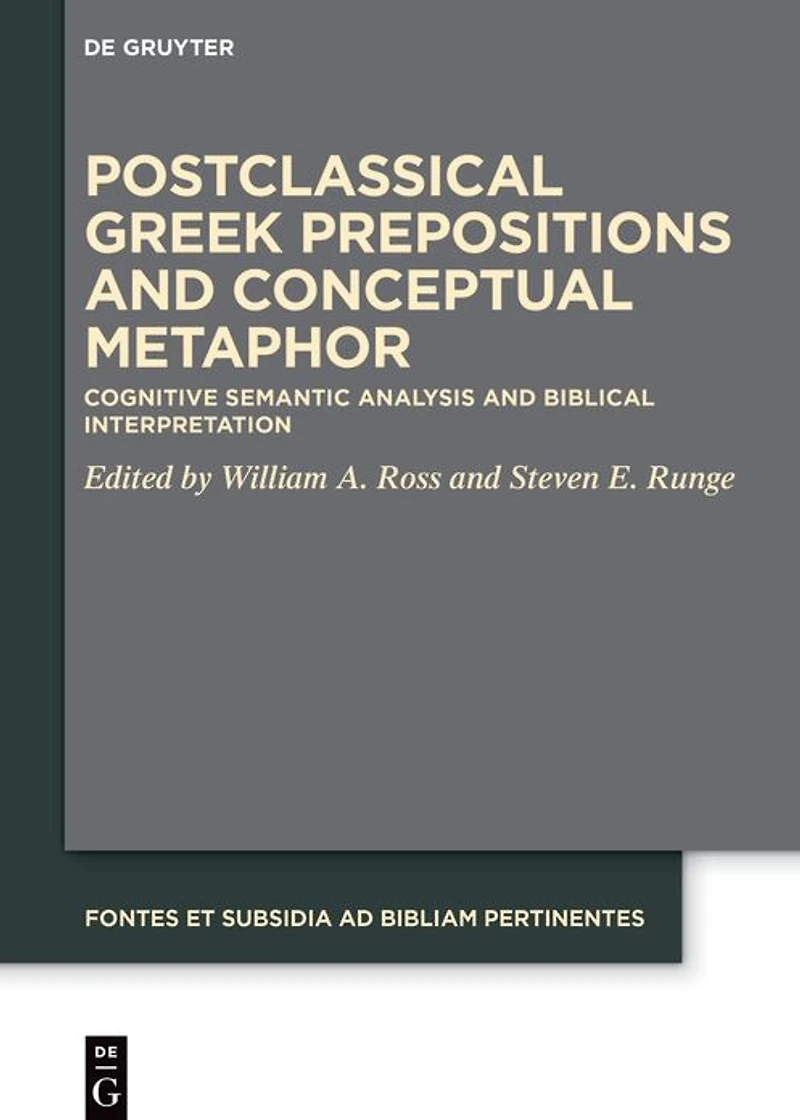
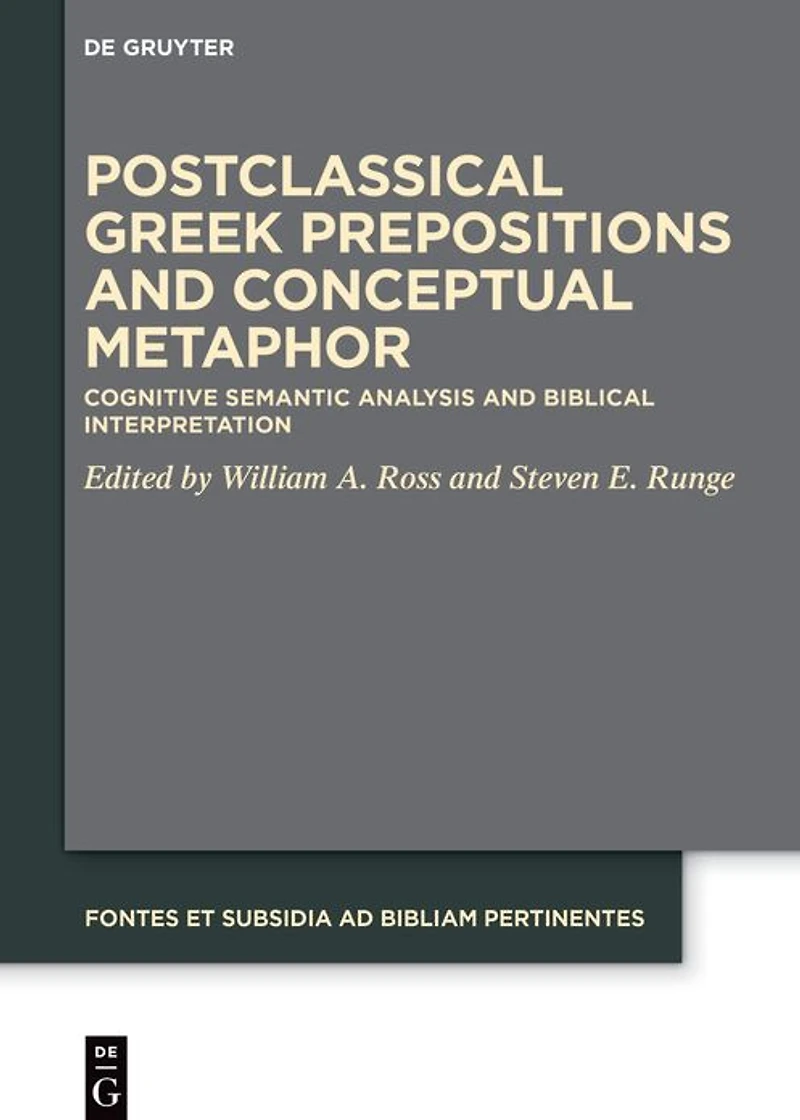
Postclassical Greek Prepositions and Conceptual Metaphor: Cognitive Semantic Analysis Biblical Interpretation in Bloomington, MN
By Barnes & Noble
Current price: $152.99

Postclassical Greek Prepositions and Conceptual Metaphor: Cognitive Semantic Analysis Biblical Interpretation in Bloomington, MN
Current price: $152.99
Loading Inventory...
Size: EBook
Traditional semantic description of Ancient Greek prepositions has struggled to synthesize the varied and seemingly arbitrary uses into something other than a disparate, sometimes overlapping list of senses. The Cognitive Linguistic approach of prototype theory holds that the meanings of a preposition are better explained as a semantic network of related senses that radially extend from a primary, spatial sense. These radial extensions arise from contextual factors that affect the metaphorical representation of the spatial scene that is profiled. Building upon the Cognitive Linguistic descriptions of Bortone (2009) and Luraghi (2009), linguists, biblical scholars, and Greek lexicographers apply these developments to offer more in-depth descriptions of select postclassical Greek prepositions and consider the exegetical and lexicographical implications of these findings. This volume will be of interest to those studying or researching the Greek of the New Testament seeking more linguistically-informed description of prepositional semantics, particularly with a focus on the exegetical implications of choice among seemingly similar prepositions in Greek and the challenges of potentially mismatched translation into English.
Traditional semantic description of Ancient Greek prepositions has struggled to synthesize the varied and seemingly arbitrary uses into something other than a disparate, sometimes overlapping list of senses. The Cognitive Linguistic approach of prototype theory holds that the meanings of a preposition are better explained as a semantic network of related senses that radially extend from a primary, spatial sense. These radial extensions arise from contextual factors that affect the metaphorical representation of the spatial scene that is profiled. Building upon the Cognitive Linguistic descriptions of Bortone (2009) and Luraghi (2009), linguists, biblical scholars, and Greek lexicographers apply these developments to offer more in-depth descriptions of select postclassical Greek prepositions and consider the exegetical and lexicographical implications of these findings. This volume will be of interest to those studying or researching the Greek of the New Testament seeking more linguistically-informed description of prepositional semantics, particularly with a focus on the exegetical implications of choice among seemingly similar prepositions in Greek and the challenges of potentially mismatched translation into English.
Shop Similar Products
















Find at Mall of America® in Bloomington, MN
Visit at Mall of America® in Bloomington, MN