


Home
Philodemus on Rhetoric Books 1 and 2: Translation Exegetical Essays
Barnes and Noble
Loading Inventory...
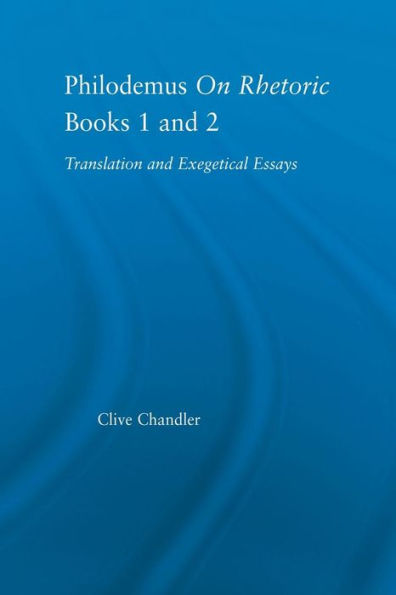
Philodemus on Rhetoric Books 1 and 2: Translation Exegetical Essays in Bloomington, MN
Current price: $190.00

Philodemus on Rhetoric Books 1 and 2: Translation Exegetical Essays in Bloomington, MN
Current price: $190.00
Loading Inventory...
Size: Hardcover
The Epicureans were notorious in antiquity for denigrating most forms of civic participation and for rejecting those cultural activities (such as poetry, music, and rhetoric) which are broadly labelled paideia. In this, as in all else, they ostensibly took their cue from Epicurus and the other founders of the School. In contrast to this, the Epicurean Philodemus, who lived and wrote in Italy in the first century B.C., presents an interesting case. For a substantial portion of his surviving work is preoccupied with investigations into this paideia and with demonstrating how an orthodox Epicurean is to approach them. This book selects one of those investigations, the first two books of Philodemus' On Rhetoric. An annotated translation is provided of the most recent edition of this text (Longo Auricchio 1977) which is followed by a series of essays which aim to clarify Philodemus' conception of, and approach to, the problem of rhetoric for Epicureans, and in particular the way he manages citations from the works of the founders to support his arguments against other Epicureans who take a different view. The book constitutes a very helpful guide to this fragmentary and difficult text.
The Epicureans were notorious in antiquity for denigrating most forms of civic participation and for rejecting those cultural activities (such as poetry, music, and rhetoric) which are broadly labelled paideia. In this, as in all else, they ostensibly took their cue from Epicurus and the other founders of the School. In contrast to this, the Epicurean Philodemus, who lived and wrote in Italy in the first century B.C., presents an interesting case. For a substantial portion of his surviving work is preoccupied with investigations into this paideia and with demonstrating how an orthodox Epicurean is to approach them. This book selects one of those investigations, the first two books of Philodemus' On Rhetoric. An annotated translation is provided of the most recent edition of this text (Longo Auricchio 1977) which is followed by a series of essays which aim to clarify Philodemus' conception of, and approach to, the problem of rhetoric for Epicureans, and in particular the way he manages citations from the works of the founders to support his arguments against other Epicureans who take a different view. The book constitutes a very helpful guide to this fragmentary and difficult text.
Shop Similar Products















Find at Mall of America® in Bloomington, MN
Visit at Mall of America® in Bloomington, MN