


Home
Persuasion after Rhetoric the Eighteenth Century and Romanticism
Barnes and Noble
Loading Inventory...
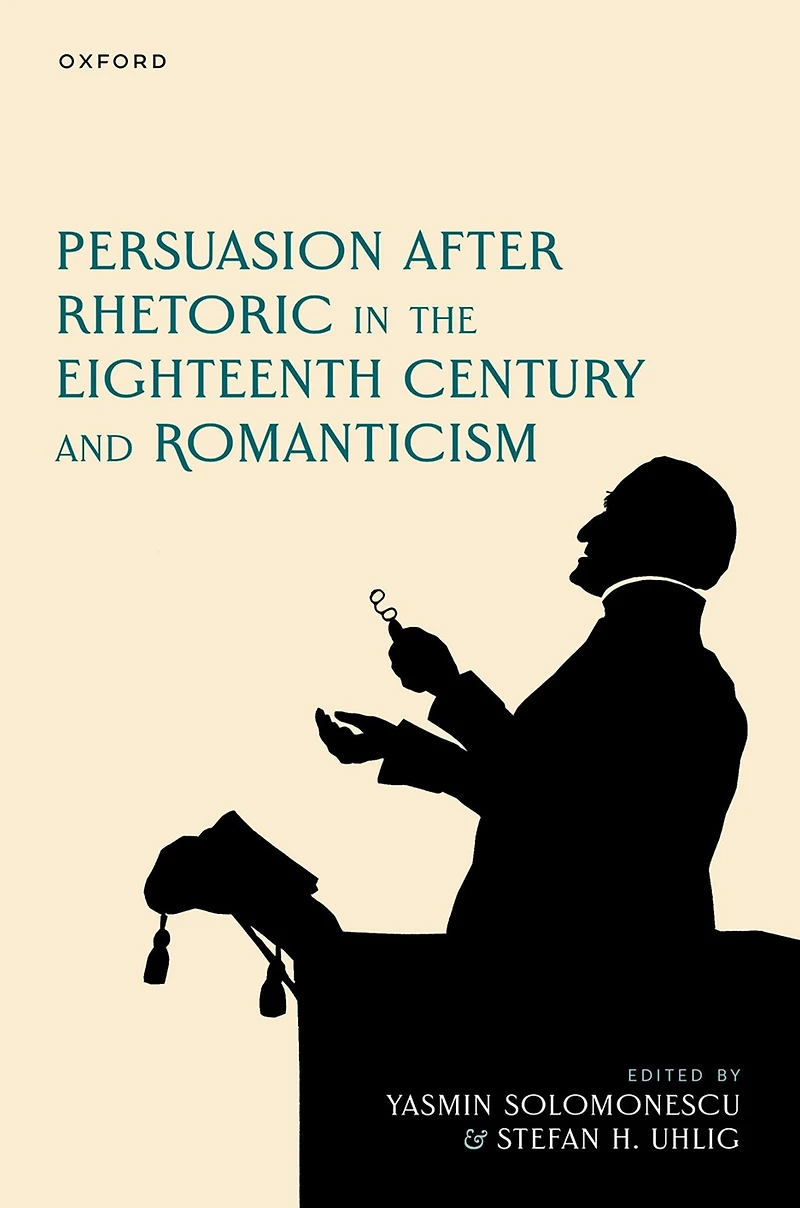
Persuasion after Rhetoric the Eighteenth Century and Romanticism in Bloomington, MN
By Barnes & Noble
Current price: $104.99

Persuasion after Rhetoric the Eighteenth Century and Romanticism in Bloomington, MN
Current price: $104.99
Loading Inventory...
Size: EBook
While the question of how rhetoric lost authority to modern philosophical and scientific inquiry has drawn much scrutiny, we have paid less attention to how values that were once bound up with rhetoric were rearticulated after its demise. This volume explores how persuasion ceased to be the seemingly self-evident objective of rhetoric and became, instead, a variable and substantive focus for discussion in its own right. After rhetoric ceded much of its centrality to logic and empirical procedures, the significance and implications of persuasion were the subject of renewed attention in a range of different fields, including philosophy, law, poetry, novels, botany, cultural criticism, historiography, political thought, and public lecturing. Persuasion after Rhetoric in the Eighteenth Century and Romanticism maps how values of persuasion were adapted and diversified in ways that still resonate with current arguments about conviction, understanding, and belief. Contributors address the figurations of persuasion in a range of theorists and writers, from Jean-Jacques Rousseau, Adam Smith, Immanuel Kant, Edmund Burke, and Mary Wollstonecraft, to Samuel Richardson, Jane Austen, Thomas De Quincey, Thomas Campbell, William Hazlitt, Heinrich Heine, William Lloyd Garrison, and Frances Ellen Watkins Harper. This collection offers a detailed account of persuasive interests at the threshold of modernity. It also prompts us to rethink persuasion now that its continued efficacy seems at risk in a fragmented public sphere.
While the question of how rhetoric lost authority to modern philosophical and scientific inquiry has drawn much scrutiny, we have paid less attention to how values that were once bound up with rhetoric were rearticulated after its demise. This volume explores how persuasion ceased to be the seemingly self-evident objective of rhetoric and became, instead, a variable and substantive focus for discussion in its own right. After rhetoric ceded much of its centrality to logic and empirical procedures, the significance and implications of persuasion were the subject of renewed attention in a range of different fields, including philosophy, law, poetry, novels, botany, cultural criticism, historiography, political thought, and public lecturing. Persuasion after Rhetoric in the Eighteenth Century and Romanticism maps how values of persuasion were adapted and diversified in ways that still resonate with current arguments about conviction, understanding, and belief. Contributors address the figurations of persuasion in a range of theorists and writers, from Jean-Jacques Rousseau, Adam Smith, Immanuel Kant, Edmund Burke, and Mary Wollstonecraft, to Samuel Richardson, Jane Austen, Thomas De Quincey, Thomas Campbell, William Hazlitt, Heinrich Heine, William Lloyd Garrison, and Frances Ellen Watkins Harper. This collection offers a detailed account of persuasive interests at the threshold of modernity. It also prompts us to rethink persuasion now that its continued efficacy seems at risk in a fragmented public sphere.
Shop Similar Products








Find at Mall of America® in Bloomington, MN
Visit at Mall of America® in Bloomington, MN