


Home
Perceptual Organization and Visual Recognition
Barnes and Noble
Loading Inventory...
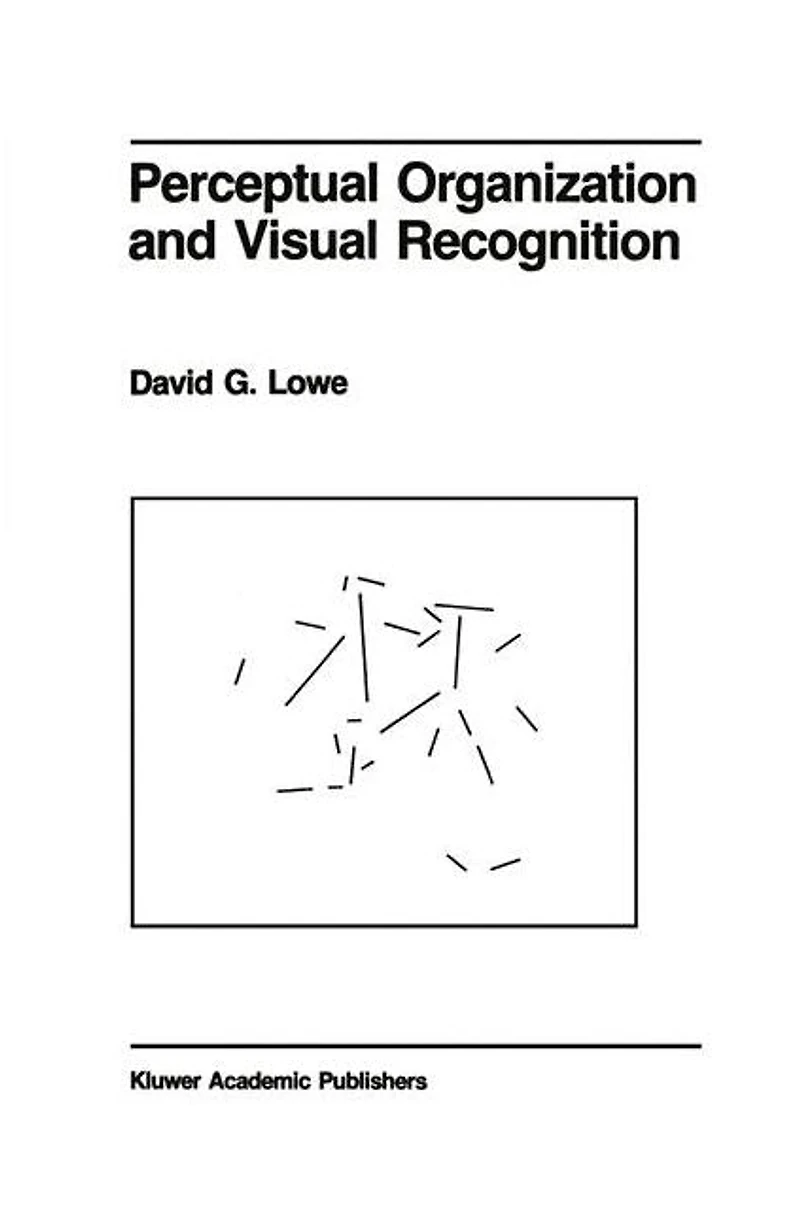
Perceptual Organization and Visual Recognition in Bloomington, MN
By Barnes & Noble
Current price: $109.99

Perceptual Organization and Visual Recognition in Bloomington, MN
Current price: $109.99
Loading Inventory...
Size: Hardcover
COMPUTER VISION is a field of research that encompasses many objectives. A primary goal has been to construct visual sensors that can provide general-purpose robots with the same information about their surroundings as we receive from our own visual senses. This book takes an important step towards this goal by describing a working computer vision system named SCERPO. This system can recognize known three-dimensional objects in ordinary black-and-white images taken from unknown viewpoints, even when parts of the object are undetectable or hidden from view. A second major goal of computer vision research is to provide a computational understanding of human vision. The research presented in this book has many implications for our understanding of human vision, particularly in the areas of perceptual organization and knowledge-based recognition. An attempt has been made to relate each computational result to the relevant areas in the psychology of vision. Since the material is meant to be accessible to a wide range of interdisciplinary readers, the book is written in plain language and attempts to explain most concepts from the starting position of the non-specialist. vii viii PREFACE One of the most important conclusions ansmg from this research is that visual recognition can commonly be achieved directly from the two-dimensional image without any preliminary reconstruction of depth information or surface orientation from the visual input.
COMPUTER VISION is a field of research that encompasses many objectives. A primary goal has been to construct visual sensors that can provide general-purpose robots with the same information about their surroundings as we receive from our own visual senses. This book takes an important step towards this goal by describing a working computer vision system named SCERPO. This system can recognize known three-dimensional objects in ordinary black-and-white images taken from unknown viewpoints, even when parts of the object are undetectable or hidden from view. A second major goal of computer vision research is to provide a computational understanding of human vision. The research presented in this book has many implications for our understanding of human vision, particularly in the areas of perceptual organization and knowledge-based recognition. An attempt has been made to relate each computational result to the relevant areas in the psychology of vision. Since the material is meant to be accessible to a wide range of interdisciplinary readers, the book is written in plain language and attempts to explain most concepts from the starting position of the non-specialist. vii viii PREFACE One of the most important conclusions ansmg from this research is that visual recognition can commonly be achieved directly from the two-dimensional image without any preliminary reconstruction of depth information or surface orientation from the visual input.
Shop Similar Products














Find at Mall of America® in Bloomington, MN
Visit at Mall of America® in Bloomington, MN