


Home
Papers of John Adams, Volume 15: June 1783 - January 1784
Barnes and Noble
Loading Inventory...
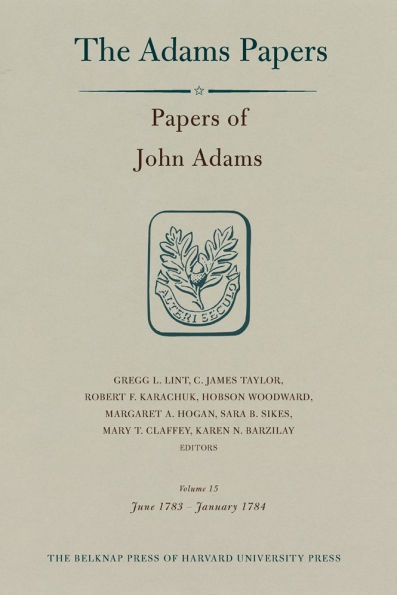
Papers of John Adams, Volume 15: June 1783 - January 1784 in Bloomington, MN
Current price: $130.50

Papers of John Adams, Volume 15: June 1783 - January 1784 in Bloomington, MN
Current price: $130.50
Loading Inventory...
Size: OS
On September 3, 1783, John Adams, Benjamin Franklin, and John Jay signed the definitive AngloAmerican peace treaty. Adams and his colleagues strived to establish a viable relationship between the new nation and its largest trading partner but were stymied by rising British antiAmericanism.
Adams’ diplomatic efforts were also complicated by domestic turmoil. Americans, in a rehearsal for the later FederalistAntifederalist conflict over the United States Constitution, were debating the proper relationship between the central government and the states. Adams, a Federalist as early as 1783, argued persuasively for a government that honored its treaties and paid its foreign debts. But when bills far exceeding the funds available for their redemption were sent to Europe, he was forced to undertake a dangerous winter journey to the Netherlands to raise a new loan and save the United States from financial disaster.
None of the founding fathers equals the candor of John Adams’ observations of his eighteenthcentury world. His letters, always interesting, reveal with absolute clarity Adams’ positions on the personalities and issues of his times.
Adams’ diplomatic efforts were also complicated by domestic turmoil. Americans, in a rehearsal for the later FederalistAntifederalist conflict over the United States Constitution, were debating the proper relationship between the central government and the states. Adams, a Federalist as early as 1783, argued persuasively for a government that honored its treaties and paid its foreign debts. But when bills far exceeding the funds available for their redemption were sent to Europe, he was forced to undertake a dangerous winter journey to the Netherlands to raise a new loan and save the United States from financial disaster.
None of the founding fathers equals the candor of John Adams’ observations of his eighteenthcentury world. His letters, always interesting, reveal with absolute clarity Adams’ positions on the personalities and issues of his times.
On September 3, 1783, John Adams, Benjamin Franklin, and John Jay signed the definitive AngloAmerican peace treaty. Adams and his colleagues strived to establish a viable relationship between the new nation and its largest trading partner but were stymied by rising British antiAmericanism.
Adams’ diplomatic efforts were also complicated by domestic turmoil. Americans, in a rehearsal for the later FederalistAntifederalist conflict over the United States Constitution, were debating the proper relationship between the central government and the states. Adams, a Federalist as early as 1783, argued persuasively for a government that honored its treaties and paid its foreign debts. But when bills far exceeding the funds available for their redemption were sent to Europe, he was forced to undertake a dangerous winter journey to the Netherlands to raise a new loan and save the United States from financial disaster.
None of the founding fathers equals the candor of John Adams’ observations of his eighteenthcentury world. His letters, always interesting, reveal with absolute clarity Adams’ positions on the personalities and issues of his times.
Adams’ diplomatic efforts were also complicated by domestic turmoil. Americans, in a rehearsal for the later FederalistAntifederalist conflict over the United States Constitution, were debating the proper relationship between the central government and the states. Adams, a Federalist as early as 1783, argued persuasively for a government that honored its treaties and paid its foreign debts. But when bills far exceeding the funds available for their redemption were sent to Europe, he was forced to undertake a dangerous winter journey to the Netherlands to raise a new loan and save the United States from financial disaster.
None of the founding fathers equals the candor of John Adams’ observations of his eighteenthcentury world. His letters, always interesting, reveal with absolute clarity Adams’ positions on the personalities and issues of his times.
Shop Similar Products













Find at Mall of America® in Bloomington, MN
Visit at Mall of America® in Bloomington, MN