


Home
Pan: The Great God's Modern Return
Barnes and Noble
Loading Inventory...
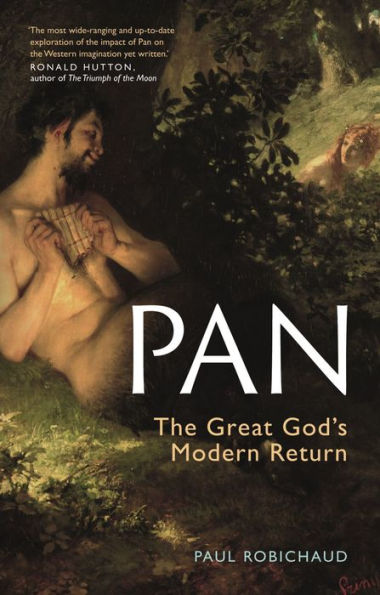
Pan: The Great God's Modern Return in Bloomington, MN
Current price: $26.00

Pan: The Great God's Modern Return in Bloomington, MN
Current price: $26.00
Loading Inventory...
Size: Paperback
From ancient myth to contemporary art and literature, a beguiling look at the many incarnations of the mischievousand culturally immortalgod Pan, now in paperback.
Panhe of the cloven hoof and lustful grin, beckoning through the trees. From classical myth to modern literature, film, and music, the god Pan has long fascinated and terrified the western imagination. “Panic” is the name given to the peculiar feeling we experience in his presence. Still, the ways in which Pan has been imagined have varied wildlyfitting for a god whose very name the ancients confused with the Greek word meaning “all.” Partgoat, partman, Pan bridges the divide between the human and animal worlds. In exquisite prose, Paul Robichaud explores how Pan has been imagined in mythology, art, literature, music, spirituality, and popular culture through the centuries. At times, Pan is a dangerous, destabilizing force; sometimes, a source of fertility and renewal. His portrayals reveal shifting anxieties about our own animal impulses and our relationship to nature. Always the outsider, he has been the god of choice for gay writers, occult practitioners, and New Age mystics. And although ancient sources announced his death, he has lived on through the work of Arthur Machen, Gustav Mahler, Kenneth Grahame, D. H. Lawrence, and countless others.
Pan: The Great God’s Modern Return
traces his intoxicating dance.
Panhe of the cloven hoof and lustful grin, beckoning through the trees. From classical myth to modern literature, film, and music, the god Pan has long fascinated and terrified the western imagination. “Panic” is the name given to the peculiar feeling we experience in his presence. Still, the ways in which Pan has been imagined have varied wildlyfitting for a god whose very name the ancients confused with the Greek word meaning “all.” Partgoat, partman, Pan bridges the divide between the human and animal worlds. In exquisite prose, Paul Robichaud explores how Pan has been imagined in mythology, art, literature, music, spirituality, and popular culture through the centuries. At times, Pan is a dangerous, destabilizing force; sometimes, a source of fertility and renewal. His portrayals reveal shifting anxieties about our own animal impulses and our relationship to nature. Always the outsider, he has been the god of choice for gay writers, occult practitioners, and New Age mystics. And although ancient sources announced his death, he has lived on through the work of Arthur Machen, Gustav Mahler, Kenneth Grahame, D. H. Lawrence, and countless others.
Pan: The Great God’s Modern Return
traces his intoxicating dance.
From ancient myth to contemporary art and literature, a beguiling look at the many incarnations of the mischievousand culturally immortalgod Pan, now in paperback.
Panhe of the cloven hoof and lustful grin, beckoning through the trees. From classical myth to modern literature, film, and music, the god Pan has long fascinated and terrified the western imagination. “Panic” is the name given to the peculiar feeling we experience in his presence. Still, the ways in which Pan has been imagined have varied wildlyfitting for a god whose very name the ancients confused with the Greek word meaning “all.” Partgoat, partman, Pan bridges the divide between the human and animal worlds. In exquisite prose, Paul Robichaud explores how Pan has been imagined in mythology, art, literature, music, spirituality, and popular culture through the centuries. At times, Pan is a dangerous, destabilizing force; sometimes, a source of fertility and renewal. His portrayals reveal shifting anxieties about our own animal impulses and our relationship to nature. Always the outsider, he has been the god of choice for gay writers, occult practitioners, and New Age mystics. And although ancient sources announced his death, he has lived on through the work of Arthur Machen, Gustav Mahler, Kenneth Grahame, D. H. Lawrence, and countless others.
Pan: The Great God’s Modern Return
traces his intoxicating dance.
Panhe of the cloven hoof and lustful grin, beckoning through the trees. From classical myth to modern literature, film, and music, the god Pan has long fascinated and terrified the western imagination. “Panic” is the name given to the peculiar feeling we experience in his presence. Still, the ways in which Pan has been imagined have varied wildlyfitting for a god whose very name the ancients confused with the Greek word meaning “all.” Partgoat, partman, Pan bridges the divide between the human and animal worlds. In exquisite prose, Paul Robichaud explores how Pan has been imagined in mythology, art, literature, music, spirituality, and popular culture through the centuries. At times, Pan is a dangerous, destabilizing force; sometimes, a source of fertility and renewal. His portrayals reveal shifting anxieties about our own animal impulses and our relationship to nature. Always the outsider, he has been the god of choice for gay writers, occult practitioners, and New Age mystics. And although ancient sources announced his death, he has lived on through the work of Arthur Machen, Gustav Mahler, Kenneth Grahame, D. H. Lawrence, and countless others.
Pan: The Great God’s Modern Return
traces his intoxicating dance.
Shop Similar Products










Find at Mall of America® in Bloomington, MN
Visit at Mall of America® in Bloomington, MN