


Home
Overview of Malaria Infection and Haematological Indices in Africa
Barnes and Noble
Loading Inventory...
Overview of Malaria Infection and Haematological Indices in Africa in Bloomington, MN
Current price: $54.00

Overview of Malaria Infection and Haematological Indices in Africa in Bloomington, MN
Current price: $54.00
Loading Inventory...
Size: OS
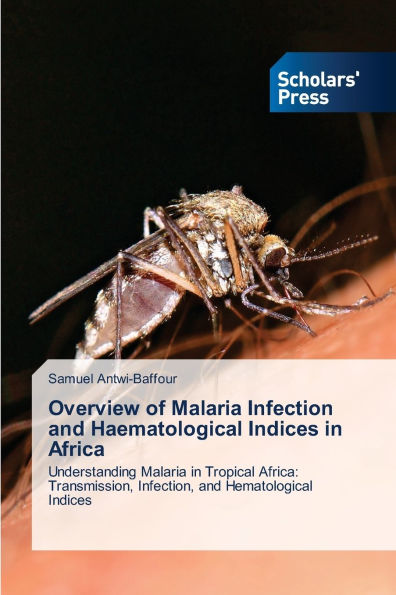
Malaria, a severe parasitic disease transmitted by Anopheles mosquitoes, is caused by various Plasmodium species, with P. falciparum and P. vivax posing the greatest threat. While most infections are uncomplicated, a small percentage progresses to severe malaria, characterized by disruptions in immune cell profiles and increased cytokine levels. Severe P. falciparum malaria is associated with elevated plasma cytokines, T cell lymphopenia, and impaired T cell function. Treatment aims to restore immune cell balance, particularly CD3+, CD4+, and CD8+ cells. Protective immunity involves CD8+ T cells and cytokines like IFN-γ and TNF, while CD4+ T cells combat erythrocytic parasites through cytokine secretion and macrophage activation. Regulatory T cells also play a role, highlighting the importance of cytokine balance in malaria. Additionally, factors like antigen affinity influence T helper lymphocyte differentiation, affecting immune responses to the disease.
Malaria, a severe parasitic disease transmitted by Anopheles mosquitoes, is caused by various Plasmodium species, with P. falciparum and P. vivax posing the greatest threat. While most infections are uncomplicated, a small percentage progresses to severe malaria, characterized by disruptions in immune cell profiles and increased cytokine levels. Severe P. falciparum malaria is associated with elevated plasma cytokines, T cell lymphopenia, and impaired T cell function. Treatment aims to restore immune cell balance, particularly CD3+, CD4+, and CD8+ cells. Protective immunity involves CD8+ T cells and cytokines like IFN-γ and TNF, while CD4+ T cells combat erythrocytic parasites through cytokine secretion and macrophage activation. Regulatory T cells also play a role, highlighting the importance of cytokine balance in malaria. Additionally, factors like antigen affinity influence T helper lymphocyte differentiation, affecting immune responses to the disease.
Shop Similar Products














Find at Mall of America® in Bloomington, MN
Visit at Mall of America® in Bloomington, MN