


Home
Nowhere to Run: Race, Gender, and Immigration American Elections
Barnes and Noble
Loading Inventory...
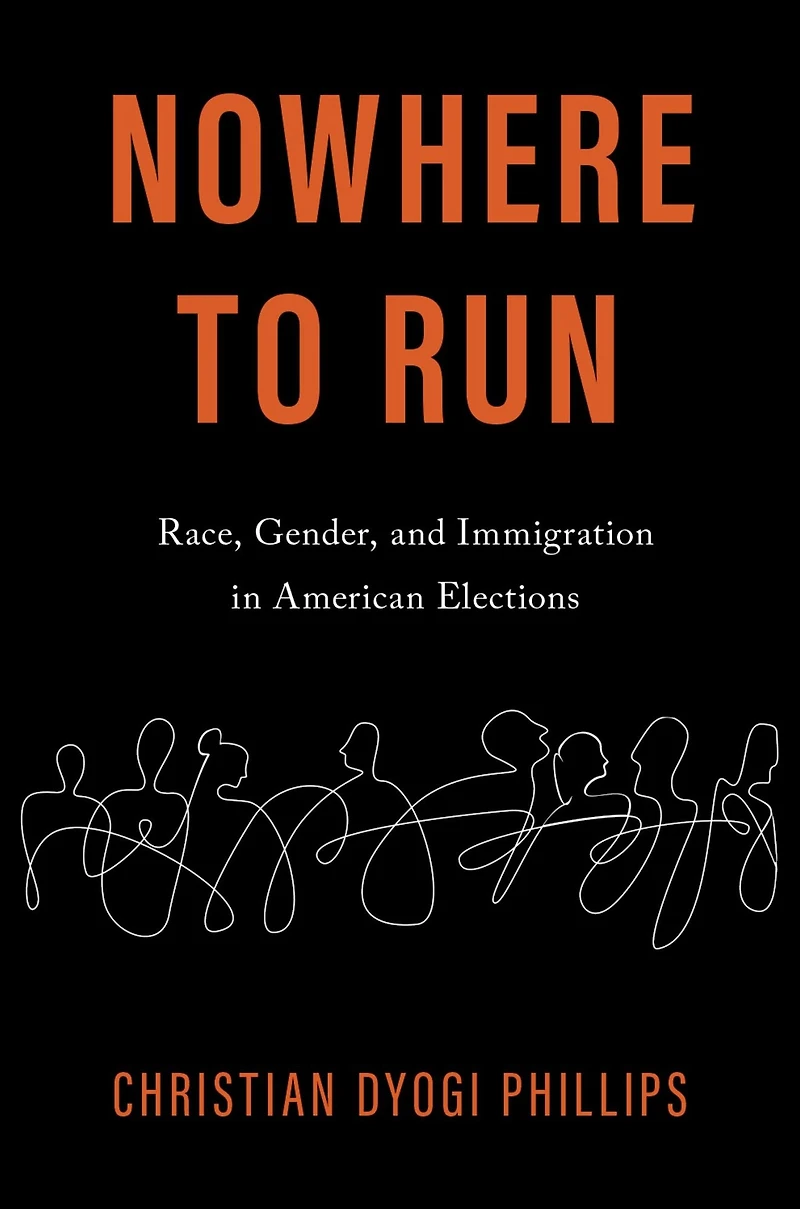
Nowhere to Run: Race, Gender, and Immigration American Elections in Bloomington, MN
By Barnes & Noble
Current price: $29.99

Nowhere to Run: Race, Gender, and Immigration American Elections in Bloomington, MN
Current price: $29.99
Loading Inventory...
Size: EBook
Why has the underrepresentation of women and racial minorities in elected office proved so persistent? Many researchers have asserted that the main shortfall happens at the candidacy stagewomen and people of color are competitive candidates, but too few throw their hat into the ring. However, these studies are animated by two assumptions that tend to speak past each other. On the one hand, gender and politics scholars often suggest that women lack sufficient ambition to run for office relative to men. On the other hand, race and politics scholars have suggested that districts with majority white populations do not provide adequate resources or opportunities for minority candidates to succeed. These approaches tend to treat women and racial minorities as parallel social groups, and fail to account for the ways in which race and gender simultaneously shape candidacy. Nowhere to Run introduces the intersectional model of electoral opportunity, which argues that descriptive representation in elections is shaped by intersecting processes related to race and gender. Across states, realistic opportunities for potential candidates of color to get on state legislative ballots are sharply circumscribed by the distribution of white majority populations in most districts; and within the districts that are most widely viewed as winnable seatsmajority minority districtsthe perceived scarcity of viable electoral opportunities exacerbates factors that tend to push women of color farther from the candidate pipeline. These overlapping constraints result in an electoral landscape where women of color face constraints on electoral opportunity that are intersecting and multilayered. Drawing on an original dataset encompassing nearly every state legislative general election from 1996-2015, as well as interviews and surveys with candidates, donors, and other political elites from 42 states, Nowhere to Run tests this theory with a first of its kind study of Asian American and Latina/o candidacies, and the first simultaneous look at the relationship between changing populations and descriptive representation for African American, Asian American, Latina/o, and white women and men. The book sheds new light on how multiple dimensions of identity simultaneously shape pathways to candidacy and representation for all groups seeking a seat at the table in American politics.
Why has the underrepresentation of women and racial minorities in elected office proved so persistent? Many researchers have asserted that the main shortfall happens at the candidacy stagewomen and people of color are competitive candidates, but too few throw their hat into the ring. However, these studies are animated by two assumptions that tend to speak past each other. On the one hand, gender and politics scholars often suggest that women lack sufficient ambition to run for office relative to men. On the other hand, race and politics scholars have suggested that districts with majority white populations do not provide adequate resources or opportunities for minority candidates to succeed. These approaches tend to treat women and racial minorities as parallel social groups, and fail to account for the ways in which race and gender simultaneously shape candidacy. Nowhere to Run introduces the intersectional model of electoral opportunity, which argues that descriptive representation in elections is shaped by intersecting processes related to race and gender. Across states, realistic opportunities for potential candidates of color to get on state legislative ballots are sharply circumscribed by the distribution of white majority populations in most districts; and within the districts that are most widely viewed as winnable seatsmajority minority districtsthe perceived scarcity of viable electoral opportunities exacerbates factors that tend to push women of color farther from the candidate pipeline. These overlapping constraints result in an electoral landscape where women of color face constraints on electoral opportunity that are intersecting and multilayered. Drawing on an original dataset encompassing nearly every state legislative general election from 1996-2015, as well as interviews and surveys with candidates, donors, and other political elites from 42 states, Nowhere to Run tests this theory with a first of its kind study of Asian American and Latina/o candidacies, and the first simultaneous look at the relationship between changing populations and descriptive representation for African American, Asian American, Latina/o, and white women and men. The book sheds new light on how multiple dimensions of identity simultaneously shape pathways to candidacy and representation for all groups seeking a seat at the table in American politics.
Shop Similar Products







Find at Mall of America® in Bloomington, MN
Visit at Mall of America® in Bloomington, MN