


Home
Nonlinear Predictive Control Using Wiener Models: Computationally Efficient Approaches for Polynomial and Neural Structures
Barnes and Noble
Loading Inventory...
Nonlinear Predictive Control Using Wiener Models: Computationally Efficient Approaches for Polynomial and Neural Structures in Bloomington, MN
By Barnes & Noble
Current price: $159.00

Nonlinear Predictive Control Using Wiener Models: Computationally Efficient Approaches for Polynomial and Neural Structures in Bloomington, MN
Current price: $159.00
Loading Inventory...
Size: EBook
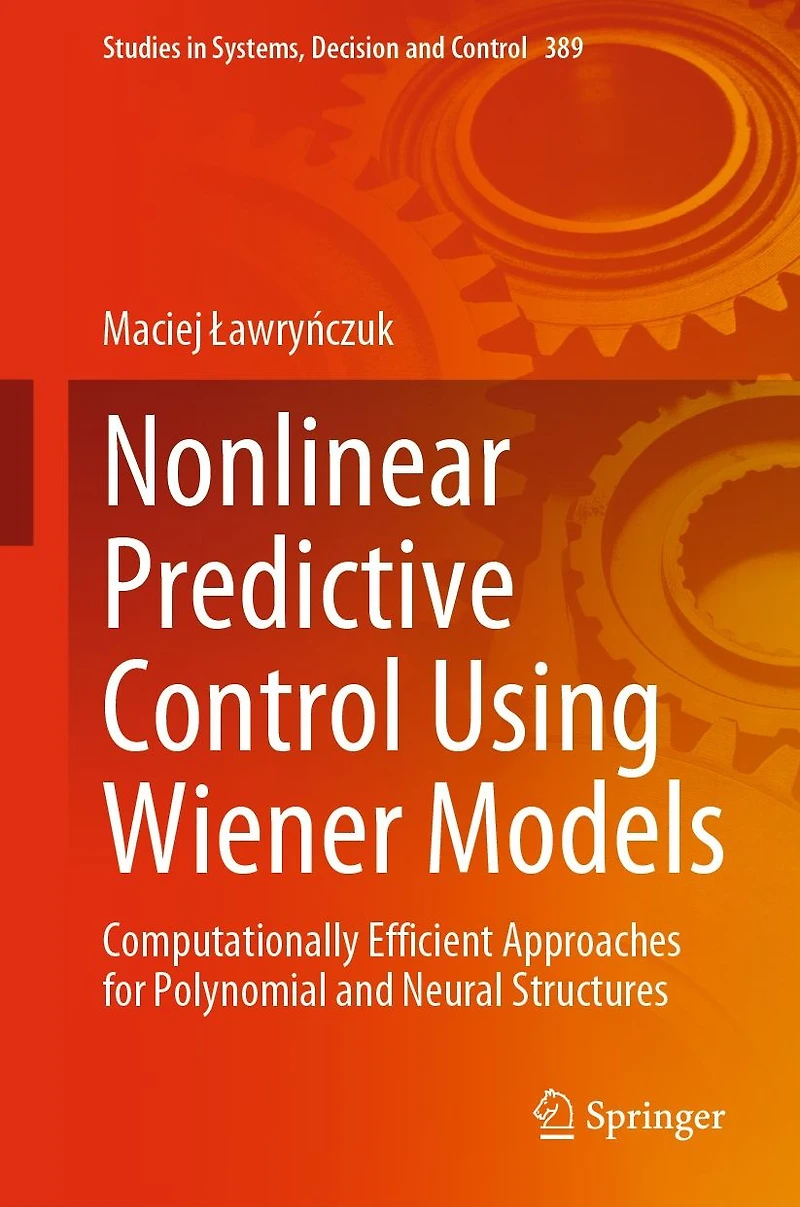
This book presents computationally efficient MPC solutions. The classical model predictive control (MPC) approach to control dynamical systems described by the Wiener model uses an inverse static block to cancel the influence of process nonlinearity. Unfortunately, the model's structure is limited, and it gives poor control quality in the case of an imperfect model and disturbances. An alternative is to use the computationally demanding MPC scheme with on-line nonlinear optimisation repeated at each sampling instant. A linear approximation of the Wiener model or the predicted trajectory is found on-line. As a result, quadratic optimisation tasks are obtained. Furthermore, parameterisation using Laguerre functions is possible to reduce the number of decision variables. Simulation results for ten benchmark processes show that the discussed MPC algorithms lead to excellent control quality. For a neutralisation reactor and a fuel cell, essential advantages ofneural Wiener models are demonstrated.
This book presents computationally efficient MPC solutions. The classical model predictive control (MPC) approach to control dynamical systems described by the Wiener model uses an inverse static block to cancel the influence of process nonlinearity. Unfortunately, the model's structure is limited, and it gives poor control quality in the case of an imperfect model and disturbances. An alternative is to use the computationally demanding MPC scheme with on-line nonlinear optimisation repeated at each sampling instant. A linear approximation of the Wiener model or the predicted trajectory is found on-line. As a result, quadratic optimisation tasks are obtained. Furthermore, parameterisation using Laguerre functions is possible to reduce the number of decision variables. Simulation results for ten benchmark processes show that the discussed MPC algorithms lead to excellent control quality. For a neutralisation reactor and a fuel cell, essential advantages ofneural Wiener models are demonstrated.
Shop Similar Products









Find at Mall of America® in Bloomington, MN
Visit at Mall of America® in Bloomington, MN