


Home
Neoliberalism and U.S. Foreign Policy: From Carter to Trump
Barnes and Noble
Loading Inventory...
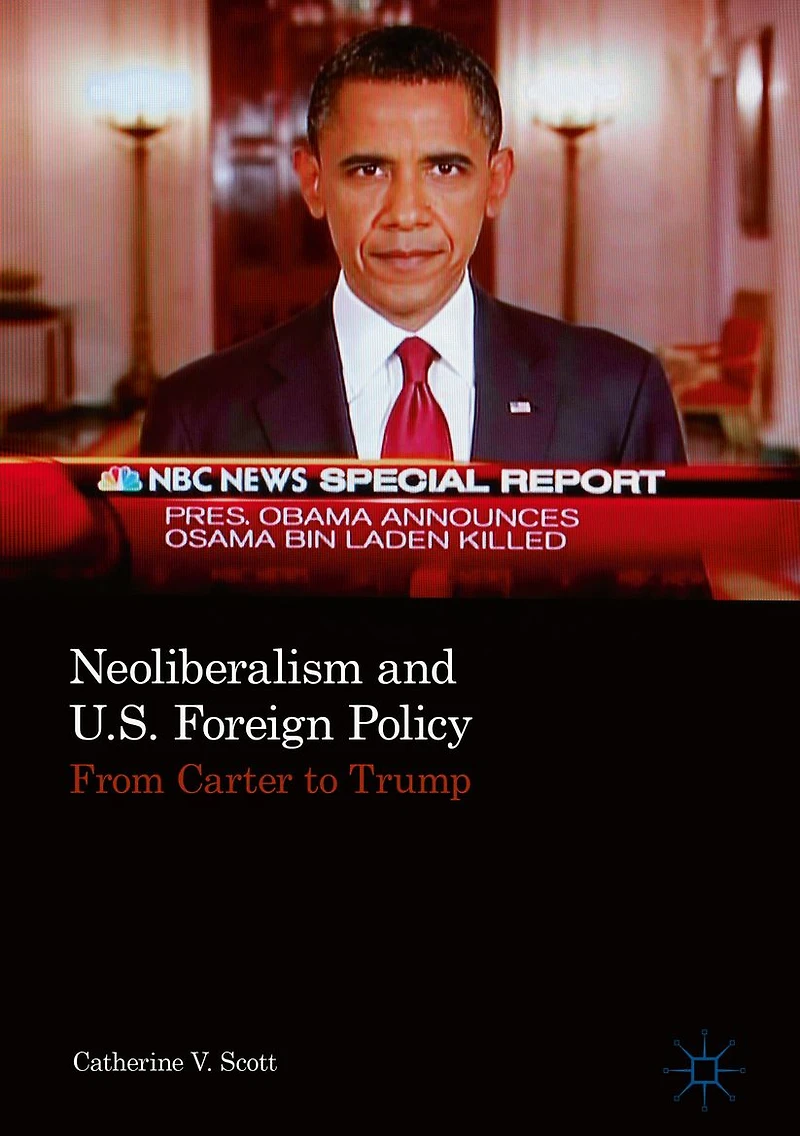
Neoliberalism and U.S. Foreign Policy: From Carter to Trump in Bloomington, MN
By Barnes & Noble
Current price: $89.00

Neoliberalism and U.S. Foreign Policy: From Carter to Trump in Bloomington, MN
Current price: $89.00
Loading Inventory...
Size: EBook
While there has been a flood of scholarly efforts to extend, adapt, and revise Foucault’s exploration of the emergence and operations of neoliberalism, the study of foreign policy has remained steeped in the analysis of partisanship, institutions, policies, and personality and their influence on various issue areas, toward particular countries, or specific presidential doctrines. This book brings the political rationality of neoliberalism to bear on U.S. foreign policy in two distinct ways. First, it challenges, complicates, and revises the numerous interpretations of U.S. nationalism that posit a homologous relationship between “1898” and contemporary nationalism, instead arguing that alterations in the operations of capitalism and its correlative forms of governance have produced a differently formatted nationalism, which in turn has produced different operations of U.S. hegemony in the twenty-first century that markedly depart from earlier eras. Second, this book argues for a new timeline—one that starts with the Carter-Reagan era and the crisis of capitalism—ultimately encouraging us to think beyond particular presidencies, wars, bureaucratic politics, and policies in order to train our sights on how long-term and sustained shifts in the economy and attendant government practices have emerged to produce new myths of exceptionalism that more fully cohere with the neoliberal foundations of the U.S. nation-state.
While there has been a flood of scholarly efforts to extend, adapt, and revise Foucault’s exploration of the emergence and operations of neoliberalism, the study of foreign policy has remained steeped in the analysis of partisanship, institutions, policies, and personality and their influence on various issue areas, toward particular countries, or specific presidential doctrines. This book brings the political rationality of neoliberalism to bear on U.S. foreign policy in two distinct ways. First, it challenges, complicates, and revises the numerous interpretations of U.S. nationalism that posit a homologous relationship between “1898” and contemporary nationalism, instead arguing that alterations in the operations of capitalism and its correlative forms of governance have produced a differently formatted nationalism, which in turn has produced different operations of U.S. hegemony in the twenty-first century that markedly depart from earlier eras. Second, this book argues for a new timeline—one that starts with the Carter-Reagan era and the crisis of capitalism—ultimately encouraging us to think beyond particular presidencies, wars, bureaucratic politics, and policies in order to train our sights on how long-term and sustained shifts in the economy and attendant government practices have emerged to produce new myths of exceptionalism that more fully cohere with the neoliberal foundations of the U.S. nation-state.
Shop Similar Products









Find at Mall of America® in Bloomington, MN
Visit at Mall of America® in Bloomington, MN