


Home
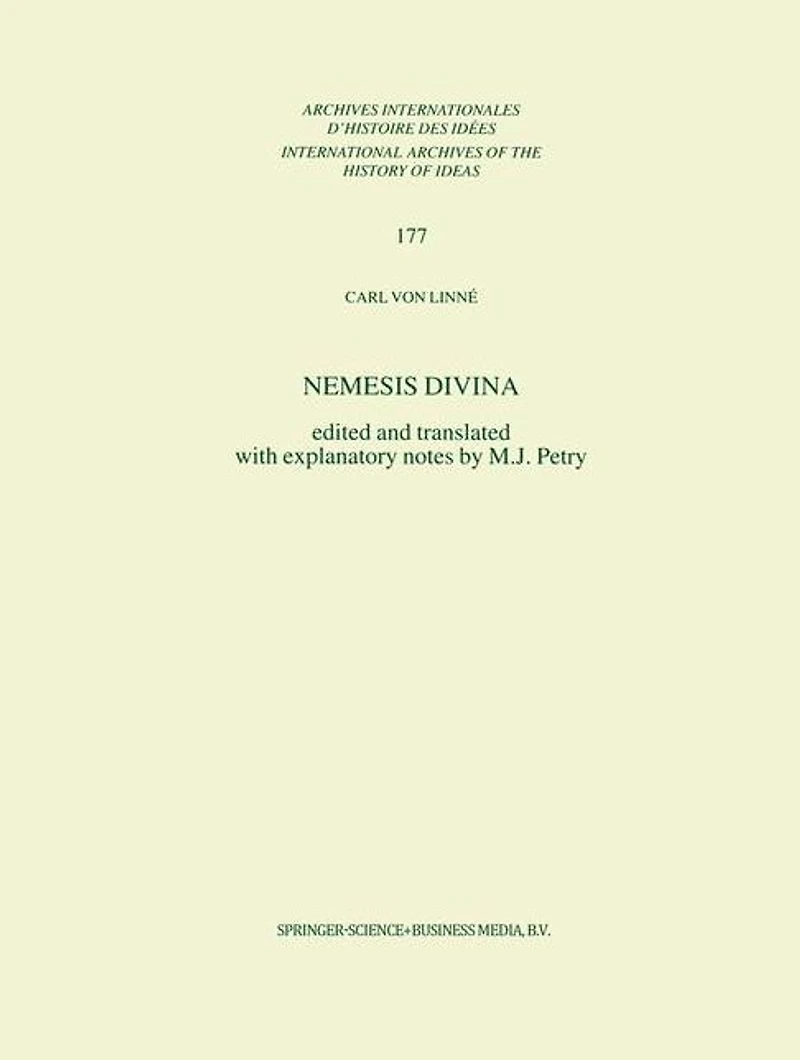
Nemesis Divina
Barnes and Noble
Loading Inventory...

Nemesis Divina in Bloomington, MN
By Barnes & Noble
Current price: $219.99

Nemesis Divina in Bloomington, MN
Current price: $219.99
Loading Inventory...
Size: Hardcover
Linnaeus' mature theodicy, his attempt to reconcile the suffering and evil of the world with the omnipotence and goodness of God, is presented in a condensed form in the final editions of his Systema Naturae (1758/68). In this comprehensive compendium of our knowledge of the three great realms of organic nature, he outlines the significance of the subconscious, social awareness and theological orientation in the spiritual life of man, and indicates how fate, fortune, and Providence interrelate within his conception of the Deity. In the Nemesis Divina this general undertaking is developed into an ‘experimental theology', which is exactly analogous to Linnaeus' work in the natural sciences, in that it involves the collecting and classifying of concrete and carefully described casestudies. He never prepared the manuscript for publication, however, and for many years it was regarded as lost, and it is only very recently that any attempt has been made to publish it in its entirety. This is the first English translation of all the relevant manuscript material. It is also the first attempt to analyse the casestudies in the light of what we know of Linnaeus' general taxonomic principles, and to relate each of them to its historical context.
Linnaeus' mature theodicy, his attempt to reconcile the suffering and evil of the world with the omnipotence and goodness of God, is presented in a condensed form in the final editions of his Systema Naturae (1758/68). In this comprehensive compendium of our knowledge of the three great realms of organic nature, he outlines the significance of the subconscious, social awareness and theological orientation in the spiritual life of man, and indicates how fate, fortune, and Providence interrelate within his conception of the Deity. In the Nemesis Divina this general undertaking is developed into an ‘experimental theology', which is exactly analogous to Linnaeus' work in the natural sciences, in that it involves the collecting and classifying of concrete and carefully described casestudies. He never prepared the manuscript for publication, however, and for many years it was regarded as lost, and it is only very recently that any attempt has been made to publish it in its entirety. This is the first English translation of all the relevant manuscript material. It is also the first attempt to analyse the casestudies in the light of what we know of Linnaeus' general taxonomic principles, and to relate each of them to its historical context.
Shop Similar Products












Find at Mall of America® in Bloomington, MN
Visit at Mall of America® in Bloomington, MN