


Home
Narratives of Statelessness and Political Otherness: Kurdish Palestinian Experiences
Barnes and Noble
Loading Inventory...
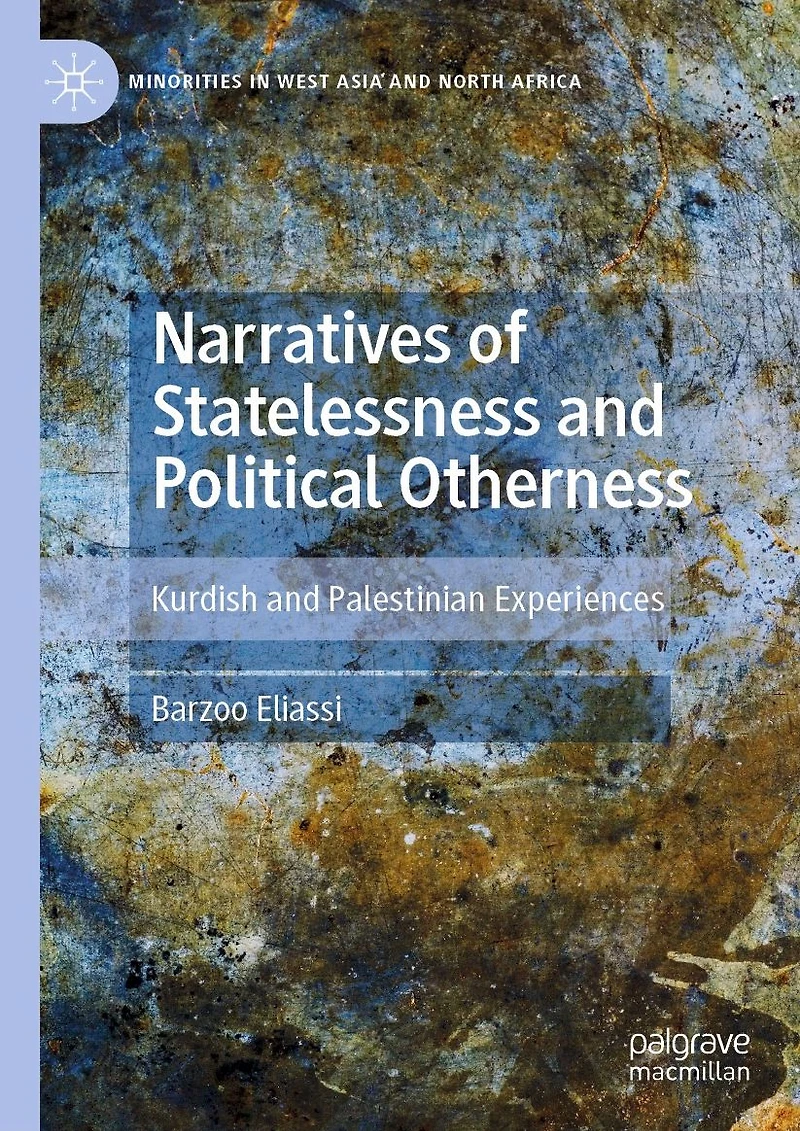

Narratives of Statelessness and Political Otherness: Kurdish Palestinian Experiences in Bloomington, MN
By Barnes & Noble
Current price: $149.00

Narratives of Statelessness and Political Otherness: Kurdish Palestinian Experiences in Bloomington, MN
Current price: $149.00
Loading Inventory...
Size: EBook
This book argues that citizenship is an inadequate solution to the problem of statelessness based on a critical investigation of the lived experiences of Kurdish and Palestinian diasporas in western Europe. It examines how statelessness affects identity formations, homelessness, belonging, non-belonging, otherness, voices, status, (non)recognition, (dis)respect, (in)visibility and presence in the uneven world of nation-states. It also demonstrates that the undoing of non-sovereign identities’ subjection to structural subalternization and everyday inferiorization requires rights in excess of the mere acquisition of juridical citizenship, which tends to assume national sameness. That assumption in turn involves sovereign practices of denial and assimilation of ethnic alterity. The book therefore highlights the necessity of de-ethnicizing and decolonizing unitary nation-states that are based on the politico-cultural supremacy of a single, “core” ethnicity as the sovereign legislator ofthe rules and regimes of national belonging and un-belonging. It therefore broaches questions of “majority” and “minority,” mobility, nationalism, home-making, equality, difference and universalism in the context of the nation-state and illustrates how stateless peoples such as Kurds and Palestinians endure and challenge their subordinate position in a hierarchical (geo-)political order and how in so doing remain bound by political otherness.
This book argues that citizenship is an inadequate solution to the problem of statelessness based on a critical investigation of the lived experiences of Kurdish and Palestinian diasporas in western Europe. It examines how statelessness affects identity formations, homelessness, belonging, non-belonging, otherness, voices, status, (non)recognition, (dis)respect, (in)visibility and presence in the uneven world of nation-states. It also demonstrates that the undoing of non-sovereign identities’ subjection to structural subalternization and everyday inferiorization requires rights in excess of the mere acquisition of juridical citizenship, which tends to assume national sameness. That assumption in turn involves sovereign practices of denial and assimilation of ethnic alterity. The book therefore highlights the necessity of de-ethnicizing and decolonizing unitary nation-states that are based on the politico-cultural supremacy of a single, “core” ethnicity as the sovereign legislator ofthe rules and regimes of national belonging and un-belonging. It therefore broaches questions of “majority” and “minority,” mobility, nationalism, home-making, equality, difference and universalism in the context of the nation-state and illustrates how stateless peoples such as Kurds and Palestinians endure and challenge their subordinate position in a hierarchical (geo-)political order and how in so doing remain bound by political otherness.
Shop Similar Products










Find at Mall of America® in Bloomington, MN
Visit at Mall of America® in Bloomington, MN