


Home
Multisensory Object Perception the Primate Brain
Barnes and Noble
Loading Inventory...
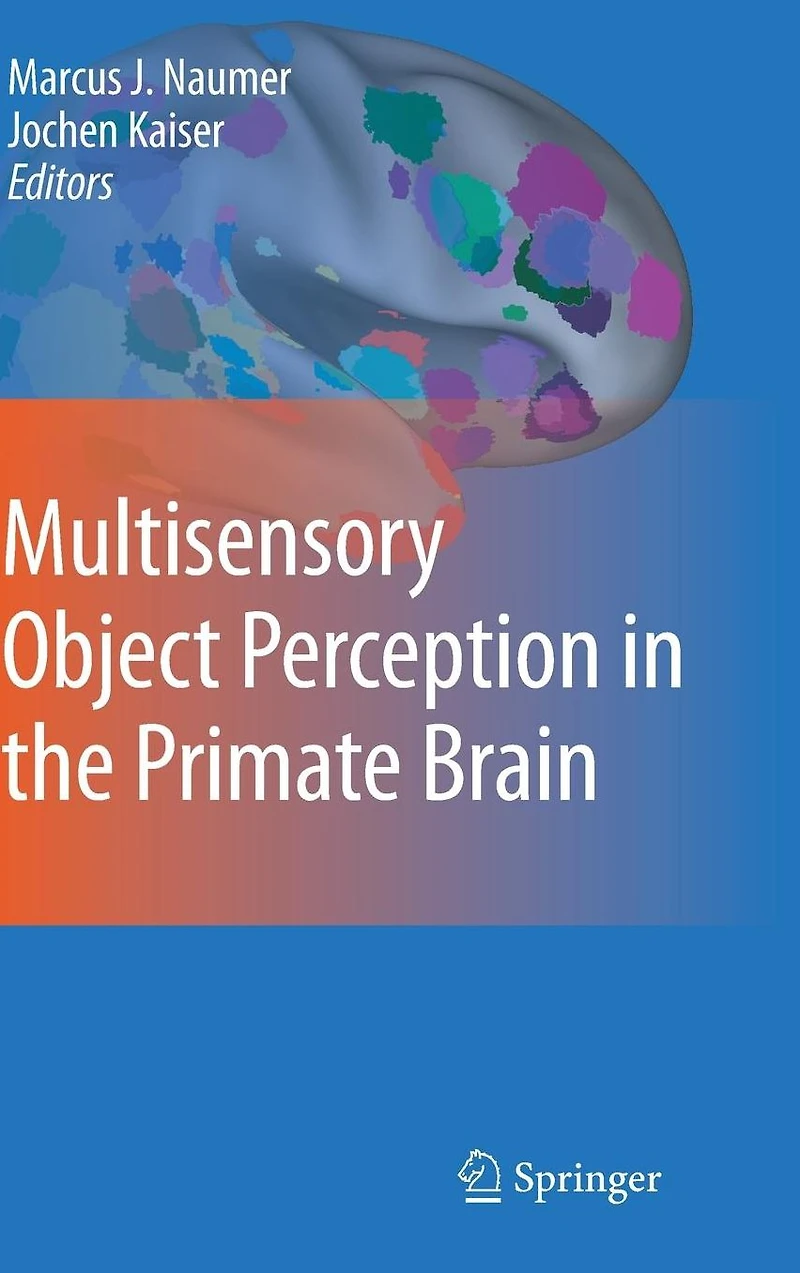
Multisensory Object Perception the Primate Brain in Bloomington, MN
By Barnes & Noble
Current price: $219.99

Multisensory Object Perception the Primate Brain in Bloomington, MN
Current price: $219.99
Loading Inventory...
Size: Hardcover
Traditionally a large proportion of perceptual research has assumed a specialization of cortical regions for the processing of stimuli in a single sensory modality. However, perception in everyday life usually consists of inputs from multiple sensory channels. Recently the question of how the brain integrates multisensory information has become the focus of a growing number of neuroscientific investigations. This work has identified both multisensory integration regions and crossmodal influences in brain areas traditionally thought to be specific to one sensory modality. Furthermore, several factors have been identified that enhance integration such as spatio-temporal stimulus coincidence and semantic congruency.Written for academic researchers and graduate students, the present book aims at elucidating the mechanisms of multisensory integration of object-related information with a focus on the visual, auditory and tactile sensory modalities. Evidence will be presented from studies in both human and nonhuman primates at different levels of analysis ranging from intracranial electrophysiological recordings to non-invasive electro-or magnetoencephalography, functional magnetic resonance imaging, behavioral approaches, and computational modeling. Seventeen chapters have been aggregated in four sections: Underlying mechanisms, audio-visual integration, visuo-tactile integration, and plasticity.
Traditionally a large proportion of perceptual research has assumed a specialization of cortical regions for the processing of stimuli in a single sensory modality. However, perception in everyday life usually consists of inputs from multiple sensory channels. Recently the question of how the brain integrates multisensory information has become the focus of a growing number of neuroscientific investigations. This work has identified both multisensory integration regions and crossmodal influences in brain areas traditionally thought to be specific to one sensory modality. Furthermore, several factors have been identified that enhance integration such as spatio-temporal stimulus coincidence and semantic congruency.Written for academic researchers and graduate students, the present book aims at elucidating the mechanisms of multisensory integration of object-related information with a focus on the visual, auditory and tactile sensory modalities. Evidence will be presented from studies in both human and nonhuman primates at different levels of analysis ranging from intracranial electrophysiological recordings to non-invasive electro-or magnetoencephalography, functional magnetic resonance imaging, behavioral approaches, and computational modeling. Seventeen chapters have been aggregated in four sections: Underlying mechanisms, audio-visual integration, visuo-tactile integration, and plasticity.
Shop Similar Products












Find at Mall of America® in Bloomington, MN
Visit at Mall of America® in Bloomington, MN