


Home
Multi-Criteria and Multi-Dimensional Analysis Decisions: Decision Making with Preference Vector Methods (PVM) Measure Construction (VMCM)
Barnes and Noble
Loading Inventory...
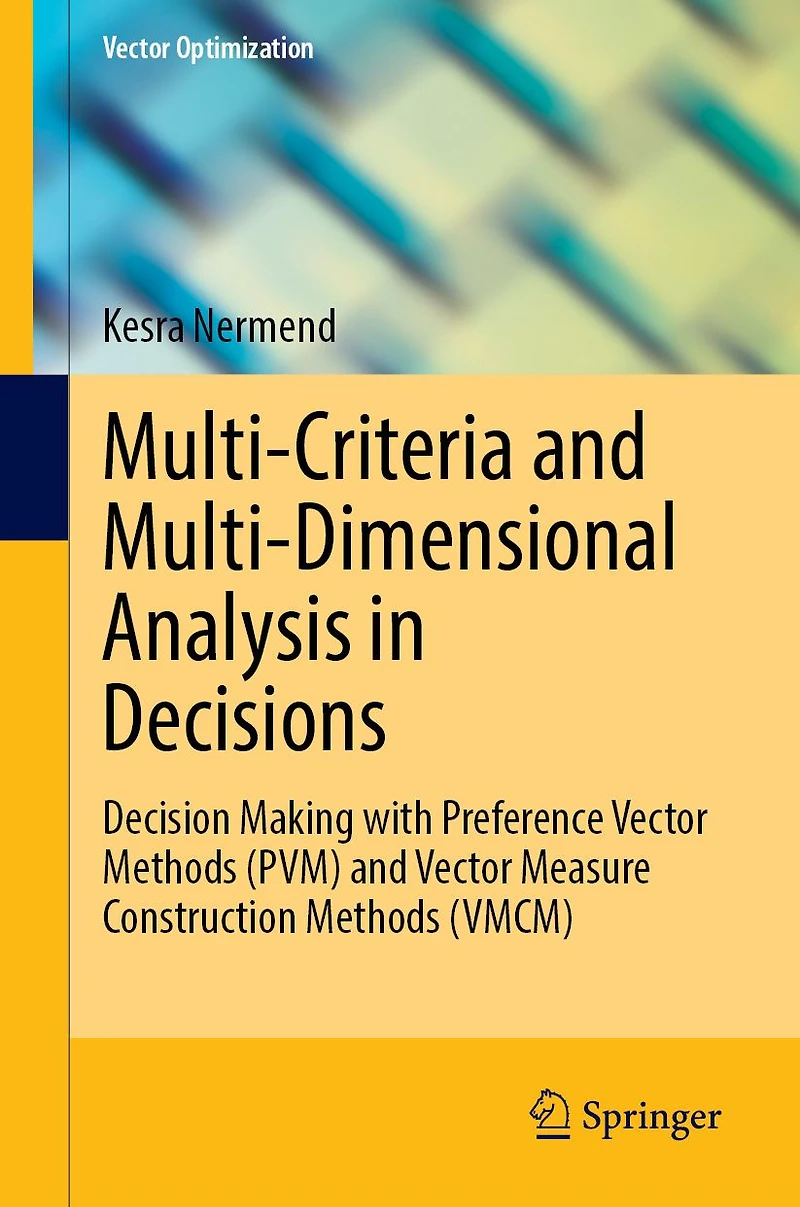
Multi-Criteria and Multi-Dimensional Analysis Decisions: Decision Making with Preference Vector Methods (PVM) Measure Construction (VMCM) in Bloomington, MN
By Barnes & Noble
Current price: $159.00

Multi-Criteria and Multi-Dimensional Analysis Decisions: Decision Making with Preference Vector Methods (PVM) Measure Construction (VMCM) in Bloomington, MN
Current price: $159.00
Loading Inventory...
Size: EBook
A new era is emerging in which a group of quantitative methods featuring characteristics of multidimensional comparative analysis (MCA) and multicriteria decisionmaking analysis (MCDA) can be used to automate objective decisionmaking processes. This book introduces the character of the criteria (desirable, nondesirable, motivating, demotivating, and neutral) to MCDA and MCA methods. It presents the author’s own developed methods, the preference vector method (PVM), for solving multicriteria problems in decision making; and, vector measure construction method (VMCM), which is dedicated to solving typical problems in the field of multidimensional comparative analysis. All methods are explained step by step with relevant examples, primarily in the fields of economics and management.
A new era is emerging in which a group of quantitative methods featuring characteristics of multidimensional comparative analysis (MCA) and multicriteria decisionmaking analysis (MCDA) can be used to automate objective decisionmaking processes. This book introduces the character of the criteria (desirable, nondesirable, motivating, demotivating, and neutral) to MCDA and MCA methods. It presents the author’s own developed methods, the preference vector method (PVM), for solving multicriteria problems in decision making; and, vector measure construction method (VMCM), which is dedicated to solving typical problems in the field of multidimensional comparative analysis. All methods are explained step by step with relevant examples, primarily in the fields of economics and management.
Shop Similar Products












Find at Mall of America® in Bloomington, MN
Visit at Mall of America® in Bloomington, MN